
Dumfries and Galloway · Scotland
External & façade joints in Dogslacks, Dumfries and Galloway
Specialist external mastic for Dogslacks: careful preparation, the right product and tidy work. Call for a quick quote.
- Panel joints letting water in
- Movement joints with cracked, split or missing sealant
- Hard, crazed mastic that has stopped moving
How we handle external mastic in Dogslacks
On houses, flats and commercial buildings across Dogslacks, we reseal joints in brickwork, render, cladding and façade panels. The preparation is the same whatever the wall: clean, sound faces and a controlled depth. If you have movement joints filled with mortar instead of sealant and moss and dirt in joints with no sealant left, we can put it right, whatever the surface.
External sealant needs dry surfaces, so outdoor work around Dogslacks is planned around the weather. Let us know about access to every wall and roofline.
Whatever the size of the job, it’s backed by our one-year guarantee in Dogslacks and across Dumfries and Galloway.
- Where
- Dogslacks (DG11)
- Wider area
- Dumfries and Galloway
- Cover
- 12 months on all our work
- Quote
- Quoted before any work starts
- info@mrmastic.co.uk
- Page updated
- 26 October 2026
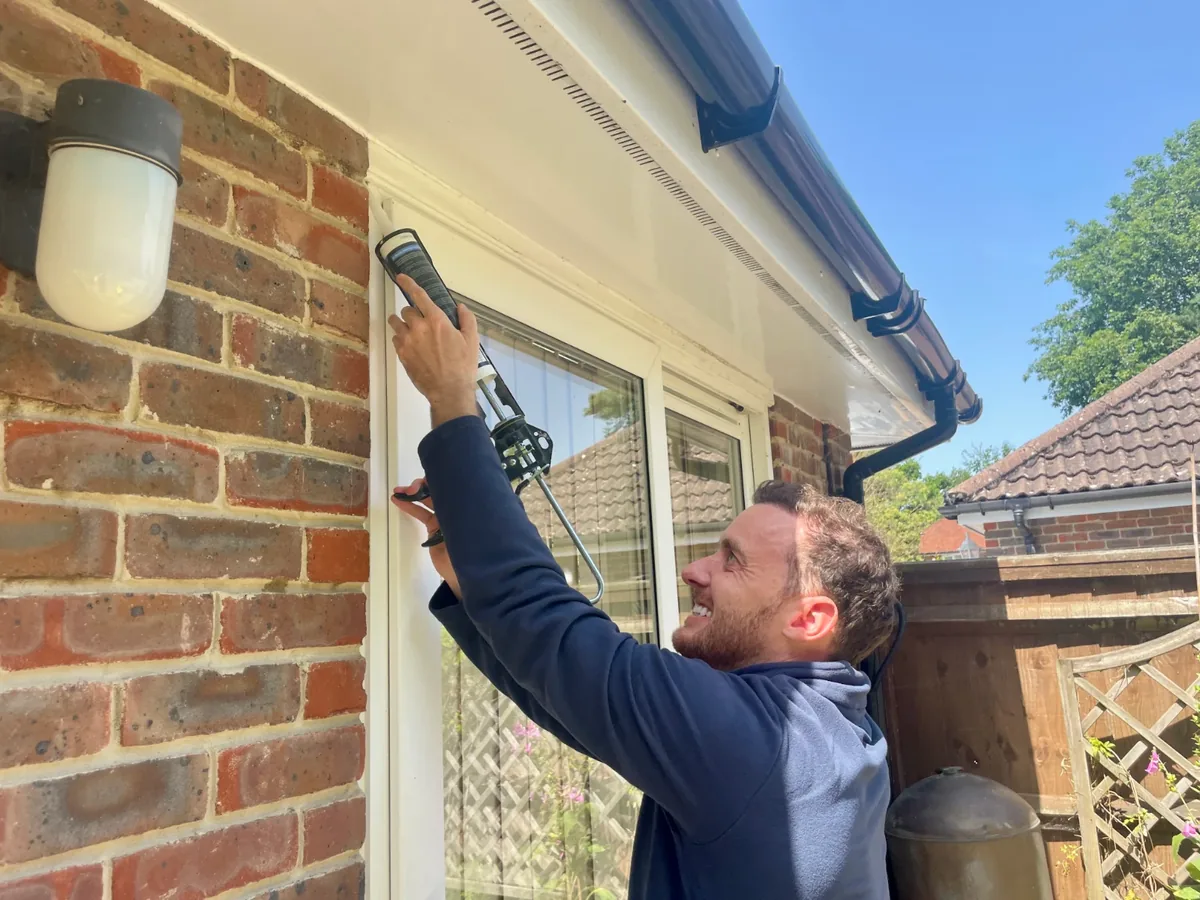
Walls and rooflines in Dogslacks
Private landlords in Scotland must meet the Repairing Standard, which includes keeping a home wind and watertight, and failed outside joints work against that. Harled (roughcast) walls are common in Scotland, and where harling meets frames, pipes and other materials, the joint needs a flexible sealant that grips a rough surface.
In the older streets around Middlebie Parish Church And Churchyard, older walls, gutters and the joints where extensions meet them need a flexible sealant.
Dogslacks is about 6 miles north of Annan, in Dumfries and Galloway. From the centre of Dogslacks to the outskirts, external mastic is available for homes and businesses alike, from flats and houses to offices and hotels. Across Dumfries and Galloway, we cover 138 places, Dogslacks among them. For nearby work, see our Edinburgh page (60 miles or so).
Here we cover the DG11 postcode area for external mastic. Other places close to Dogslacks include Middlebie (1 mile east), Ecclefechan (1 mile south-west), Eaglesfield (2 miles south-east), Brydekirk (4 miles south) and Kirkpatrick-Fleming (5 miles south-east). Further out, we also cover Dumfries (14 miles west), Annan (6 miles south), Heathhall (13 miles west), Langholm (11 miles north-east), Newbridge Drive (15 miles west) and Gretna (9 miles south-east).
Local landmarks in Dogslacks
A little further out are Hoddom Castle (3.7 miles south-west) and Annan Hospital (5.9 miles south).
What we cannot put right
A few problems are outside what sealant work can do:
- Rising or penetrating damp from elsewhere in the wall
- Cutting new joints into brickwork, which is building work rather than sealant work
- Structural movement, which needs a surveyor or engineer
If in doubt, email us at info@mrmastic.co.uk and we’ll say what we think before you book.
Surfaces we seal
- Concrete & block
- Brickwork movement joints
- Render & cladding joints
- Copings & trims
- Joints between brick and frames
- Façade panels
When to call us in Dogslacks
Weeds, moss and debris in a joint are a sign the sealant has gone. Dirt and roots then trap moisture in the joint and make things worse.
Most people get in touch when they notice something like this:
- Water getting into walls through failed joints
- Panel joints letting water in
- Weeds or debris growing in open joints
- Sealant pulling away from one side of the joint
Around Dogslacks, as everywhere, external mastic is only as good as the preparation behind it.
What your quote should include
- Whether they seal over old material or remove it
- How long to leave it before use
- How the joint is cleaned and prepared
- Who turns up on the day
Places near Dogslacks
Also in Dogslacks
Why deal with it now?
A low-modulus sealant is chosen because it moves without pulling hard at the edges. That protects surfaces like brick, render and concrete. A stiffer product can damage the joint edge as it fails. When the nearest tradesperson is a drive away, it’s tempting to leave a small leak, but water through a failed joint keeps working away until it’s fixed.
Homes and businesses are quoted the same way: the amount of work, how we reach it and what it needs, plus any working-time requirements on site. Call for a quick quote and we will explain what it covers.
Why us?
- You choose the colour before work begins
- Arbo and Everbuild products
- A choice of colours where the product allows
- Any old sealant cut out fully, not covered over
See our cost guide and customer reviews.
How to look after the new joints
Simple care keeps the joints in good condition. We recommend:
- Keep soil, plants and ivy away from the joints
- Keep movement joints as flexible joints, not mortar
- Keep water from gutters off the wall
- Show decorators and builders where the movement joints are
Avoid pressure-washing straight into the joints. High-pressure water can lift the edges.
A joint that has stopped moving pushes the movement elsewhere, often as cracks near the joint. Catch it early and you reduce the risk.
Can I do it myself?
The biggest DIY mistake is sealing over old sealant. New silicone will not bond to old, so it lifts and traps water and mould underneath. All the old material has to come out first.
If you do try it yourself, take your time over the preparation: take out all the old sealant, make sure the joint is clean and dry, and give it the full cure time. If it fails, we can still redo it.
Common questions in Dogslacks
Is Dogslacks within the area you cover?
Yes, we do. Our work covers the whole of Scotland, and smaller places are part of that. Longer journeys are simply planned in advance.
Do you cover Dogslacks for external mastic?
Yes. Our work covers the whole of Scotland, and Dogslacks is part of that. You can drop us a line at info@mrmastic.co.uk and let us know what needs doing.
Do you work for landlords and businesses?
Yes. We work for householders, landlords, letting agents, businesses and hotels.
What is a movement joint?
A vertical gap in a long brick wall is normally a movement joint. It gives the wall room to move, and it should be sealed with a flexible sealant.
Will it make a mess?
Very little: the area around the joints is protected first, and we tidy up before we go.
Do you do commercial work?
Yes. Commercial and hotel work is a large part of what we do. Working times can be discussed when we quote.
Is it OK to fill a movement joint with cement?
No. Mortar locks the joint solid, so the movement cracks the wall elsewhere. It needs a flexible sealant over backing rod.
Do you remove the old sealant?
Yes, always, and completely. New silicone doesn’t stick to old silicone, so any old material comes out before anything new goes in.
For landlords and businesses
We regularly work with letting and managing agents. Tell us the address, the job and how access works and we’ll quote.
We also work for businesses, from offices to washrooms and kitchens. For commercial premises, we can talk through working times when we quote.
What happens on the day
All our tools and materials come with us in the van. Once we have agreed what’s being done, the area is protected and the work begins. It normally takes a few hours to a few days, depending on the length of joint and the access. Outdoor work around Dogslacks depends on the weather, as sealant needs a dry surface, so an outdoor job can move if the forecast changes. Indoor work goes ahead whatever the weather.
- First we look over the joints with you, agree which to renew and talk through access.
- We cut out the failed sealant and rake out any dirt or growth.
- The joint faces are cleaned and primed where the sealant needs it.
- Closed-cell backing rod is fitted to set the depth and stop three-sided bonding.
- The new sealant, chosen to suit the brick or render, is applied and tooled to a neat finish.
Preparing for the visit
- Tell us if parking is tricky
- Let us know about stairs, lifts or work at height
- Plan for the work area to be out of bounds to pets and children
How to get a quote
Asking for a quote is easy: let us know the job and the location. A few photos by email make the job easier to understand.