
Mr Mastic · South East, London and Scotland
Bathroom and kitchen resealing
Old, mouldy or leaking sealant cut out and replaced around baths, showers, basins, wet rooms, worktops and sinks, with a neat new bead of anti-fungal silicone.
- Black mould in the sealant that won’t clean off
- Sealant that has split, shrunk or peeled away
- Water getting behind the bath panel or worktop
What bathroom & kitchen resealing involves
Sealant is the thin line that keeps water where it belongs. When it splits, shrinks or goes black with mould, water starts getting behind the bath, into the tray surround or under the worktop. We cut every bit of the old sealant out, clean and dry the joint, treat any mould and lay a single, even bead of anti-fungal sanitary silicone.
We work across the South East, London and all of Scotland from our base in Crawley. Every job comes with our one-year guarantee, and we’re fully insured and an ARBOMaster approved applicator.
Problems we put right
- Black mould in the sealant that won’t clean off
- Sealant that has split, shrunk or peeled away
- Water getting behind the bath panel or worktop
- Gaps where the bath or tray has moved
- A messy, uneven bead from a previous reseal
Where we work
- Baths
- Shower trays & enclosures
- Basins & vanity units
- Wet rooms
- Kitchen worktops & upstands
- Sinks & splashbacks
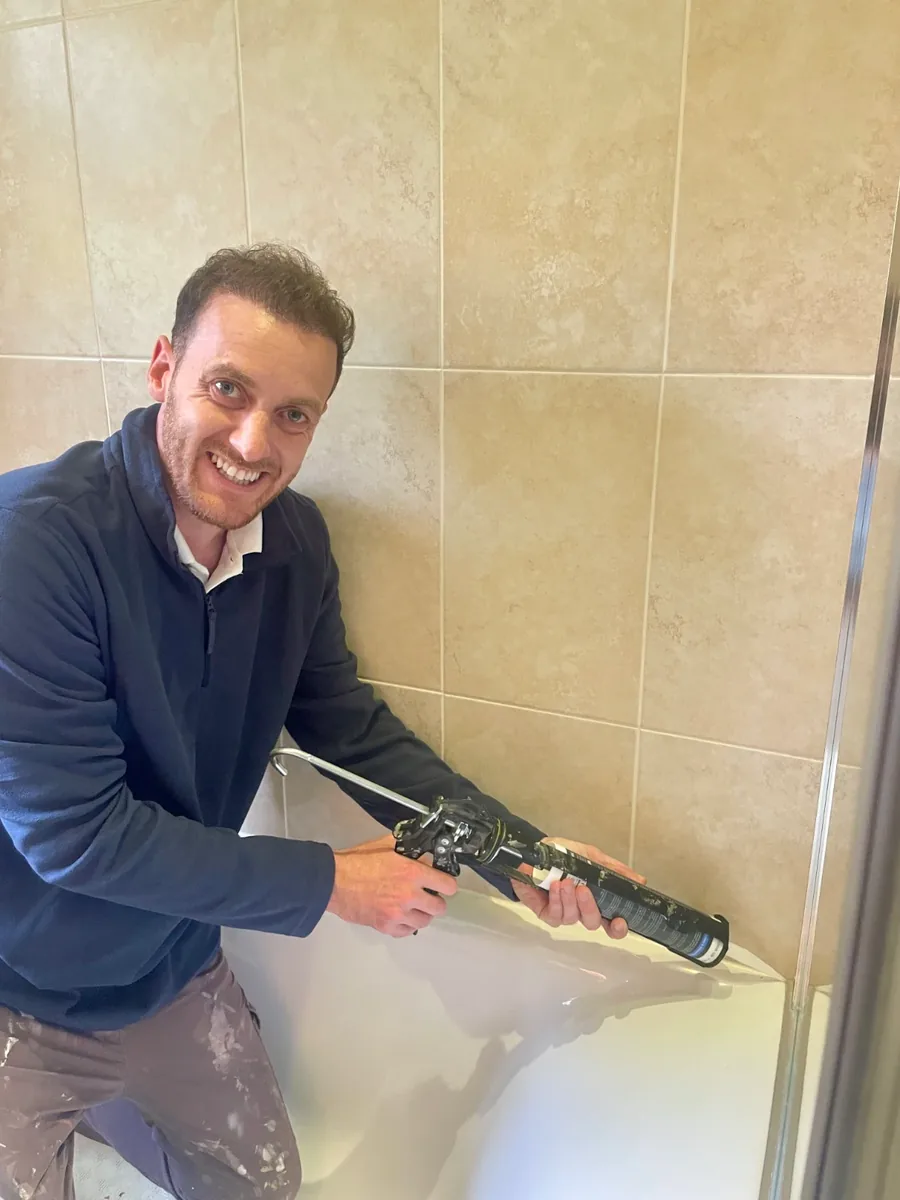
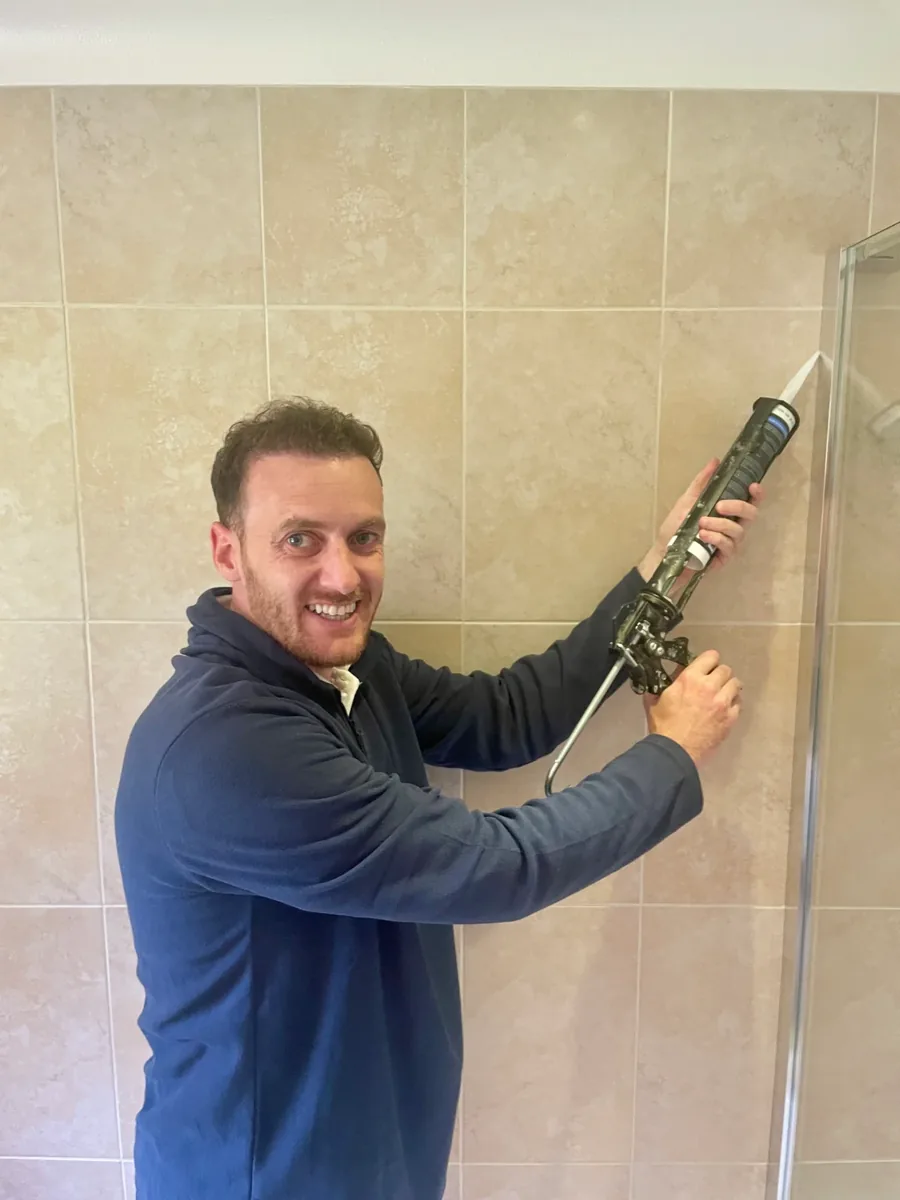
How it works
- We protect the area and cut out all of the old sealant, including the thin film left on the tiles and bath.
- We clean and degrease the joint and treat any mould with a mould remover.
- We let the joint dry fully. Baths are filled with water first so the bead is laid with the bath at its heaviest.
- We apply a single bead of anti-fungal sanitary silicone in a colour to suit and tool it to a neat, even finish.
- We tidy up and tell you how long to leave it before it gets wet (usually around 24 hours).
Why we never seal over old silicone
New silicone won’t bond to old silicone. Sealing over the top looks fine for a few weeks, then lifts and traps mould and water underneath. We always take the old bead out completely, as we did on a 1950s terrace in Three Bridges where someone had sealed straight over failed sealant.
Kitchens
Around worktops, upstands and sinks we use a sealant suited to kitchens, colour-matched where it shows, and a food-safe product beside the sink where it’s needed.
A real job
In a 1950s terrace on Crossways in Three Bridges, Crawley, black mould kept coming back around the bath. Someone had sealed straight over the old, failed sealant, so the mould was underneath from the start. We took both layers out, cleaned and dried the joint and applied Everbuild anti-fungal white silicone. The job took under three hours.
Why it’s worth doing now
Split or mouldy sealant isn’t just untidy. Once water gets past it, it runs behind the bath panel, under the shower tray or into the worktop, where it can rot boards, loosen tiles and stain the ceiling below. Replacing the sealant is a small job; repairing what a long-term leak does is not.
What affects the quote
We don’t publish set prices, because every job is different. Call or email us with a few details and we’ll give you a clear quote before we start. The main things that affect it are:
- How many joints, rooms, windows or metres of joint there are
- How much old sealant or grout has to come out, and how many layers
- Mould, damage or movement that needs dealing with first
- Access: stairs, height, ladders or work outside
- The product the joint needs (sanitary, exterior, fire-rated, glazing or sand mastic)
- For commercial sites, working hours and phasing
What a good quote includes
- All the old sealant removed, not sealed over
- The product named for each joint
- How long the guarantee is and what it covers
- How long before the area can be used
- How your home or building will be protected
- Who is doing the work, and that they’re insured
Aftercare
Run the extractor fan or open a window after bathing, wipe the joints dry when you can, and clean them with a mild bathroom cleaner rather than bleach-based sprays every day. Leave the new sealant to cure for the time we give you before it gets wet.
What customers say
Rated 4.9 on Google from 180+ five-star reviews. Read the reviews on Google.
“Called for a bathroom reseal and the mastic man showed up on time with all the right equipment. Brilliant attention to detail. The sealant looks perfect and they kept everything tidy.”
“We had old mastic that needed replacing throughout our kitchen and bathrooms. The mastic man professional was knowledgeable, quoted fairly, and delivered excellent quality work. Highly recommend!”
“Professional mastic man service from start to finish. They assessed the work properly, gave a clear quote, and executed the job perfectly. Very satisfied with the results.”
Bathroom and kitchen resealing: common questions
How long does a bath or shower reseal take?
Most single baths or showers take a couple of hours, including removing the old sealant. A full bathroom and kitchen can take most of a day.
When can I use the bath or shower?
Usually after around 24 hours. We’ll tell you the cure time for the product we used before we leave.
Can you get rid of the black mould?
If mould has grown into the sealant, the only lasting fix is to cut it out. We remove it, treat the joint and use anti-fungal silicone.
Is the work guaranteed?
Yes. Every job comes with our one-year guarantee.
Do you give a price before you start?
Yes. Call or email us with a few details and we’ll give you a clear quote, so you know the price before any work starts.
Are you insured?
Yes. Mr Mastic is fully insured, and we’re an ARBOMaster approved applicator.
Page updated 26 October 2026
Near you
We cover the South East, London and Scotland. Find bathroom & kitchen resealing in your town:
- London
- Crawley
- Brighton
- Guildford
- Chelmsford
- Colchester
- Southampton
- Reading
- Oxford
- Edinburgh
- Glasgow
- Aberdeen
- Dundee