
Hampshire · England
Glazing Silicone in Viables
Glazing silicone for conservatories, rooflights, glass panels and shower screens for homes and businesses in Viables and across Hampshire. ARBOMaster approved applicators, fully insured, with a one-year guarantee.
- A quick top-up bead that didn’t last
- Cracked silicone between glass panels
- Conservatory leaks at frame and glazing joints
Glazing silicone for homes and businesses in Viables
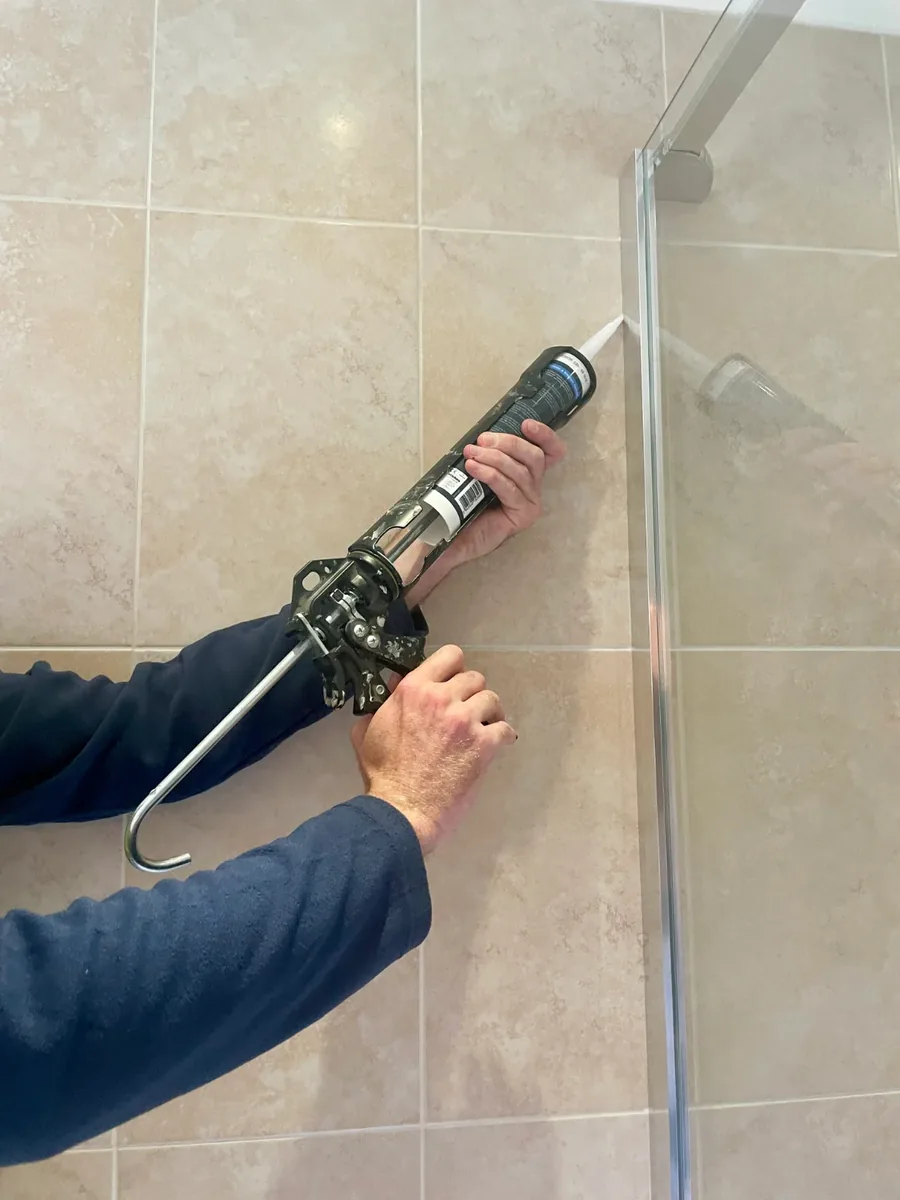
Glazing silicone that has yellowed, blackened or come away looks poor and can leak. It comes off cleanly, without marking the glass before the new bead goes in. We work on shower screens, glass balustrade bases and glass-to-glass joints, and common reasons people get in touch are stained, discoloured glazing silicone and rooflight joints letting water in.
Around Viables, conservatories, garden rooms and patio doors are often part of the house. Their glazing joints and frame seals are as much a part of the job as the windows.
Our work is backed for twelve months, in Viables and everywhere else we cover.
- Place
- Viables (RG21, RG22, RG25)
- Wider area
- Hampshire
- Guarantee
- A year, on every job
- Quote
- Quoted before any work starts
- Phone
- 0345 464 0079
- Last updated
- 26 October 2026
How the job changes by surface
Rooflights
Rooflight glazing joints are cut out and renewed. Leaks from the roof itself need a roofer.
Conservatory frames
Frame-to-wall joints on a conservatory move with the weather. We reseal them with a sealant suited to the frame.
Nearby places to Viables
Also in Viables
Common problems we fix in Viables
Not every leak is a sealant problem: broken panels, roof problems and blocked gutters can all let water in. We find the cause before we seal anything.
Any of these means the joints need attention:
- Silicone pulling away from the glass
- Leaks where conservatory glass meets the frame
- Sealant that was laid over old silicone and failed
- Stained, discoloured glazing silicone
For an older house near a landmark such as Church of All Saints, frames set in older brick or stone need a sealant that suits the wall as well as the frame.
What your quote should include
- Which sealant they’ll use, and why
- Which colour the sealant will be
- How long to leave it before use
- The length of the guarantee
What glazing silicone looks like in Viables
Historic houses like The Vyne (about 3.9 miles north) are a reminder that the area around Viables has older buildings as well as new. Where a home is older, older timber frames in brick or stone need a different approach from a modern uPVC window. Rainfall in the South East is lower than in much of the UK, but outside sealant still needs a dry, clean surface, so outdoor work is planned around the forecast.
If you let a flat or house near Basingstoke station, a shower screen or conservatory joint that leaks is easier to reseal while the property is empty. If you look after a building such as St John's Church of England Voluntary Aided Primary School, larger buildings have plenty of frames, and the mastic around each one ages.
Viables is about 1 mile south-east of Basingstoke, in Hampshire. We provide glazing silicone to homes and businesses in Viables and nearby, as part of our work across Hampshire. We cover 683 towns and villages across Hampshire, large and small. There’s also a page for Reading, roughly 15 miles from Viables.
Postcode districts we cover here for glazing silicone: RG21, RG22 and RG25. If you need glazing silicone at a property on Grove Road, Porter Road and Morley Road or a nearby road, our applicators can take on the job. Other places close to Viables include Cliddesden (1 mile south), Eastrop (1 mile north), Oakridge (1 mile north), Lychpit (2 miles north-east) and Old Basing (2 miles north-east). Within a short drive, we also cover Farnborough (14 miles east), Fleet (11 miles east), Aldershot (14 miles east), Alton (8 miles south-east), Yateley (13 miles north-east) and Tadley (8 miles north).
Around Viables
In Viables, that means homes and buildings near The Costello School, Queen Mary's College and Hackwood Park. The nearest railway station is Basingstoke station, roughly 1.3 miles north. A little further out are Willis Museum (0.9 miles north) and Festival Place (1.1 miles north). Green spaces nearby include The Mill Field and Farleigh Hill.
Why act early in Viables
Topping up old silicone can look like a fix, but new silicone will not bond to old, and the leak generally returns. A proper reseal is the lasting answer. Homes in smaller places like Viables can face more weather, and failed outside joints let damp into walls. Inside, a split seal lets water into floors and panels just as it would anywhere.
No two jobs are quite the same, so we quote each one individually. Size, access and the product the joint needs all play a part.
Why Viables customers choose us
- One-year guarantee on every job
- We agree the colour with you first
- Fully insured
- Experience in homes, commercial sites and hotels
Read what affects the cost or our reviews.
Questions from Viables
Do you cover smaller places like Viables?
Yes, we do. Our work covers London and the South East, from towns to the smallest places. Longer journeys are simply planned in advance.
Is Viables in your area for glazing silicone?
Yes. Our work covers London and the South East, and Viables is part of that. Just call 0345 464 0079 or drop us an email with a few details of the job.
Do you seal glass balustrade bases?
Yes. We cut out the failed sealant and reseal the base joint using a sealant that suits the materials.
Are you an approved applicator?
Yes. Mr Mastic is an ARBOMaster approved applicator.
What sealant do you use?
Products from Arbo and Everbuild, among others, picked for each joint. We explain the product when we quote.
Do the sealants smell?
Some sealants have a smell while they cure, which fades as it sets. Ventilation helps.
Are you fully insured?
Yes. We are fully insured for every job we do.
Can you do several jobs on one visit?
Yes, we can. Several rooms, windows or areas can go on one quote.
Looking after it afterwards
So the new joints stay in good condition:
- Don’t leave a drip for the next storm
- Keep air moving in the conservatory
- Check the silicone on glass every year or so
- Use a gentle glass cleaner and a soft cloth
Squeegee a shower screen after each shower and keep the room ventilated. It helps stop mould getting into the silicone.
A leaking shower screen may not show at first. Water can soak into the floor or reach the room below long before you see it.
The process
At the end, we look at the finished work together and tell you how long to leave it. The work normally takes a few hours for most jobs, depending on the size of the job. A visit to Viables is planned like any other: the time, the access and where to park are agreed in advance. If the work is outside, the weather plays a part, as sealant needs a dry surface.
- We trace the leak and confirm it’s a sealant joint.
- We remove the old sealant carefully.
- We clean the glass and frame so the new silicone bonds.
- A neutral-cure glazing silicone is applied and tooled.
- Each joint is checked and, where possible, water-tested.
Getting ready for the visit
- Tell us about access, such as stairs, a lift or high-level joints
- Try not to wet indoor joints just before the visit
- On commercial sites, let us know about site rules
Getting a quote
Asking for a quote is easy: let us know the job and the location, and roughly how big it is. Photos by email help us understand the job.
Read more
Honest limits
We’d rather tell you now than do work that will not last, so here’s what sealant can’t put right:
- Condensation trapped between two panes
- Rotten or badly damaged frames
- Water coming through the roof rather than a sealant joint
If in doubt, ring 0345 464 0079 or send us an email and we’ll say what we think before you book.
What we seal
- Conservatory frames
- Glass-to-frame joints
- Glass-to-glass joints
- Glass balustrade bases
- Rooflights
- Shower screens
Can I do it myself?
Too much sealant is as bad as too little. A thick, smeared bead looks untidy and doesn’t move well, and the joint depth matters as much as the finish.
If you’re set on DIY, put the effort into preparation: remove every trace of old sealant, clean and dry the joint, and follow the product’s cure time. If it doesn’t work out, we can still put it right.