
North Lanarkshire · Scotland
External & façade joints in Twechar, North Lanarkshire
Sealing brickwork movement joints, render, cladding and façade joints for Twechar, backed by a 12-month guarantee. Ask us for a quote.
- Sealant pulling away from one side of the joint
- Weathered mastic that no longer stretches
- Weeds or debris growing in open joints
About our external mastic in Twechar
Movement joints let brickwork, render and cladding expand and shrink without cracking. The sealant in it has to stretch and squeeze for years, and when it fails, the wall takes the strain and water finds a way in. We work on brickwork movement joints, joints between brick and frames and render & cladding joints, and the jobs we see most are movement joints filled with mortar instead of sealant and moss and dirt in joints with no sealant left.
Stone walls need a stone-friendly sealant, as acetoxy products can attack some stone. On newer homes, the movement joints and roofline trims are what need watching.
There’s a 12-month guarantee on every job, large or small.
- Place
- Twechar (G65)
- Region
- North Lanarkshire
- Cover
- One year on every job
- Quotes
- Quoted before any work starts
- info@mrmastic.co.uk
- Page updated
- 26 October 2026
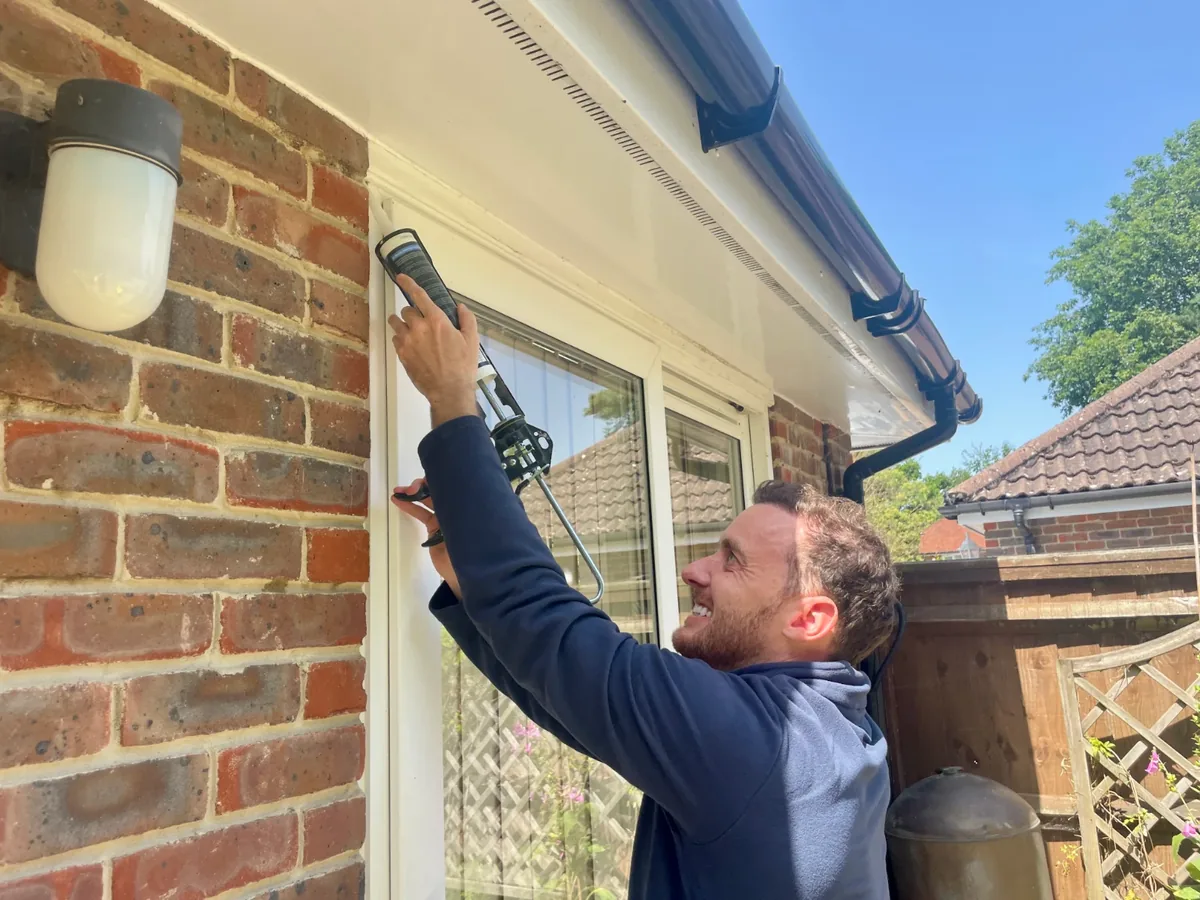
What external mastic looks like in Twechar
The west of Scotland is wetter than the east, so there’s plenty of rain for movement joints and outside wall joints to keep out. Under the Repairing Standard, private landlords in Scotland have to keep homes wind and watertight, and sound outside sealant is part of that.
If you look after a building such as Kirkintilloch High School, movement joints, cladding joints and gutters on larger buildings need the same care as a house’s. If you let a flat or house near Croy station, failed wall and movement joints let damp in, so they’re worth checking between tenancies.
Twechar is about 3 miles north-east of Kirkintilloch, in North Lanarkshire. Twechar gets the same service as everywhere we cover: old sealant removed completely, careful preparation and a one-year guarantee. 89 places in North Lanarkshire are on our list, large and small. Our Glasgow page covers work nearby (10 miles or so).
Our applicators cover all of the G65 postcode area for external mastic and the streets around it. You’ll find streets such as Main Street, Drumgrew Quadrant and Turnyhill Road, all of which we cover. We also cover the places around Twechar: Queenzieburn (1 mile north), Auchinstarry (2 miles east), Croy (2 miles east), Kilsyth (2 miles north-east) and Smithstone (2 miles east). Within a short drive, we also cover Motherwell (12 miles south), Cumbernauld (3 miles east), Coatbridge (7 miles south), Airdrie (8 miles south-east), Wishaw (14 miles south-east) and Bellshill (10 miles south).
Local landmarks in Twechar
The closest station to Twechar is Croy station, roughly 2 miles east. Well-known places in the area include Colzium Museum (2.9 miles north-east) and Kirkintilloch Castle (3 miles west). Not far away are Antermony Loch and Bar Hill.
FAQs for Twechar
Is Twechar within the area you cover?
Yes, smaller places are covered as well as towns. Our work covers the whole of Scotland. Just mention lanes, gates or anything else about the route when you book.
Do you work for landlords with property near Croy station?
Yes, rental work is part of what we do. You can send an email to info@mrmastic.co.uk with the address and a few details, and we’ll give you a fixed price before work begins.
Can you seal over the old sealant?
No, it will not last. It can look neat for a few weeks, but the new bead soon lifts. Removing the old sealant completely is the only lasting way.
Are you insured?
Yes. We’re fully insured, and we have been doing sealant work for more than 20 years.
Should I try DIY first?
Some simple jobs can be done by a careful DIYer. The usual mistakes are sealing over old sealant, sealing a damp joint and using too much.
How long does external mastic take?
Most jobs take a few hours for a handful of joints, longer for a whole elevation. We’ll confirm how long when we quote.
Will it make a mess?
No. We work neatly, protect the area around the joints and tidy up afterwards.
What’s an expansion joint in brickwork?
Walls move with heat, cold and moisture, and planned joints take up that movement. It’s closed with backing rod and a flexible sealant.
DIY versus a professional finish
If you’re set on DIY, put the effort into preparation: take out all the old sealant, make sure the joint is clean and dry, and give it the full cure time. If it fails, we can still redo it.
Some sealant jobs are within reach of a careful DIYer, such as a straightforward joint indoors. The common mistakes are sealing over old sealant, sealing a damp joint and using far too much.
Landlord and commercial work in Twechar
In hotels, rooms out of use cost money, so the work can be planned room by room. We’ve worked in hotels as well as homes and businesses.
Mouldy or split sealant often shows up at the end of a tenancy, and it’s quick to put right between tenancies. We can quote for more than one property at once.
Leave it or put it right?
Running new sealant over the old bead rarely lasts. The new layer can’t bond properly to old, weathered material, so we always take the old sealant out. In a place like Twechar, small leaks are easy to put off, but water behind a failed seal does the most damage when nobody’s watching.
Doing several joints on one visit is normally more efficient than separate visits, so it’s worth mentioning everything you’d like done. You will get one clear quote for the whole job.
Why us?
- A choice of colours where the product allows
- Colour picked to suit the job
- We agree the colour with you first
- Tidy, careful work
Take a look at our cost guide and customer reviews.
When it is not the sealant
We will not take on work that will not last, so here’s what sealant can’t put right:
- Loose or hollow render, which needs re-rendering
- Walls that need new movement joints cut into them
- Cracks in the bricks or render themselves, away from the joints
Not sure which it is? You can drop us a line at info@mrmastic.co.uk and we will tell you honestly.
Surfaces we seal
- Brickwork movement joints
- Render & cladding joints
- Copings & trims
- Concrete & block
- Façade panels
- Joints between brick and frames
How to look after the new joints
So the new joints stay in good condition:
- Avoid pressure-washing directly into sealant joints
- Keep water from gutters off the wall
- Never let anyone fill a movement joint with mortar
- Act on the first splits you see
Follow the cure time we give you before the joint is knocked or disturbed. Most exterior sealants skin fast but take longer to cure right through.
If you can see gaps, plants or bare sections in a joint, have it checked. Early work is quicker and leaves a better finish.
What affects the quote in Twechar
Every job gets its own quote. These are the things that affect it:
- How easy the joints are to reach
- Any mould that needs treating
- The number of rooms or windows
- Working hours on commercial sites
The cost reflects the work involved, not guesswork. That’s why we ask about the job first.
What we need to know
What to tell us when you ask for a quote:
- Pictures of the joints, sent by email
- Where the job is, and your postcode
- The type of property
- Roughly how big the job is
If you’re in Twechar and need external mastic, email us at info@mrmastic.co.uk. Tell us what the problem is and where, and we’ll agree the price before any work begins.
How the visit works
Most of a good job is in the preparation, so that is where we spend the time. Every joint is cleaned and dried before new material goes in. In total, it usually takes a few hours to a few days, depending on the length of joint and the access. In smaller Scottish places, parking is normally less of an issue than access and distance. Let us know how to find you and how to reach the joints, and the visit is planned around that.
- First we look over the joints with you, agree which to renew and talk through access.
- Old sealant and any debris are cut and raked out.
- The joint faces are cleaned and primed where the sealant needs it.
- Backing rod goes in next, setting the depth and keeping the sealant off the back of the joint.
- A flexible exterior sealant is applied and tooled in a colour to suit the wall.
How to prepare
- Mention any leaks or damp you’ve noticed
- For business premises, tell us about site rules or sign-in
- Try not to wet indoor joints just before the visit
Ask for a quote
We quote each job on its own, so the first step is telling us about yours. Just drop us a line at info@mrmastic.co.uk with the details.