
Hampshire · England
External Mastic in St Ives
Sealing brickwork movement joints, render, cladding and façade joints for homes and businesses in St Ives and across Hampshire. Fully insured, ARBOMaster approved and guaranteed for a year.
- Rigid filler in a joint that should flex
- Leaking joints around cladding and façade panels
- Failed seals between different materials
For landlords and businesses
Housing providers, facilities teams and property managers book us too in St Ives and across Hampshire. We can quote a run of properties together, and we are fully insured for the work.
Water getting past a failed joint can damage the building, which is a bigger problem in a rented property. Resealing at the right time is simple maintenance.
External mastic in St Ives
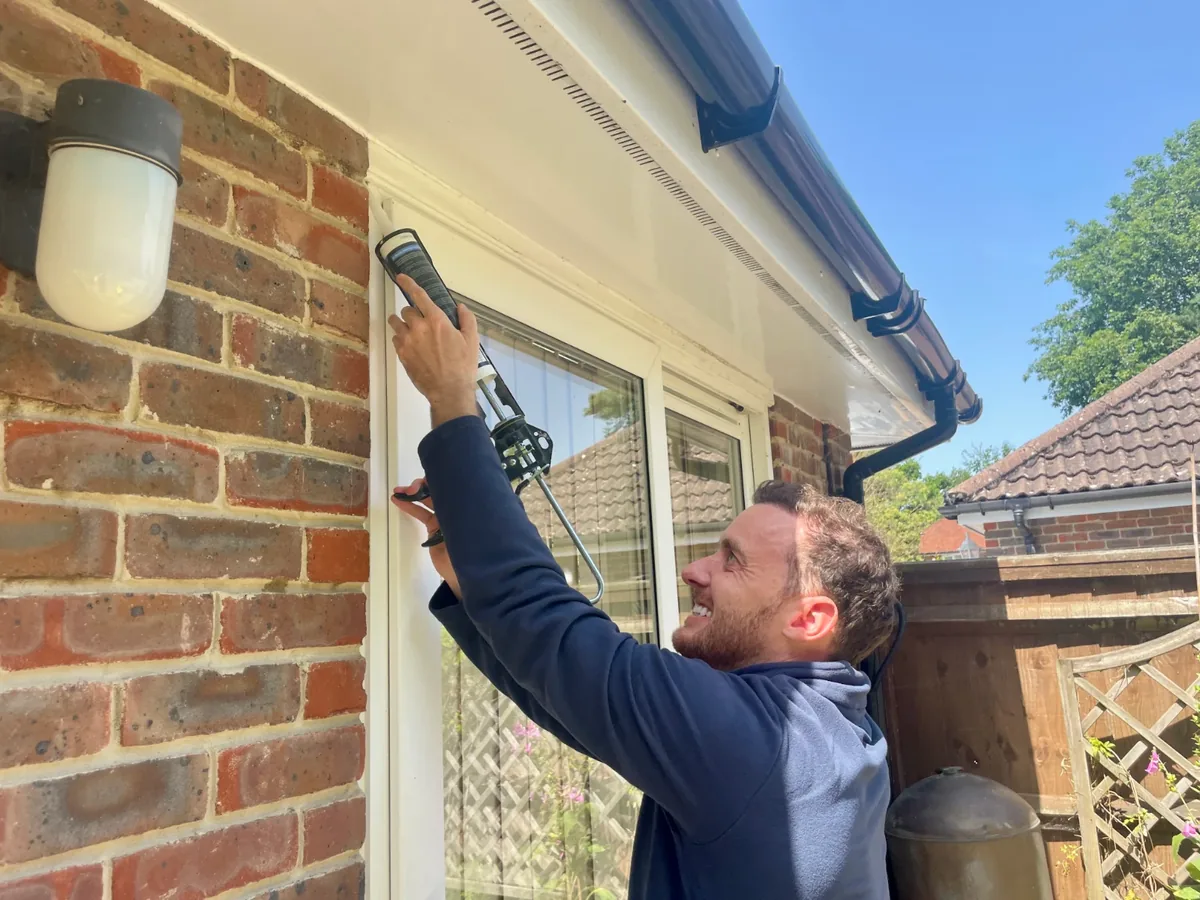
External mastic is a job where short cuts show quickly. New sealant over old, joints packed with mortar and beads with no backing all tend to fail early. We strip the joint back and start again. We work on render & cladding joints, concrete & block and joints between brick and frames, and people most often call us about plants rooting in failed movement joints and rain getting behind render or cladding at a joint.
Outside joints can only be sealed when they’re dry, so work in St Ives is booked around the forecast. Let us know about access to every wall, plus any garages or outbuildings.
You are covered for a year from the day we finish. If anything is not right with it, call 0345 464 0079 or email us.
- Place
- St Ives (BH24)
- Region
- Hampshire
- Guarantee
- 12 months on all our work
- Price
- Quoted before any work starts
- Telephone
- 0345 464 0079
- Last updated
- 26 October 2026
When something else is needed
Some problems need a builder, plumber or other trade rather than us:
- Cracked brickwork or render that needs a builder or plasterer
- Adding movement joints to masonry that has none
- Damp from another source, such as a leaking gutter or a bridged damp-proof course
If in doubt, ring 0345 464 0079 or drop us an email and we will say what we think.
What we seal
- Render & cladding joints
- Copings & trims
- Concrete & block
- Façade panels
- Joints between brick and frames
- Brickwork movement joints
Also near St Ives
What else we do in St Ives
Outside joints around St Ives
Compared with the north and west, the South East gets less rain, but outside sealant still needs a dry, clean surface, so outdoor work is planned around the forecast. Historic houses like Avon Tyrrell House (about 4.5 miles south-east) are a reminder that the area around St Ives has older buildings as well as new. In older buildings, older brick and stone need a sealant that suits them, at the right joint depth.
If you look after a building such as St Ives Primary & Nursery School, its movement joints, gutters and trims need looking after like any other building’s.
St Ives is in Hampshire. Jobs in St Ives get the same care as everywhere else we work: old sealant removed completely, careful preparation and a 12-month guarantee. St Ives is one of 683 towns and villages in Hampshire where we work. Southampton is on our list too, around 20 miles away.
Postcode districts we cover here for external mastic: BH24. Local streets include Compton Beeches, Post Office Lane and Azalea Close, all of which we cover. Neighbouring places we cover for external mastic include Ashley Heath (1 mile west), Avon Castle (1 mile south-east), St Leonards (1 mile south-west) and Matchams (1 mile south). We also work in nearby towns such as Totton (15 miles east), Lymington (13 miles south-east), New Milton (9 miles south-east), Barton on Sea (10 miles south-east), Ashley (10 miles south-east) and Milford on Sea (13 miles south-east).
Around St Ives
Around St Ives, our work takes us to homes and buildings near Ringwood School, Ringwood Waldorf School and Avon Heath Country Park. Well-known places in the area include St Leonard's Hospital (1.8 miles south-west). Not far away are Blashford Lakes and Linbrook Lake.
St Ives questions
Do you cover smaller places like St Ives?
Yes, we do. We work across London and the South East, and smaller places are part of that. The journey is planned ahead, so it helps to know about access.
Is St Ives in your area for external mastic?
Yes, St Ives is within the area we cover. Our work covers London and the South East. Just phone 0345 464 0079 or drop us an email with a few details of the job.
Do I have to be there?
For indoor joints, yes, someone needs to let us in. Once we’ve agreed the job, you do not need to watch us work.
Will the new joint stand out?
The sealant colour is picked to suit the wall, so the joint sits quietly in the wall. There’s a wide choice of exterior colours.
Can landlords and businesses book you?
Yes, regularly. Several properties can go on one quote, and between tenancies is a good time for the work.
How do you reach high-level joints?
That depends on how high the joints are and the ground below. Ground-floor joints are simple; for higher work, tell us about the building and we will confirm what’s needed.
How long does the job take?
Typically it takes a few hours for a handful of joints, longer for a whole elevation. Bigger jobs take longer, and we will tell you how long to expect.
How long should I leave it?
Many sealants skin over quickly but take longer to cure fully. We’ll tell you how long to leave the joint.
What happens on the day
Most of a good job is in the preparation, so that’s where we spend the time. Joints are cleaned back and dried before anything new goes in. In total, it normally takes a few hours to a few days, depending on the length of joint and the access. Somewhere like St Ives needs a little journey planning: let us know about lanes, gates and parking. Everything for the job comes with us, so a second trip is avoided where possible.
- We start by walking round the building and agreeing the joints and the access.
- We cut out the old mastic and rake out anything in the joint.
- The faces are brushed clean and primed where the product requires it.
- Backing rod sized to the joint goes in to set the depth.
- The exterior sealant is applied, tooled and checked along its length.
How to prepare
- For indoor joints, keep the area dry beforehand if you can
- Mention any tricky access
- Clear the area around the work
How to get a quote
For a quote, call 0345 464 0079 or drop us an email with the location and a short description of the problem. We will give you a clear price before any work starts.
Related advice
What affects the cost of external mastic
Every job gets its own quote. These are the things that affect it:
- How many rooms, windows or areas are involved
- How much old sealant there is and how hard it is to remove
- Access and height
- Mould in or behind the old joints
Combining jobs into one visit generally makes better use of the time than several visits. You will get one clear quote for the whole job.
What to tell us for a quote
You don’t need to know the technical terms. Just tell us:
- Pictures of the joints, sent by email
- The rough size of the job
- How we’d reach the joints
- Whether it’s a home or a business
There’s no standard price list, as no two jobs are quite the same. Instead, your job gets its own clear quote. To get started, ring 0345 464 0079 or email us.
Should I try it myself first?
The biggest DIY mistake is sealing over old sealant. Silicone doesn’t stick to old silicone, so it peels away and traps moisture behind it. Everything old must be removed first.
If you are set on DIY, put the effort into preparation: take out all the old sealant, make sure the joint is clean and dry, and give it the full cure time. If it fails, we can still redo it.
Surface by surface
Concrete and blockwork
Concrete faces can be dusty and porous, so cleaning and priming matter. We prime where the sealant needs it.
Joints between dissimilar materials
Where a frame or panel meets masonry, water often finds a way in. The old joint is removed and a sealant that bonds to both sides goes in.
What we are called out for in St Ives
Poor preparation causes many early failures: dusty or wet faces, no primer where one was needed, or old sealant left in. The sealant never bonds properly.
Common reasons people contact us include:
- Water getting into walls through failed joints
- Rigid filler in a joint that should flex
- Brick movement joints where the sealant has split
- Weathered mastic that no longer stretches
Homes close to All Saints include some older properties, and an extension built onto an older house moves differently, and the joint between them takes the strain.
Questions to ask before you book
- Whether they seal over old material or remove it
- Are they insured?
- How the joint is cleaned and prepared
- Who turns up on the day