
Hampshire · England
External Mastic in Barton on Sea
We cover Barton on Sea for sealing brickwork movement joints, render, cladding and façade joints. Old sealant removed completely, joints prepared properly and every job guaranteed for a year.
- Water getting into walls through failed joints
- Cracked joints where brick meets render or frames
- Brick movement joints where the sealant has split
How the job changes by surface
Copings and trims
Coping joints that leak let water straight down into the wall. Sealing them early saves the wall below.
Concrete and blockwork
Concrete faces can be dusty and porous, so preparation is key. We prime where the sealant needs it before the bead.
How we handle external mastic in Barton on Sea
Short cuts in external joints show up within a season or two. Overfilled joints, missing backing rod and sealant laid over old sealant all tend to fail early. We strip the joint back and start again. We’re often asked to deal with movement joints filled with mortar instead of sealant and leaking joints around cladding and façade panels, across render & cladding joints, joints between brick and frames and brickwork movement joints.
Outbuildings, garages and conservatories around homes in places like Barton on Sea add more joints to look after. Leaks normally start at a gutter end, a garage door frame or where an extension meets the house.
You’re covered for a year from the day we finish. If anything is not right with it, call 0345 464 0079 or drop us an email.
- Where
- Barton on Sea (BH25)
- Wider area
- Hampshire
- Guarantee
- 12 months on all our work
- Quote
- Quoted before any work starts
- Telephone
- 0345 464 0079
- Last updated
- 26 October 2026
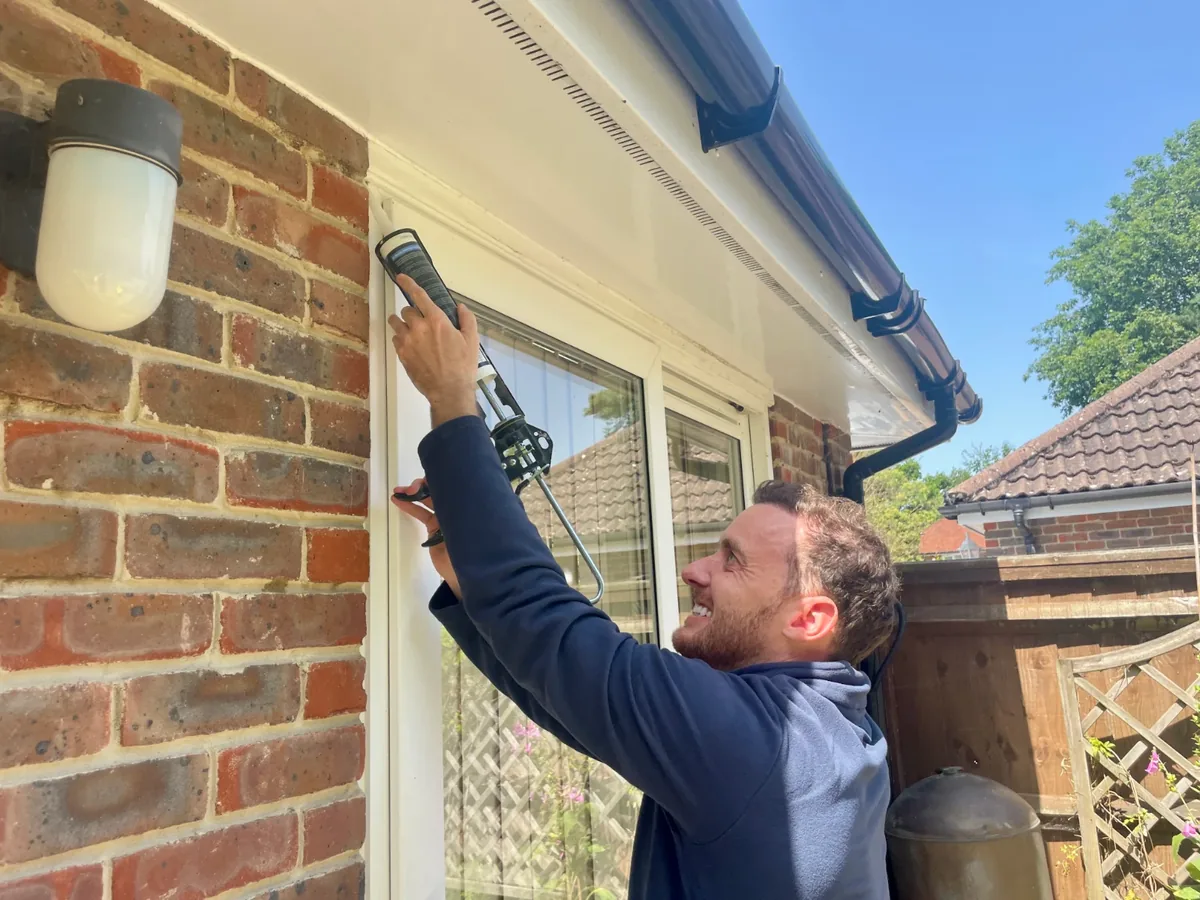
How to look after the new joints
Joint life depends on how it’s used and looked after. We suggest:
- Deal with leaking gutters that soak the joints below
- Have failed joints looked at early
- Keep movement joints as flexible joints, not mortar
- Ask before painting over external sealant
Avoid pressure-washing straight into the joints. A strong jet can damage the edges of the bead over time.
Once a joint can’t move, the wall finds another way, generally as cracking in the brickwork or render nearby. Resealing it early helps prevent that.
Should I try it myself first?
Too much sealant is as bad as too little. A heavy bead looks messy and copes badly with movement, and the joint depth matters as much as the finish.
The biggest DIY mistake is sealing over old sealant. New silicone will not bond to old, so it peels away and traps moisture behind it. All the old material has to come out first.
What we can’t put right
It helps to know what we can’t do too:
- Cutting new joints into brickwork, which is building work rather than sealant work
- Cracked brickwork or render that needs a builder or plasterer
- Loose or hollow render, which needs re-rendering
If in doubt, call 0345 464 0079 or drop us an email and we’ll say what we think.
What we seal
- Brickwork movement joints
- Concrete & block
- Joints between brick and frames
- Façade panels
- Render & cladding joints
- Copings & trims
For landlords and businesses
Letting agents often deal with us directly. Tell us the address, the job and how access works.
Whether it’s one flat or a portfolio, you get the same standard of work: old sealant fully removed, joints prepared properly and a 12-month guarantee.
How the visit works
Once we are on site, we check the joints match what you told us. If we find something unexpected, we talk it through with you first. After that, the work takes anything from a few hours to several days, depending on the building. A visit to Barton on Sea is planned like any other: the time, the access and where to park are agreed in advance. If the work is outside, the weather plays a part, as sealant needs a dry surface.
- We start by walking round the building and agreeing the joints and the access.
- Every bit of old sealant and any mortar or debris is cut out.
- Joint faces are cleaned back and primed if the sealant needs it.
- We fit closed-cell backing rod to control the depth.
- The exterior sealant is applied, tooled and checked along its length.
Preparing for the visit
- Let us know about earlier repairs to the joints
- Mention any tricky access
- Tell us if parking is tricky
Get a quote
Every job is quoted individually. Simply phone 0345 464 0079 or send us an email and describe the job.
Related advice
Barton on Sea buildings and the weather
Barton on Sea is close to the coast, where wind-driven rain is a fact of life and, nearer the shore, so is salt air. Both are hard on movement joints and outside wall joints, which can dry out and crack sooner where a building faces the weather. Historic houses like Highcliffe Castle (about 2.2 miles west) are a reminder that the area around Barton on Sea has older buildings as well as new. In older buildings, older brick and stone need a sealant that suits them, at the right joint depth.
Schools such as New Milton Infant School are buildings too, and its movement joints, gutters and trims need looking after like any other building’s. If you let a flat or house near New Milton station, failed wall and movement joints let damp in, so they’re worth checking between tenancies.
Barton on Sea is in Hampshire. Barton on Sea gets the same service as everywhere we cover: the old material taken out, joints prepared properly and a 12-month guarantee. Our Hampshire coverage runs to 683 places, Barton on Sea among them. Our Southampton page covers work nearby, about 17 miles away.
Postcode districts we cover here for external mastic: BH25. External mastic is available to properties on Barton Drive, Heathy Close and Barton Way and the roads around them. Nearby, we also carry out external mastic in New Milton (1 mile north), Ashley (2 miles north-east) and Downton (2 miles east). Larger places within reach include Totton (14 miles north-east), Lymington (5 miles east), Hythe (14 miles north-east), Ringwood (9 miles north-west), Dibden Purlieu (13 miles north-east) and Marchwood (14 miles north-east).
What’s near Barton on Sea
Locally, jobs take us to homes and businesses close to The Arnewood School, The Arnewood School and The George Centre pub. The closest station to Barton on Sea is New Milton station, about 1 mile north of the centre. Well-known places in the area include Highcliffe Castle (2.2 miles west) and Lymington New Forest Hospital (5.5 miles east). The countryside around Barton on Sea includes Milford on Sea LNR.
Barton on Sea: your questions answered
Will you come out to Barton on Sea?
Yes. Barton on Sea is within the area we cover, which takes in towns, villages and rural addresses. Our work covers London and the South East. Let us know about access, parking and anything unusual about getting there when you book.
I let a flat near New Milton station. Can you help?
Yes, we work for landlords and letting agents. Just phone 0345 464 0079 or drop us an email and tell us about the property, and we’ll send you a clear quote.
Will the new joint stand out?
Exterior sealants are made in a range of colours, from greys and browns to whites and stone shades. We pick the one that suits your wall best.
Where are you based?
Our base is in Crawley, West Sussex, and we work across South East England, London and Scotland.
Is the work guaranteed?
Yes, always. Each job is guaranteed for twelve months, wherever you are.
Which products do you use?
Each joint gets the product that suits it. Movement, water and weather all affect the choice.
How do you reach high-level joints?
It depends on the height and the site. Ground-floor joints are simple; for higher work, tell us about the building and we’ll confirm what’s needed.
Can you work on commercial sites?
Yes. Commercial and hotel work is a large part of what we do. We can talk about working times when we quote.
Places near Barton on Sea
Other services in Barton on Sea
When to call us in Barton on Sea
The wrong product in a moving joint is a classic cause. A stiff, general-purpose sealant can’t cope with a joint that moves a lot, and it tears off the sides.
Look out for any of the following:
- Rain getting behind render or cladding at a joint
- Cracked joints where brick meets render or frames
- Leaking joints around cladding and façade panels
- Joints pointed up with cement by mistake
For an older house near a landmark such as Parish Church of St Magdalene, the joints between older walls, newer extensions and the roofline need a sealant that can move.
Questions to ask before booking
- Whether all the old sealant comes out first
- What product goes in the joint
- Are they insured?
- What guarantee comes with the work