
Greater London · England
External Mastic in London Docklands
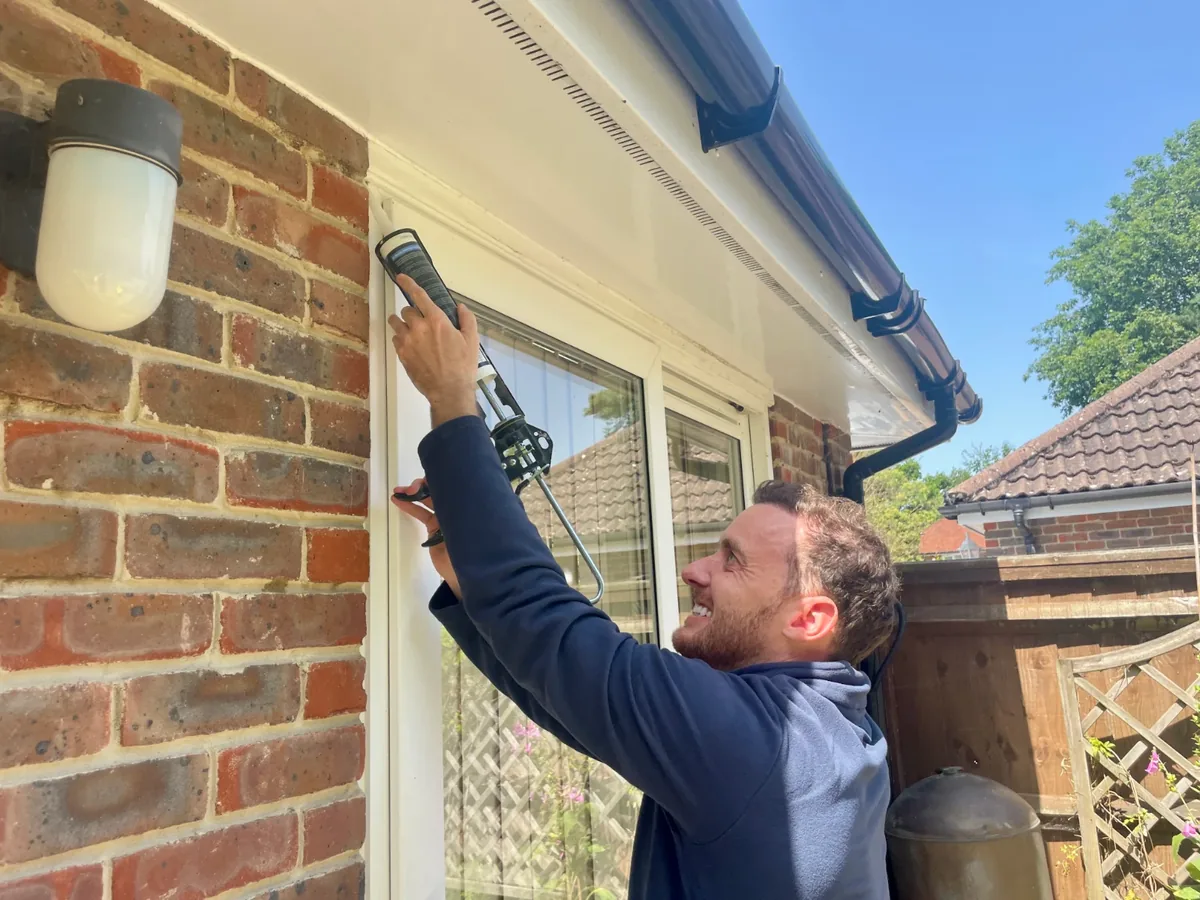
We cover London Docklands for sealing brickwork movement joints, render, cladding and façade joints. Old material cut out, joints cleaned and sealed neatly.
- Weeds or debris growing in open joints
- Weathered mastic that no longer stretches
- Failed seals between different materials
Leave it or put it right?
It often makes sense to reseal all the failing joints on an elevation together. Joints of the same age tend to fail together and it means sorting access once. In London conversions, one flat’s bathroom is often above another flat’s ceiling, so a small leak from tired sealant can mean a neighbour’s ceiling and a lot of disruption. Putting it right early is much less trouble.
Rather than a set price list, we look at what your job involves: how many joints, what’s in them now and how we reach them. You will know the price before we begin.
Why book with us
- Over 20 years’ experience
- We never seal over old sealant
- Approved under the ARBOMaster scheme
- A 12-month guarantee on all work
Read how sealant jobs are priced and our reviews.
External mastic for homes and businesses in London Docklands
Low-level joints can normally be done from the ground. For joints higher up, give us some details of the building and we will confirm what’s needed to reach them safely. If you are dealing with old sealant gone brittle and cracked and joints where the bead has come unstuck, we can help, on copings & trims, concrete & block and joints between brick and frames alike.
Working on the outside of a London home means planning access: shared paths, upper floors and parking. In London Docklands, joints up high may need ladders or other access, which is worth talking through when you book.
All our work comes with our one-year guarantee.
- Where
- London Docklands (E14, SE16, E22)
- Wider area
- Greater London
- Guarantee
- A year, on every job
- Price
- A clear price before work begins
- Phone
- 0345 464 0079
- Last updated
- 26 October 2026
FAQs for London Docklands
Is parking an issue for external mastic in London Docklands?
London parking needs a little planning, so let us know about permits, bays or a driveway when you book. That way the visit can be planned around it.
Can you help a landlord with a rental near Canary Wharf station?
Yes, landlords and agents are among the people we work for, and several properties can be quoted together. Just call 0345 464 0079 or email us with the address and what needs doing, and we’ll give you a clear price.
What information do you need?
Tell us what needs doing and where, plus pictures if you have them. We’ll ask anything else we need to know.
Do you use backing rod?
Backing rod controls the sealant depth and keeps it off the back of the joint. Then the sealant bonds to two faces and can move.
Should I try DIY first?
Some simple jobs can be done by a careful DIYer. The usual mistakes are sealing over old sealant, sealing a damp joint and using too much.
Do I need to be at home?
It depends on the job. For work indoors, someone needs to let us in.
Is the work guaranteed?
Yes. Each job is guaranteed for twelve months, wherever you are.
Can you match the colour of my brickwork?
We choose a sealant colour to suit the brick, stone or render. Exterior sealants come in a good range of colours.
When something else is needed
We will always be straight with you, so here’s what new sealant won’t do:
- Structural movement, which needs a surveyor or engineer
- Damp from another source, such as a leaking gutter or a bridged damp-proof course
- Loose or hollow render, which needs re-rendering
If you’re not sure, just call 0345 464 0079 or drop us an email and we’ll give you a straight answer.
Where we work in London Docklands
- Concrete & block
- Joints between brick and frames
- Façade panels
- Copings & trims
- Render & cladding joints
- Brickwork movement joints
London Docklands buildings and the weather
With historic houses such as Queen's House (about 1.8 miles south) nearby, there’s older building stock in the area around London Docklands as well as newer homes. In older buildings, older walls and rooflines need a sealant that moves with them and suits the material. London and the South East are among the drier parts of the UK, but outside sealant still needs a dry, clean surface, so outdoor work is planned around the forecast.
London Docklands is in London, so parking needs planning: let us know about parking bays, permits or a driveway. Schools such as Tower Hamlets College are buildings too, and its movement joints, gutters and trims need looking after like any other building’s. Homes close to St Peter's Church include some older properties, and an extension built onto an older house moves differently, and the joint between them takes the strain.
London Docklands is about 2 miles north-west of Greenwich, in Greater London. Anywhere in E14, our applicators can take on external mastic. Our Greater London coverage runs to 764 places, and London Docklands is one of them.
Our applicators cover all of E14, SE16 and E22 for external mastic and the streets around it. Whether your property is on Castor Lane, Cassilis Road and Dockyard Lane or anywhere close by, we can help. Main roads around London Docklands include the A1206 and A1261. If you’re just outside London Docklands, we cover Canary Wharf (1 mile west), Poplar (1 mile north), Heron Quays (1 mile south-west), Coldharbour (1 mile east) and Blackwall (1 mile east). Within a short drive, we also cover London (3 miles west), City of Westminster (6 miles west), Marylebone (6 miles west), Kensington (8 miles west), St Pancras (5 miles west) and Shoreditch (3 miles north-west).
Landmarks near London Docklands
Typical jobs here are in homes near Sir John McDougall Gardens, Our Lady and St Joseph Catholic Primary School and The Ledger Building pub, among other places. London Docklands has its own railway station: Canary Wharf station. Other landmarks nearby include Greenwich Castle (2 miles south) and Surrey Quays Shopping Centre (1.4 miles south-west). The countryside around London Docklands includes St. James's Park Lake and Lavender Pond.
Looking after it afterwards
Once the sealant has cured, a few habits help it last:
- Get split or bare joints resealed while the damage is small
- Leave the joints unpainted unless we have said otherwise
- Do not let climbing plants root in the sealant
- Tell anyone working on the walls about the movement joints
Don’t let soil, plants or ivy build up against the new joints. Anything that holds water against the joint wears it out sooner.
Small splits are the time to act. At that stage it’s a simple cut out and reseal with no damage behind it to deal with.
Can I do it myself?
Sealing over old silicone is the commonest DIY error. Silicone does not stick to old silicone, so it peels away and traps moisture behind it. Everything old must be removed first.
If you do try it yourself, take your time over the preparation: take out all the old sealant, make sure the joint is clean and dry, and give it the full cure time. If it does not work out, we can still put it right.
How the job changes by surface
Cladding and façade panels
Panels heat up and cool down quickly, so the joints work hard every day. We choose the product to suit.
Render joints
Render is weaker at the surface than brick, so a sealant that stretches easily protects the edges. Priming is done where the sealant calls for it.
How we quote for external mastic
You will get a clear quote before we start. It takes into account:
- Any working-time requirements on site
- Whether old sealant or filler has to be cut out
- The number and length of the joints
- Access and height
Leaving a failed joint usually makes the job bigger, not smaller, as water and mould keep getting in. If you are unsure, phone 0345 464 0079 or email us for an honest opinion and a quote.
What we need to know
To make quoting easier, let us know:
- A few photos by email, if you can
- Any previous sealing or DIY work
- Access, such as stairs, a lift or height
- What’s wrong with the joints now
Want a quote for external mastic? Please phone 0345 464 0079 or send us an email with a few details. We’ll explain what we’d do and give you a clear quote before any work starts.
The process
The work is kept neat and contained to the joints we are treating, so you can carry on as normal. The job normally takes anything from a few hours to several days, depending on the building. In London Docklands, as in most of London, parking needs a little planning. A visitor permit or a nearby bay makes the visit run more smoothly.
- Each joint is checked and the colour of the new sealant agreed.
- We take out the old sealant until the faces are sound.
- Closed-cell backing rod is pushed in so the sealant bonds to two sides only.
- We prime the faces where required.
- A low-modulus exterior sealant is gunned in and tooled to a neat finish.
Preparing for the visit
- Let us know about earlier repairs to the joints
- Clear items away from the joints we are working on
- Tell us about any water getting in
Ask for a quote
We quote each job on its own, so start by telling us what you need. Simply phone 0345 464 0079 or email us and describe the job.