
Greater London · England
External & façade joints in Canary Wharf, Greater London
Sealing brickwork movement joints, render, cladding and façade joints in Canary Wharf, with a 12-month guarantee on every job. Ask us for a quote.
- Weathered mastic that no longer stretches
- Weeds or debris growing in open joints
- Brick movement joints where the sealant has split
External mastic in Canary Wharf, done properly
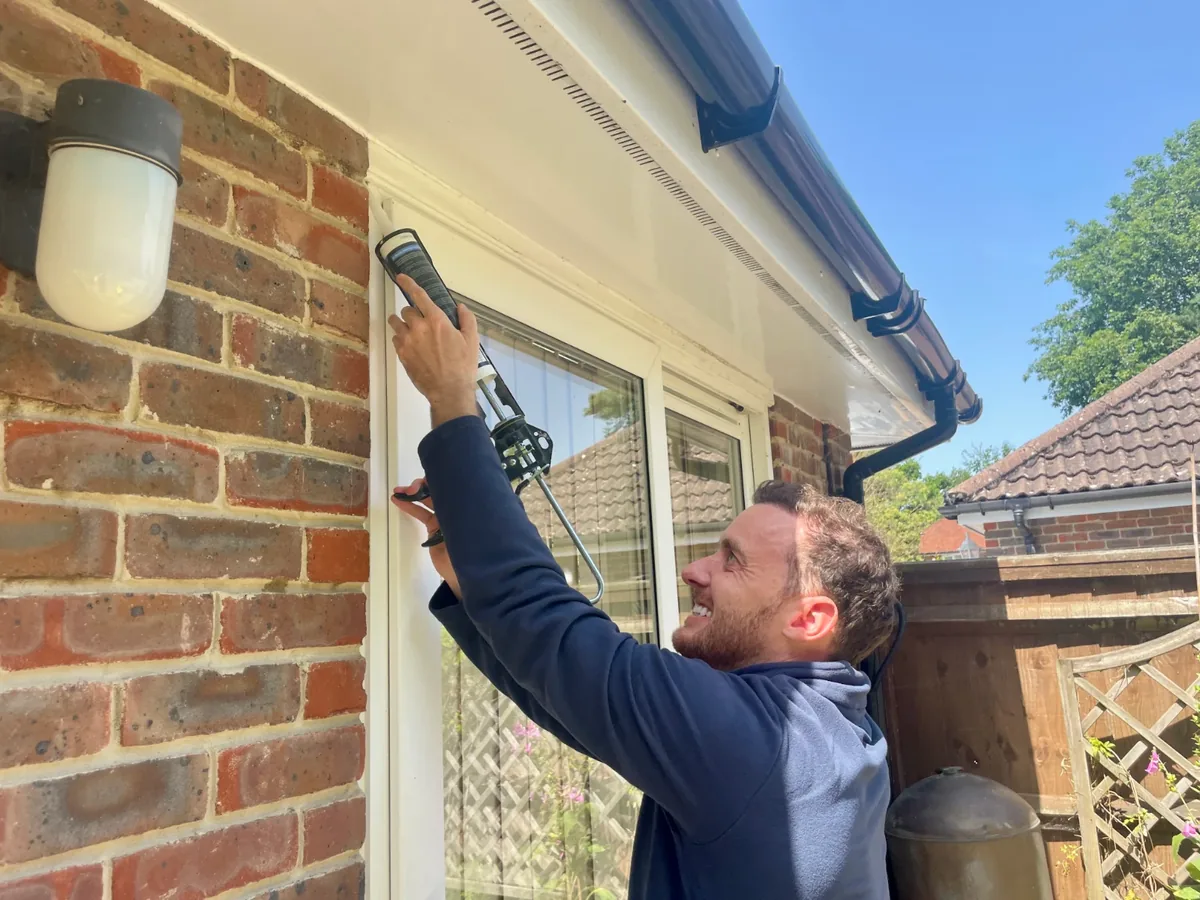
Getting the depth right is half the job. Closed-cell backing rod sets the depth and stops the sealant sticking to the back, so it bonds to the two sides only and can stretch. We work on brickwork movement joints, joints between brick and frames and render & cladding joints, and common reasons people get in touch are sealant pulling away from one side of the joint and gaps where render, brick and frames meet.
Modern London flats rely on sealed movement joints and cladding joints. Older terraces have their own weak points: gutter joints, roofline trims and the joint where an extension meets the original wall.
All our work comes with our one-year guarantee, wherever you are in Greater London.
- Place
- Canary Wharf (E14, SE16, E22)
- Wider area
- Greater London
- Cover
- 12 months on all our work
- Quotes
- A clear quote up front
- Call
- 0345 464 0079
- Last updated
- 26 October 2026
What we cannot put right
New sealant can’t fix everything, and we’ll tell you before any work starts. It will not solve:
- Structural movement, which needs a surveyor or engineer
- Damp that isn’t coming from the joint
- Render that is blown, hollow or coming away
If in doubt, phone 0345 464 0079 or send us an email and we will say what we think before you book.
What we seal
- Concrete & block
- Render & cladding joints
- Joints between brick and frames
- Façade panels
- Copings & trims
- Brickwork movement joints
How we quote for external mastic
Some jobs are bigger than they look, and some smaller. The main factors:
- Any mould that needs treating
- Which sealant suits the joint
- How much old sealant there is and how hard it is to remove
- The number and length of the joints
The cost depends on the size of the job, how hard the old material is to remove and how easy the joints are to reach. You’ll have a clear quote before any work starts, so you know where you stand.
Asking for a quote
To help us quote quickly, let us know:
- How many joints, rooms or windows are involved
- Where the property is
- Any previous sealing or DIY work
- Any access issues, like height or stairs
For external mastic in Canary Wharf, phone 0345 464 0079 or drop us an email. A short description of the job and where it is helps us quote, and we’ll agree the price before any work begins.
Questions from Canary Wharf
I let a flat near Canary Wharf station. Can you help?
Yes, rental work is part of what we do. Just call 0345 464 0079 or email us and tell us about the property, and we’ll give you a clear price.
Is parking an issue for external mastic in Canary Wharf?
In much of London, parking needs planning: a visitor permit or a bay close to the door helps a lot.
Can you do several jobs on one visit?
Yes, and it often makes sense. Combining jobs makes good use of the visit.
Do you work at height?
It depends on the building. Where joints can be reached safely, we’ll do them. Give us some details and we’ll confirm the access.
Why is there a gap in my brick wall?
A movement joint is a planned break in the wall that absorbs expansion and shrinkage. It’s sealed with a flexible sealant, not mortar.
Are you insured?
Yes. Full insurance covers our work, and we can confirm the details when we quote.
Do I have to be there?
That depends on where the joints are. For work indoors, someone needs to let us in, while outside work can sometimes be arranged differently.
What do you need from me for a quote?
Where the job is, what the problem is and roughly how big it is. Photos by email help too.
What external mastic looks like in Canary Wharf
Historic houses like Queen's House (about 1.8 miles south) are a reminder that the area around Canary Wharf has older buildings as well as new. Where a home is older, older walls and rooflines need a sealant that moves with them and suits the material. London and the South East are among the drier parts of the UK, but outside sealant still needs a dry, clean surface, so outdoor work is planned around the forecast.
Schools such as Our Lady and St Joseph Catholic Primary School are buildings too, and movement joints, cladding joints and gutters on larger buildings need the same care as a house’s. Canary Wharf is in London, so parking needs planning: tell us about permits, visitor bays or off-street space when you book. Letting a property close to Canary Wharf station? Then outside joints that have cracked can let damp into a rental, so check them between lets.
Canary Wharf is about 2 miles north-west of Greenwich, in Greater London. From the centre of Canary Wharf to the outskirts, we cover external mastic for every kind of property. Canary Wharf is one of 764 towns and villages in Greater London we cover.
Work in E14, SE16 and E22 works the same way as everywhere else we cover. You will find streets such as Castor Lane, Cassilis Road and Dockyard Lane. Canary Wharf is on the A1261, so it’s easy for us to get to. Neighbouring places we cover for external mastic include London Docklands (1 mile east), Poplar (1 mile north-east), Heron Quays (1 mile south-west), Coldharbour (1 mile east) and Blackwall (1 mile east). Larger places within reach include London (3 miles west), City of Westminster (6 miles west), Marylebone (6 miles west), Kensington (8 miles west), St Pancras (4 miles west) and Shoreditch (3 miles north-west).
What’s near Canary Wharf
Typical jobs here are in homes near Tower Hamlets College, Sir John McDougall Gardens and The Ledger Building pub, among other places. There’s a railway station in Canary Wharf itself: Canary Wharf station. A little further out are The Pumphouse Educational Museum (0.8 miles west) and Surrey Quays Shopping Centre (1.4 miles south-west). Open spaces near Canary Wharf include St. James's Park Lake and Tower Hill.
DIY sealant or a professional job?
Sealing over old silicone is the commonest DIY error. New silicone will not bond to old, so it peels away and traps moisture behind it. Everything old must be removed first.
Overfilling a joint is a classic DIY mistake. A heavy bead looks messy and copes badly with movement, and the joint depth matters as much as the finish.
What the job involves on each surface
Cladding and façade panels
Where a cladding system has its own specified sealant, we follow it or an approved alternative. Tell us what the building has when you get in touch.
Concrete and blockwork
Concrete faces can be dusty and porous, so cleaning and priming matter. We prime where the sealant needs it before the bead.
Aftercare tips
A little care helps the new joints last. Our advice:
- Keep movement joints as flexible joints, not mortar
- Leave the joints unpainted unless we have said otherwise
- Fix overflowing gutters above sealed joints
- Keep soil, plants and ivy away from the joints
Avoid pressure-washing straight into the joints. A strong jet can damage the edges of the bead over time.
An open movement joint lets rain into the wall every time it pours. That can lead to damp patches, staining and frost damage, all bigger jobs than a reseal.
Towns and villages near Canary Wharf
Other services in Canary Wharf
How the visit works
We keep the work tidy and contained to the joints we are treating, so you can carry on as normal. The job normally takes a few hours for a handful of joints, longer for a whole elevation, and we explain the cure time before we leave. In a London area like Canary Wharf, the main things to plan are parking and access: tell us about permits, visitor bays or off-street space, which floor we’re working on and whether there’s a lift.
- We start by walking round the building and agreeing the joints and the access.
- We cut out the old mastic and rake out anything in the joint.
- The faces are brushed clean and primed where the product requires it.
- Backing rod sized to the joint goes in to set the depth.
- We apply the sealant, tool it and check the whole run.
Preparing for the visit
- Mention any sign-in or site rules at work premises
- Keep children and pets away from the work area
- Mention any parking rules near the property
How to get a quote
The more we know about the job, the more useful the quote. Let us know the location, the problem and roughly how many joints, and email pictures if that is easy.
Related advice
Landlord and commercial work in Canary Wharf
We regularly work with letting and managing agents. Send the address, what’s needed and the access arrangements.
For anyone letting property in or around Canary Wharf, several properties can go on one quote. Just tell us the addresses and what each one needs, and pictures by email help.