
Kent · England
Watt's Cross Bathroom Resealing
Our applicators work in Watt's Cross on bath, shower, basin, wet room, worktop and sink resealing. Old material cut out, joints cleaned and sealed neatly and every job guaranteed for a year.
- Leaking joints on a shower screen
- A reseal done over the top of the old bead
- Water getting behind the kitchen upstand
About our bathroom resealing in Watt's Cross
Sealant is the soft line between a bath, shower or worktop and the wall. Once it cracks or goes mouldy, water starts to find its way through and into the wall or floor. Our team cut the old bead out completely and lay a new one in anti-fungal sanitary silicone. If you are dealing with leaks into the floor or ceiling below and gaps where the bath or tray has moved, we can put it right, on shower trays & enclosures, basins & vanity units and kitchen worktops & upstands alike.
Homes around Watt's Cross are mostly houses and cottages rather than flats, some with bathrooms tucked into older rooms or extensions. The work is the same as anywhere: old material cut out, joints cleaned and a fresh finish laid.
Every job comes with our 12-month guarantee.
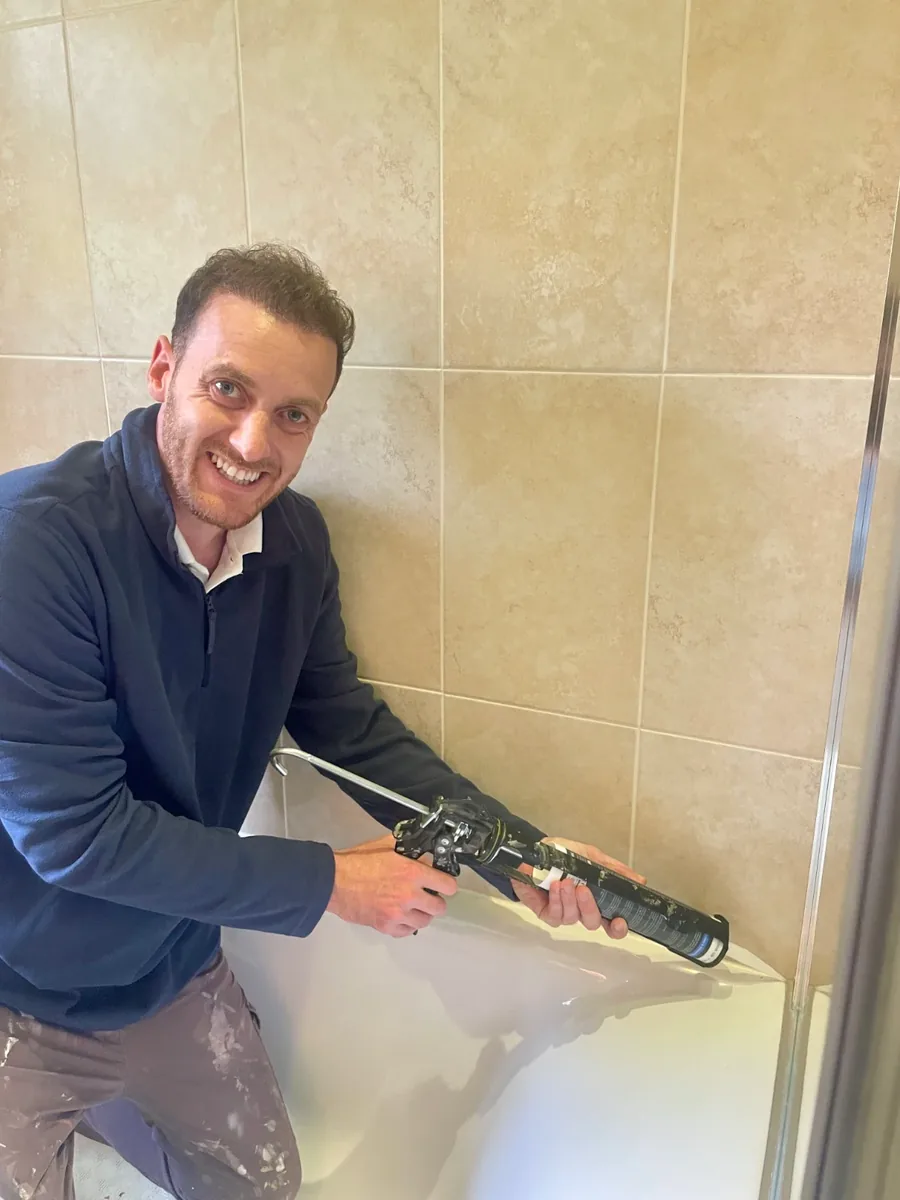
- Location
- Watt's Cross (TN11)
- Region
- Kent
- Guarantee
- 12 months on all our work
- Quotes
- Quoted before any work starts
- Telephone
- 0345 464 0079
- Last updated
- 26 October 2026
Bathrooms and kitchens in Watt's Cross
Most of the South East has hard water, so limescale builds up on sealant, grout and fittings.
Rented homes near Hildenborough station change hands often, and a reseal between tenants is a quick way to make the bathroom and kitchen look cared for. For an older house near a landmark such as Parish Church of St John, bathrooms in older houses have often been refitted more than once, with sealant laid over sealant.
Watt's Cross is about 3 miles north-west of Tonbridge, in Kent. Anywhere in TN11, our applicators can take on bathroom resealing. Our Kent coverage runs to 922 places, and Watt's Cross is one of them. For nearby work, see our Crawley page.
Postcode districts we cover here for bathroom resealing: TN11. Nearby, we also carry out bathroom resealing in Hildenborough (1 mile south-east), Stocks Green (1 mile south), Coldharbour (1 mile east), Hilden Park (2 miles south-east) and Underriver (2 miles north). Larger places within reach include Maidstone (13 miles east), Dartford (15 miles north), Sevenoaks (4 miles north-west), Royal Tunbridge Wells (6 miles south), Tonbridge (3 miles south-east) and Northfleet (15 miles north).
Around Watt's Cross
The nearest railway station is Hildenborough station, about 0.6 miles south. A little further out are Tonbridge Castle (2.7 miles south-east) and Tonbridge Cottage Hospital (3.7 miles south-east). Green spaces nearby include Dryhill Nature Reserve and Barden Lake.
Nearby places to Watt's Cross
More services for Watt's Cross
Your questions about bathroom resealing in Watt's Cross
Do you work for landlords with property near Hildenborough station?
Yes. We work for landlords and agents as well as householders, and several properties can go on one quote. You can ring 0345 464 0079 or send us an email with the details for a clear quote.
Can you do bathroom resealing in Watt's Cross?
Yes. We work across London and the South East, and Watt's Cross is part of that. Just ring 0345 464 0079 or drop us an email with a few details of the job, and we’ll give you a clear quote.
How much does bathroom resealing cost in Watt's Cross?
The cost depends on the size of the job, access and how much old sealant has to come out. Ask us for a quote.
Is it messy?
Not at all. We work neatly, protect the area around the joints and tidy up afterwards.
How long does a bath or shower reseal take?
Allow a morning or an afternoon for most single baths and showers. You will know how long to expect before we start.
What sealant do you use?
Quality sealants from brands including Arbo and Everbuild, chosen to suit the joint. We will tell you what we’re using and why.
Are you an approved applicator?
Yes. We’re an ARBOMaster approved applicator.
Where is Mr Mastic based?
We’re based in Crawley, West Sussex, and we cover South East England, London and all of Scotland.
What we’re called out for in Watt's Cross
Baths and trays move. Acrylic in particular gives slightly under the weight of water and a person, while a poorly supported tray can shift underfoot. Over time the joint tears or pulls away from the tile.
These are the problems we’re asked about most:
- Water getting behind the kitchen upstand
- Black mould in the silicone that will not clean off
- Water getting behind the bath panel
- A joint torn by a bath that flexes
For site and facilities teams at buildings such as Hildenborough Church of England Primary School, we reseal washrooms and kitchens in schools and businesses as well as homes.
What to look for in a quote
- Is VAT in the price?
- When the joint can take water or movement
- Whether the sealant suits the joint
- What happens if they find a problem under the old sealant
Should I try it myself first?
Not every job suits DIY: work at height, external movement joints, fire-rated sealant and large areas need the right product, the right access and the right method.
If you are set on DIY, put the effort into preparation: take out all the old sealant, make sure the joint is clean and dry, and give it the full cure time. If it fails, we can still redo it.
How to look after the new joints
Aftercare is simple, and it makes a real difference:
- Squeegee the walls and tray after use
- Keep the fan on for a while after bathing
- Keep an eye on the corners, where splits start
- Keep bottles off the sealant line
Mould needs damp, so keep the room aired. Run the extractor fan during and after a shower, so the bead dries out between uses.
A few black dots in the silicone soon become a black line. Once it’s deep in the silicone, cleaning normally won’t remove it. Catching it early keeps it a simple reseal.
The process
On the day, we look over the joints with you first, so there are no surprises. We protect the surfaces around the joints before we start. Most jobs take around two hours for one bath or shower, longer for a whole bathroom. In a small place like Watt's Cross, access is usually the main thing to plan. For outside work, also let us know about exposed walls and any outbuildings involved.
- We look at every joint first and check for movement or leaks.
- Every trace of the old bead is removed, including the thin smear on the tiles.
- The joint is cleaned, degreased and treated for mould.
- With the joint dry, and any bath loaded with water, a single bead of anti-fungal silicone is applied.
- The bead is tooled smooth and you’re told the cure time, normally around 24 hours.
Before we arrive
- Clear items away from the joints we’re working on
- Mention if the joints have been sealed before
- For business premises, tell us about site rules or sign-in
How to get a quote
It all starts with a short chat. Describe the problem, the location and the size of the job. When it suits you, ring 0345 464 0079 or send us an email.
Advice
Leave it or put it right?
Mould removers can fade the surface of a stained bead, but mould that has grown into the sealant tends to return. Cutting it out and resealing with anti-fungal silicone is the fix that lasts. Older cottages and farmhouses around Watt's Cross can have timber floors and frames, and water through a failed joint can rot timber if it’s left.
There are no prices on our website, because each job is priced on what it involves. For a quick quote, please phone 0345 464 0079 or drop us an email and we’ll talk you through it.
Why us?
- Old sealant always removed completely
- White, clear, grey or coloured to suit, where the product allows
- An ARBOMaster approved applicator
- Full insurance on every job
What sealant work cannot fix
In fairness, some problems need a different trade:
- Cracked or missing grout between tiles (that’s regrouting)
- A cracked shower tray or bath (that needs repair or replacement)
- Water coming from the plumbing rather than the joint
If in doubt, phone 0345 464 0079 or drop us an email and we will say what we think.
Joints and surfaces we work on
- Shower trays & enclosures
- Sinks & splashbacks
- Kitchen worktops & upstands
- Basins & vanity units
- Wet rooms
- Baths
How the job changes by surface
Baths
Most bath leaks begin along the long edge, particularly where there’s a shower over the bath. We finish it with a single, even bead of anti-fungal silicone, tooled so water cannot sit on it.
Kitchen worktops & upstands
The joint between worktop and wall takes splashes, crumbs and cleaning sprays. The new bead is colour-matched where it shows.