
North Lanarkshire · Scotland
Biggar Road Bathroom Resealing
Bath, shower, basin, wet room, worktop and sink resealing for Biggar Road, backed by a one-year guarantee. Ask us for a quote.
- A joint torn by a bath that flexes
- Smears of silicone across the tiles
- Black mould in the silicone that won’t clean off
Bathrooms and kitchens in Biggar Road
In Scotland, private landlords have to meet the Repairing Standard, which includes keeping fixtures and fittings in reasonable repair. Failed sealant around a bath or shower is worth sorting between tenancies. Scottish Water supplies are generally soft, so limescale is less of a problem than in hard-water areas. Mould is another matter: a bathroom that stays damp still turns sealant and grout black.
If you let a flat or house near Cleland station, a reseal between tenants is a quick way to make the bathroom and kitchen look cared for.
Biggar Road is about 2 miles north of Wishaw, in North Lanarkshire. We carry out bathroom resealing for homes and businesses in Biggar Road. Biggar Road is one of 89 towns and villages in North Lanarkshire we cover for bathroom resealing. For nearby work, see our Glasgow page.
Our applicators cover all of ML1 for bathroom resealing and the streets around it. We cover properties on Omoa Road, Biggar Road and Foundry Road and the roads around them. We also cover Cleland (1 mile south), Newarthill (1 mile north-west), Hareshaw (1 mile north-east), Carfin (2 miles west) and Holytown (2 miles west). We also work in nearby towns such as Motherwell (3 miles west), Cumbernauld (10 miles north), Coatbridge (5 miles north-west), Airdrie (5 miles north-west), Bellshill (4 miles west) and Kilsyth (13 miles north-west).
Around Biggar Road
There’s a railway station in Biggar Road itself: Cleland station. Well-known places in the area include Cleland Hospital (0.5 miles south-east) and Murdostoun Castle (1.9 miles south-east). Green spaces nearby include Baron's Haugh RSPB Reserve and Allanton House lake.
About our bathroom resealing in Biggar Road
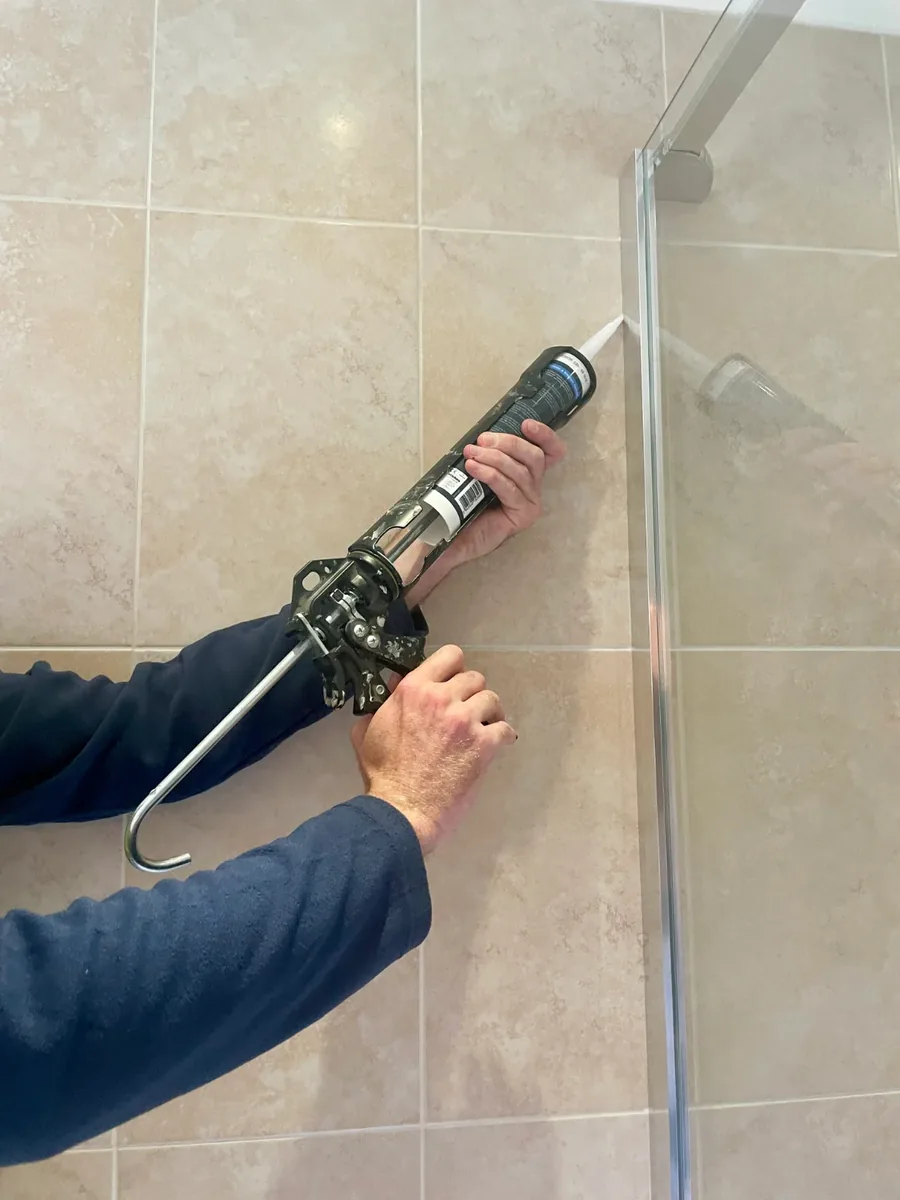
The secret of a lasting bead is the preparation. The old sealant is removed to the last smear, then the joint is cleaned, degreased and treated for mould. New silicone goes on only when the joint is fully dry. If you are dealing with water getting behind the kitchen upstand and sealant that has split, shrunk or peeled away, we can put it right.
Across smaller places in Scotland, homes range from stone and harled cottages to newer houses. Where a building moves, cracked grout and split sealant are normally the first signs.
There’s a 12-month guarantee on every job.
- Location
- Biggar Road (ML1)
- Wider area
- North Lanarkshire
- Cover
- A year, on every job
- Quote
- A clear price before any work starts
- info@mrmastic.co.uk
- Updated
- 26 October 2026
Places near Biggar Road
More services for Biggar Road
How we quote for bathroom resealing
For a quick quote, just ask. What matters most is:
- Mould in or behind the old joints
- How much old sealant there is and how hard it is to remove
- Access and height
- How many areas need sealing
We don’t show prices on the website, because each job is priced on what it involves. For a quick quote, please send an email to info@mrmastic.co.uk and we will talk you through it.
Helping us quote
There’s no need for technical detail. It helps if you can tell us:
- Whether it has been sealed before
- What the problem is, such as mould, gaps, leaks or cracking
- Whether it’s a home or a business
- The rough size of the job
Quotes start with a quick conversation. Tell us what’s wrong, where it is and how much there is. Whenever you’re ready, email us at info@mrmastic.co.uk.
Common problems we fix in Biggar Road
Plenty of failed sealant has been laid over the top of older sealant. New silicone will not bond to old silicone, so it peels, leaks and hides mould behind it.
Most people get in touch after spotting one of these:
- Sealant that has split, shrunk or peeled away
- Damp behind the bath or under the tray
- A messy, uneven bead from a previous reseal
- Two layers of silicone, both failing
If you look after a building such as Brannock High School, its toilets, changing areas and kitchens need their sealant renewed like any other building’s.
Before you book anyone
- How hidden problems are handled
- Is VAT in the price?
- Are they insured?
- Which colour the sealant will be
When something else is needed
A few problems are outside what sealant work can do:
- A tray that rocks until it’s re-bedded
- Loose or hollow tiles, or failed tanking behind them
- A cracked shower tray or bath (that needs repair or replacement)
If you are not sure, just email us at info@mrmastic.co.uk and we’ll give you a straight answer before you book.
Surfaces we seal
- Baths
- Wet rooms
- Basins & vanity units
- Kitchen worktops & upstands
- Shower trays & enclosures
- Sinks & splashbacks
Why deal with it now?
The difference in a professional reseal is mostly what you don’t see: cutting out every trace of the old bead, cleaning, treating mould and letting the joint dry. Without that preparation, the new bead won’t last. When the nearest tradesperson is a drive away, it’s tempting to leave a small leak, but water behind a failed seal does the most damage when nobody’s watching.
What you pay reflects the work, not a rough estimate. That’s why we ask a few questions first and give you a clear quote before work begins.
Why choose Mr Mastic in Biggar Road
- White, clear, grey or another colour, product permitting
- We never seal over old sealant
- Trusted Arbo and Everbuild sealants
- Sealant colour chosen to suit
Read how sealant jobs are priced or our reviews.
DIY sealant or a professional job?
The biggest DIY mistake is sealing over old sealant. Silicone doesn’t stick to old silicone, so it lifts and traps water and mould underneath. Everything old must be removed first.
A careful DIYer can reseal a simple joint, such as a straightforward joint indoors. Where it goes wrong is sealing over the old bead, working on a wet joint or overloading the gap.
Your questions about bathroom resealing in Biggar Road
Can you do bathroom resealing in Biggar Road?
Yes, Biggar Road is within the area we cover. We work across all of Scotland. You can email us at info@mrmastic.co.uk and tell us what needs doing, and we will send you a clear quote.
Is Biggar Road within the area you cover?
Yes, smaller places are covered as well as towns. We work across all of Scotland. Just mention lanes, gates or anything else about the route when you book.
What sealant do you use?
Each joint gets the product that suits it. Where it moves, gets wet or faces the weather makes a difference, and we will tell you what we are using.
Where is Mr Mastic based?
Our base is Crawley. Our area covers South East England, London and Scotland.
Can you get rid of the black mould in my sealant?
Yes. Once mould has grown into the silicone, it usually cannot be cleaned out for good, so we cut it out, treat the joint and reseal with anti-fungal silicone.
Is it worth trying it myself?
For a simple, easy-to-reach joint, a careful DIYer can do a reasonable job. The usual mistakes are sealing over old sealant, sealing a damp joint and using too much.
I rent my home. Can I book you?
Of course. Check with your landlord; we can send the quote to them too.
Do you hold any approvals?
Yes. We hold ARBOMaster approved applicator status and we are fully insured too.
What we do, step by step
You do not need to clear the whole room or building before we come, just the space around the work. Everything nearby is protected, and the work takes two to three hours for a typical bath, depending on how much old sealant there is in most cases. For a place like Biggar Road, longer drives are planned in advance. Mention tracks, gates, ferries or anything else about the route.
- We look at every joint first and check for movement or leaks.
- Every trace of the old bead is removed, including the thin smear on the tiles.
- The joint is cleaned, degreased and treated for mould.
- When the joint is dry, and a bath has been filled with water, the new silicone goes on.
- We tool the bead to a neat finish and give you the cure time, generally around 24 hours.
Preparing for the visit
- For business premises, tell us about site rules or sign-in
- Plan for the work area to be out of bounds to pets and children
- Move anything stored near the joints
Getting a quote
We quote each job on its own, so the first step is telling us about yours. Just send an email to info@mrmastic.co.uk with the details and send pictures if you have them.
Advice
Aftercare tips
No joint lasts for ever, but care makes a real difference. Our tips:
- Use gentle cleaners on the silicone
- Keep an eye on the corners, where splits start
- Dry worktop joints after washing up
- Run the extractor fan during and after every shower
Wipe up standing water along the worktop joint and keep hot pans away from the silicone. A dry joint lasts longer.
Worktop joints fail quietly. Water gets behind the upstand and into the edge of a laminate worktop, and the board underneath can swell. Resealing before that happens protects the worktop.