
Greater London · England
Sand mastic for sash & case windows in Notting Dale, Greater London
Our applicators work in Notting Dale on traditional burnt sand mastic around sash and case windows and doors in stone and brick. Old sealant removed completely, joints prepared properly and a one-year guarantee.
- Tired mastic found when preparing windows for paint
- Old cement repairs round a window that have failed
- Failed mastic on an exposed elevation
What we do, step by step
Good joint work is mostly preparation, and we do not rush it. Every joint is cleaned and dried before new material goes in. In total, it normally takes anything from a few hours to a full day, depending on how many windows. In Notting Dale, as in most of London, parking needs a little planning. A visitor permit or a nearby bay makes the visit run more smoothly.
- We check each window surround and the condition of the joint.
- We rake out the old mastic and clean the joint.
- Large voids are packed out.
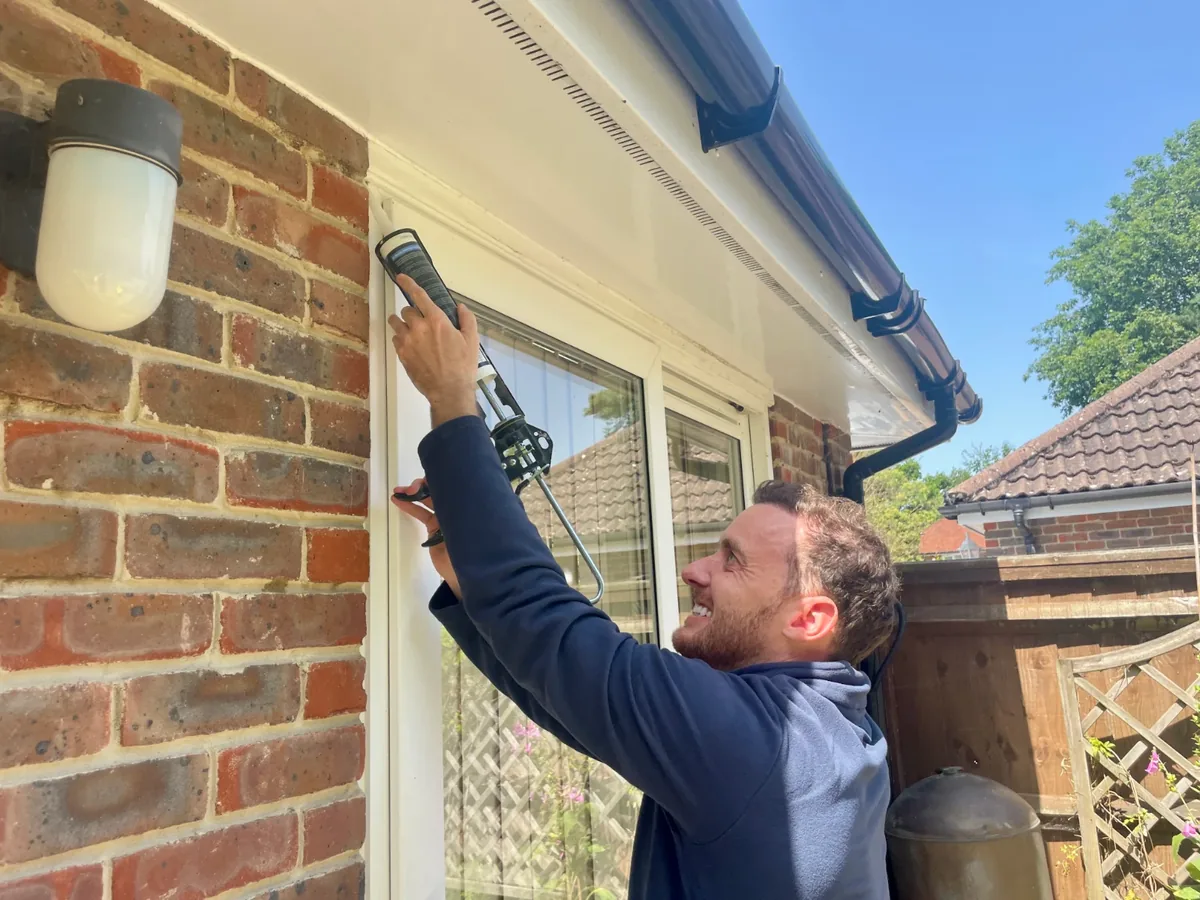
- We point the joint with sand mastic by hand.
- The finish is dressed neatly.
How to prepare
- Let us know if you’ve seen damp or leaks
- Move anything stored near the joints
- Mention if the joints have been sealed before
Get a quote
Quotes start with a quick conversation. Tell us what’s wrong, where it is and how much there is, and we will talk you through what we’d do. When it suits you, ring 0345 464 0079 or send us an email.
Related advice
Sand mastic in Notting Dale
If your home is listed or in a conservation area, check with your local planning authority whether consent is needed for work to windows. Sand mastic is often favoured as a like-for-like material. If you are dealing with cracked mastic round a front door frame and weathered mastic on the most exposed windows, we can put it right.
Many London homes are flats, with windows high above the street. Who looks after the outside of the frames can depend on the lease, so check that first.
Big or small, it’s backed by our one-year guarantee in Notting Dale and across Greater London.
- Where
- Notting Dale (W11, W10, W2)
- Wider area
- Greater London
- Cover
- A year, on every job
- Quotes
- Quoted before any work starts
- Call
- 0345 464 0079
- Updated
- 26 October 2026
Keeping the joints in good condition
Joint life depends on how it’s used and looked after. We suggest:
- Have rotten timber repaired before new mastic goes in
- Find out about consent before window work on a listed home
- Make sure water runs off the sill
- Take care around the mastic when scraping paint
Leave the new mastic unpainted, as traditional guidance advises. Ask us before any decorating around it.
Crumbling mastic lets rain into the joint. It can soak into the frame and the surrounding masonry, so renewing it early is worth it.
How the job changes by surface
Tenement and terrace windows
Windows above ground floor need the right access. Let us know the floor and we will confirm access.
Timber door frames
Round a period front door, sand mastic gives the right look.
What sealant work cannot fix
Sealant is not the answer to every problem, and we’d rather say so up front. Sealant will not put right:
- Sash cords, weights and draught-proofing of the sashes
- Rotten sashes, sills or window boxes (a joiner’s job)
- Cracked or broken glass
If you are not sure, just phone 0345 464 0079 or drop us an email and we’ll give you a straight answer before you book.
Where we work in Notting Dale
- Period & listed homes
- Sash and case windows
- Brick reveals
- Tenement windows
- Timber door frames
- Stone surrounds
Common problems we fix in Notting Dale
Over the years, sand mastic weathers. It hardens, cracks and starts to come away from the frame or the masonry.
Common reasons people contact us include:
- A silicone bead on a sash window that spoils the look
- Gaps between timber frames and stone or brick
- Wind and rain getting in round a sash window
- Tired mastic found when preparing windows for paint
Notting Dale is in London, so parking needs planning: tell us about permits, visitor bays or off-street space when you book.
What your quote should include
- What the quote includes, VAT included or not
- What happens if the job turns out different
- What insurance they hold
- Whether all the old sealant comes out first
Notting Dale questions
I let a flat near Shepherds Bush station. Can you help?
Yes. We work for landlords and letting agents as well as homeowners, and several properties can go on one quote. Just phone 0345 464 0079 or send us an email with the address and what needs doing, and we’ll give you a clear quote.
Do you cover Notting Dale for sand mastic?
Yes, Notting Dale is within the area we cover. We work across London and the South East. Just call 0345 464 0079 or send us an email with a few details of the job.
Can you quote for more than one area?
Yes. More than one area can be quoted together.
Are you fully insured?
Yes. We are fully insured.
What information do you need?
Only a few details: where it is, what you’ve noticed and how we reach it. Then call 0345 464 0079 or drop us an email.
Do you guarantee sand mastic work?
All our work has a one-year guarantee, and we are fully insured.
How long does sand mastic take?
Typically it takes a few hours per window, depending on the condition of the joints. Bigger jobs take longer.
Is it messy?
Tidy work is part of the job. Nearby surfaces are protected, and we clear up when we are done.
Windows and doors in Notting Dale
With historic houses such as Sambourne House (about 1.1 miles south-east) nearby, there’s older building stock in the area around Notting Dale as well as newer homes. Where a home is older, older frames set in brick or stone need a sealant that suits them, and sometimes that’s traditional sand mastic. Compared with the north and west, the South East gets less rain, but outside sealant still needs a dry, clean surface, so outdoor work is planned around the forecast.
If you look after a building such as Thomas Jones Primary School, larger buildings have plenty of frames, and the mastic around each one ages. Homes close to Church of St Sava include some older properties, and frames set in older brick or stone need a sealant that suits the wall as well as the frame.
Notting Dale is about 1 mile north of Kensington, in Greater London. Our applicators cover sand mastic for homes and businesses in Notting Dale and nearby. We cover 764 towns and villages across Greater London, from the larger towns to small villages.
We cover every part of the W11, W10 and W2 postcode area for sand mastic and the streets around it. Streets in the area include Bard Road, Walmer Road and Sirdar Road, and we cover them all. Neighbouring places we cover for sand mastic include Notting Hill (1 mile south-east), White City (1 mile west), Kensal Town (1 mile north), North Kensington (1 mile north-west) and Holland Park (1 mile south). Larger places within reach include London (5 miles east), Marylebone (3 miles east), St Pancras (4 miles east), Shoreditch (6 miles east), Walthamstow (9 miles north-east) and Hoxton (6 miles east).
Around Notting Dale
Locally, jobs take us to homes and businesses close to Kensington Aldridge Academy, Abdus Salam Library and The Elgin pub, among other places. You will also find Maida Vale School (1.1 miles north-east) and Emslie Horniman's Pleasance (0.7 miles north). The closest station to Notting Dale is Shepherds Bush station, about 0.7 miles south-west. Well-known places in the area include Greek Orthodox Cathedral Treasury Museum (0.8 miles east) and Westfield London (0.7 miles south-west). For a walk, there’s Greville Place nature reserve and Campden Hill.
Also near Notting Dale
What else we do in Notting Dale
Landlords, agents and businesses in Notting Dale
In hotels, rooms out of use cost money, so we plan the work room by room around your bookings where we can. Hotel work is part of what we do, alongside homes and businesses.
Housing providers, facilities teams and property managers book us too. We can quote a run of properties together.
Should I try it myself first?
Not every job suits DIY: high-level joints, fire-rated gaps, external movement joints and big jobs need the right product, the right access and the right method.
Overfilling a joint is a classic DIY mistake. A heavy bead looks messy and copes badly with movement, and getting the depth right matters as much as the look.