
Isle of Wight · England
Sand mastic for sash & case windows in Niton, Isle of Wight
Professional sand mastic in and around Niton, with old sealant always removed completely and a 12-month guarantee.
- Draughty sash windows at the surround
- Gaps between timber frames and stone or brick
- Cracked mastic round a front door frame
Sand mastic in Niton
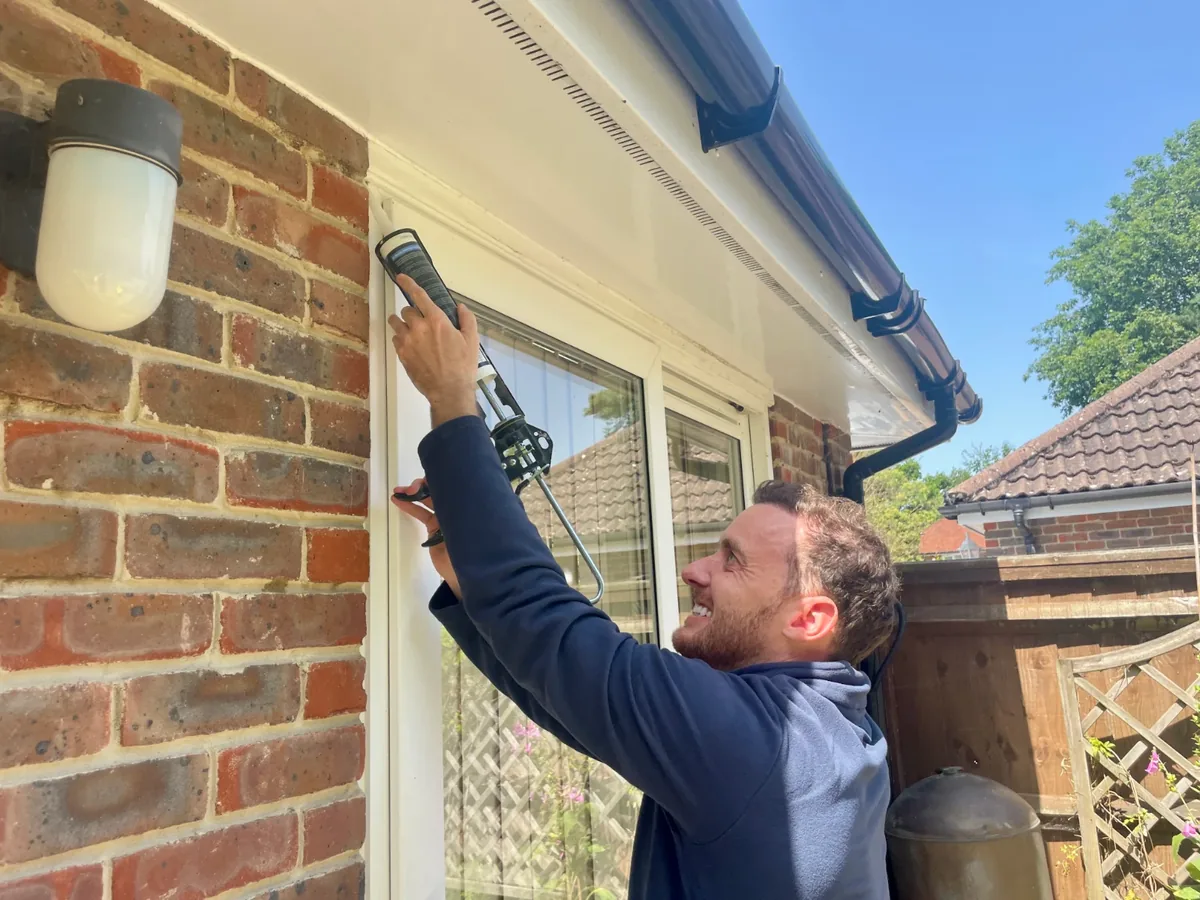
Sand mastic doesn’t last for ever, leaving gaps round the window. We rake it out and renew it and tidies the surround. We work on timber door frames, period & listed homes and brick reveals, and the jobs we see most are open joints round the window box and mastic dropping out of the joint.
Somewhere as small as Niton, older homes often have timber frames set in stone or brickwork. Older buildings like these don’t always suit modern silicone, so the sealant has to be chosen to suit the building.
All of our work is guaranteed for twelve months, in Niton and everywhere else we cover.
- Place
- Niton (PO38)
- Wider area
- Isle of Wight
- Guarantee
- A year, on every job
- Price
- A clear price before work begins
- Phone
- 0345 464 0079
- Updated
- 26 October 2026
Questions from Niton
Does living near the coast affect sand mastic in Niton?
Coastal homes put outside sealant through more weather than inland ones, so the choice of sealant and the preparation matter even more. It’s worth checking the walls that face the sea first.
Is Niton within the area you cover?
Yes, smaller places are covered as well as towns. We work across London and the South East. Let us know about access, parking and anything unusual about getting there when you book.
How much does sand mastic cost in Niton?
We do not publish prices, because the cost depends on the job: its size, the old material, access and the product needed. We agree the price before any work begins.
Do you offer different sealant colours?
Yes. Sealants come in white, clear, grey and other colours, and we agree the colour with you before any work starts.
Can you seal over the old sealant?
No, because it fails. The old sealant always comes out first, so the new joint bonds to clean surfaces.
When will the new mastic be hard?
It takes a while. The skin forms first, and the full set comes later, and we will tell you what to expect.
Will it make a mess?
Tidy work is part of the job. Nearby surfaces are protected, and the area is left clean when we finish.
Do you remove the old sealant?
Always. Sealing over the old bead is the commonest cause of early failure, and it’s something we never do.
Other services in Niton
When something else is needed
It helps to know what we cannot do:
- Rotten sashes, sills or window boxes (a joiner’s job)
- Decisions on consent for listed homes
- Masonry that needs repairing
If you’re not sure, just call 0345 464 0079 or drop us an email and we’ll give you a straight answer.
What we seal
- Timber door frames
- Tenement windows
- Sash and case windows
- Stone surrounds
- Brick reveals
- Period & listed homes
Should I try it myself first?
Some jobs are best left to a professional: high-level joints, fire-rated gaps, external movement joints and big jobs call for the right materials, safe access and experience.
The biggest DIY mistake is sealing over old sealant. New silicone will not bond to old, so it lifts and traps water and mould underneath. All the old material has to come out first.
Why deal with it now?
Not every filler suits an old window surround. Sand mastic is the like-for-like choice, which can matter on listed and conservation-area homes. Where a wall is exposed, as many are in small places like Niton, wind-driven rain gets into any failed joint, and older walls, once damp, take a long time to dry.
Commercial jobs are quoted on the same basis as homes: the amount of work, the access and the products needed, plus any working-time requirements on site. Ask us for a quote and we’ll go through it with you.
Why us?
- 4.9 on Google from 180+ five-star reviews
- ARBOMaster approved applicator
- We’re fully insured
- Any old sealant cut out fully, not covered over
Take a look at our cost guide and our reviews.
What we do, step by step
Every visit runs the same way: we check the joints, protect the area around them, do the work and clear up. It usually takes a few hours for a single window, longer for several. Somewhere as small as Niton, access is often the only tricky part. If the job is outside, mention outbuildings, exposed walls and how to reach them.
- First, we look at the surrounds with you and agree what needs doing.
- Old, loose mastic is raked out and the joint cleaned.
- Large voids are packed out first, so the mastic isn’t too thick.
- Sand mastic is mixed and applied by hand, then shaped to the joint.
- The finish is dressed so it sits neatly against the stone or brick.
Before we arrive
- Where the joints are inside, avoid wetting them before we arrive
- Mention any leaks or damp you’ve noticed
- Let us know about stairs, lifts or work at height
Getting a quote
Getting a quote is simple: let us know what needs doing and where and its rough size. Photos by email help us understand the job.
Related advice
For landlords and businesses
We regularly work with letting and managing agents. Send the address, what’s needed and the access arrangements and we’ll quote.
We work for landlords and letting agents as well as homeowners. Resealing between tenancies keeps a property looking cared for.
How we quote for sand mastic
The quote reflects the job in front of us. We look at:
- The amount of work
- How many areas need sealing
- Any mould that needs treating
- How easy the joints are to reach
The cost reflects the work involved, not a rough estimate. That’s why we ask a few questions first and give you a clear quote before any work starts.
What we need to know
You do not need to know the technical terms. It helps if you can tell us:
- Whether it’s a home or a business
- The rough size of the job
- If someone has resealed it before
- Access, such as stairs, a lift or height
We do not publish a price list, because every job is different. Instead, we give you a clear price for your job. To get started, call 0345 464 0079 or email us.
Niton homes and the weather
Niton is within about 1 mile of the coast, where wind-driven rain is a fact of life and, nearer the shore, so is salt air. Both are hard on the mastic around older windows and doors, which can dry out and crack sooner where a building faces the weather. London and the South East are among the drier parts of the UK, yet outdoor joints still have to be sealed dry, so jobs are booked with the weather in mind.
For site and facilities teams at buildings such as Niton Primary School, its window and door frames need their mastic kept sound, just like a home’s. For an older house near a landmark such as Church of St. John the Baptist, the joint between an old wall and a newer frame is normally the first place rain gets in.
Niton is about 8 miles south of Newport, in the Isle of Wight. Every kind of property in Niton is covered for sand mastic, old or new, large or small. Every job comes with our 12-month guarantee. Our the Isle of Wight coverage runs to 125 places, Niton among them. There’s also a page for Portsmouth, about 18 miles away.
Every address in PO38 is within our area for sand mastic, from the main roads to the quietest streets. We cover properties on Puckwell Lane, School Lane and Church Street. Nearby, we also carry out sand mastic in Puckaster (1 mile south), Bierley (1 mile north), Blackgang (1 mile west), Whitwell (1 mile north-east) and Southford (1 mile north). We also work in nearby towns such as Newport (8 miles north), Ryde (11 miles north-east), Cowes (12 miles north), Sandown (7 miles north-east), Shanklin (6 miles north-east) and Ventnor (3 miles east). Remote and island addresses need a little more planning, so tell us where you are when you ask for a quote.
What’s near Niton
Locally, jobs take us to homes and businesses close to White Lion pub, among other places. A little further out are Blackgang Sawmill Museum (1.3 miles west) and Arthur Webster Memorial Hospital for Children (5.6 miles north-east). The countryside around Niton includes Stenbury Down.
Keeping the joints in good condition
Once the sealant has cured, a few habits help it last:
- Don’t paint over the new mastic
- Avoid patching sand mastic with silicone
- Look over the window mastic once a year
- Get any rot dealt with first
Avoid painting over the new mastic, which is the traditional advice. Ask us before any decorating around it.
Good mastic helps keep the frame dry. Failed mastic lets water reach the timber, which can lead to rot.