
Highland · Scotland
Remedial Sealant in Tongue
Remedial sealant across Tongue and nearby, with every bit of old sealant taken out first.
- Dark patches showing through the sealant
- Movement joints that have split or pulled away
- Repeat leaks from the same joint
Remedial sealant in Tongue, done properly
Decorators’ caulk in a shower, bathroom silicone on a window, a rigid filler in a movement joint won’t last, however tidy it looks. We take it out and use a sealant made for that joint. Typical jobs include smears and lumps from a botched reseal and dark patches showing through the sealant, on botched or over-sealed joints, expansion joints and failed movement joints.
Bathrooms in smaller places like Tongue work just as hard as those in the cities. Limescale is less of a problem with Scotland’s generally soft water, but mould still takes hold in damp sealant and grout.
All our work is covered by our one-year guarantee.
- Place
- Tongue (IV27)
- Wider area
- Highland
- Cover
- A year, on every job
- Quotes
- A clear price before work begins
- info@mrmastic.co.uk
- Updated
- 26 October 2026
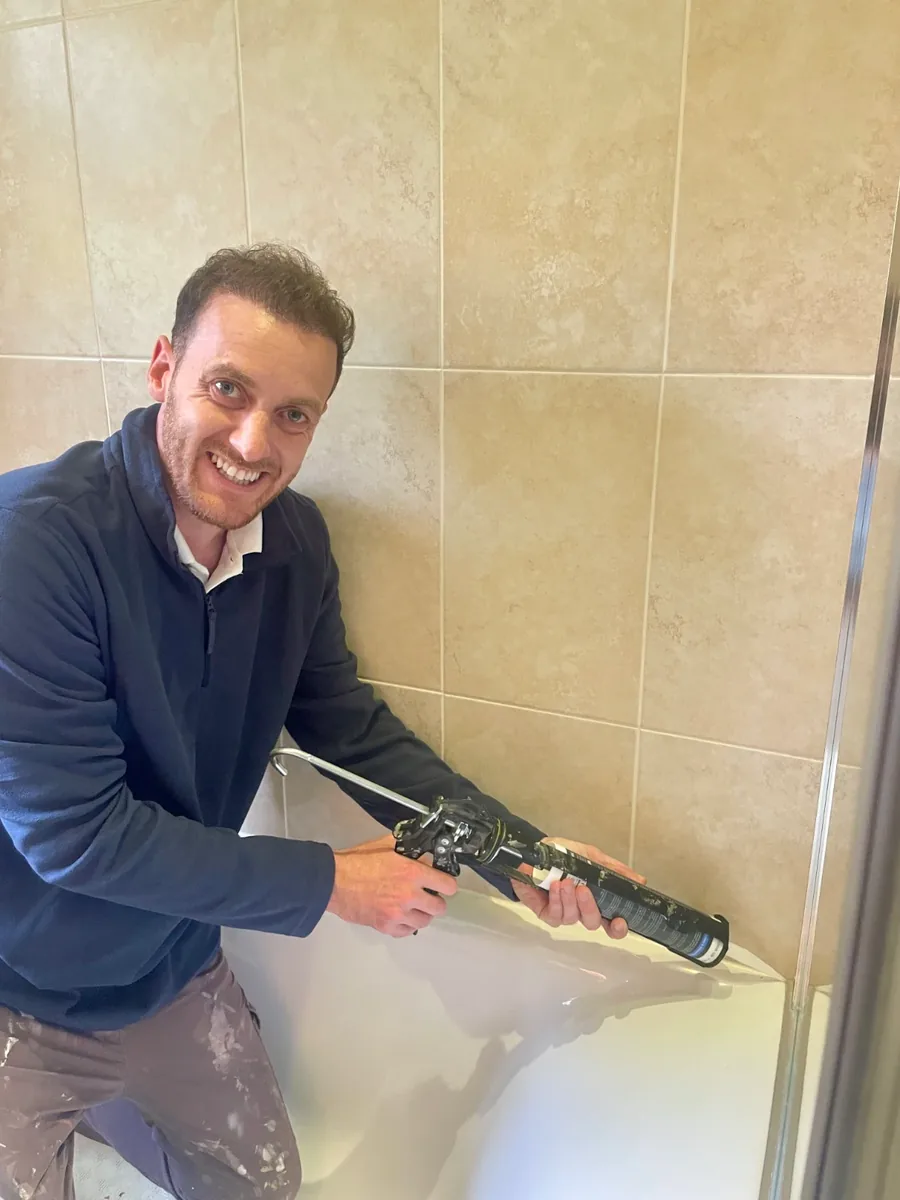
Bathrooms and kitchens in Tongue
Tongue is close to the coast. Coastal homes, holiday lets and guest houses can see heavy bathroom use in busy months, which wears sealant and grout out faster than in a quiet home. Scottish Water supplies are generally soft, so limescale is less of a problem than in hard-water areas. Mould is another matter: a bathroom that stays damp still turns sealant and grout black.
In and around Tongue, as anywhere, good remedial sealant starts with a clean, dry, properly prepared joint.
Tongue is about 33 miles west of Thurso, in Highland. Across the IV27 area, our applicators can take on remedial sealant. Across Highland, we cover 253 places, Tongue among them.
Every address in IV27 is within our area for remedial sealant, from the main roads to the quietest streets. That includes homes and businesses on Varich Place and Loyal Terrace and the roads around them. If you are just outside Tongue, we cover Melness (4 miles north), Am Blàran Odhar (8 miles north-east), Smoo (13 miles north-west), Altnaharra (13 miles south) and Diuranais (14 miles north-west). For island and remote addresses, the job takes a little more planning, so let us know when you get in touch.
Near you in Tongue
A little further out are Castle Varrich (0.7 miles west). The countryside around Tongue includes Cnoc an Fhreiceadain and Lochan Hakel.
Why act early in Tongue
Another bead over the top won’t fix a failed joint. It doesn’t grip the old layer, so the leak carries on and there’s now more to remove. Exposed walls in smaller Scottish places take a lot of wind and rain, and once water gets behind a failed joint, damp in stone or harled walls is slow to dry out.
Homes and businesses are quoted the same way: the amount of work, how we reach it and what it needs, plus any working-time requirements on site. Call for a quick quote and we will explain what it covers.
What you get with us
- Sealant colour chosen to suit
- Rated 4.9 stars on Google
- Anti-fungal sanitary silicone in wet areas
- Full insurance on every job
Take a look at what affects the cost or our reviews.
Nearby places to Tongue
Other services in Tongue
DIY versus a professional finish
A careful DIYer can reseal a simple joint, like a short, easy-to-reach joint indoors. Where it goes wrong is sealing over the old bead, working on a wet joint or overloading the gap.
If you’re set on DIY, put the effort into preparation: take out all the old sealant, make sure the joint is clean and dry, and give it the full cure time. If it fails, we can still redo it.
How it works
There isn’t much for you to do on the day. Point us to the joints and we will get on with it. The job generally takes a few hours, depending on how many layers have to come out. For a place like Tongue, longer drives are planned in advance. Mention tracks, gates, ferries or anything else about the route.
- We look at how the sealant has failed and check for movement or a leak path.
- All the old sealant comes out, including any layers underneath.
- Next, any mould is treated and the joint dried.
- We use the right backing and sealant for any joint that moves.
- We tool the joint and tell you about anything else that needs attention.
Before we arrive
- Let us know about parking restrictions
- Mention any sign-in or site rules at work premises
- Mention any tricky access
Getting a quote
For remedial sealant in Tongue, drop us a line at info@mrmastic.co.uk. Tell us what the problem is and where, and you will get a clear quote before work begins.
Advice
Tongue: your questions answered
Will you come out to Tongue?
Yes, Tongue is covered. We work across all of Scotland, and smaller places are part of that. The journey is planned ahead, so it helps to know about access.
Is there a guarantee on remedial sealant in Tongue?
All our work, in Tongue and everywhere else, comes with a 12-month guarantee. We’re also fully insured and ARBOMaster approved.
Do you work for letting agents?
Yes, often. Several properties can go on one quote.
What do you need from me for a quote?
A short description and the location. We’ll ask anything else we need to know.
Can you remove sealant that is been put over old sealant?
Yes. We cut out all the layers and clean off the film, before resealing with a single bead.
Do you remove the old sealant?
Yes. Sealing over old sealant is the main reason resealing fails early, and it’s something we never do.
Where do you work from?
We’re based in Crawley, and we cover South East England, London and all of Scotland.
Can you work on commercial sites?
Yes. We’ve worked for hotels, offices and other businesses, and we’re fully insured.
What affects the cost of remedial sealant
You will get a clear quote before work begins. It takes into account:
- Which sealant suits the joint
- Access and height
- The size of the job
- How many areas need sealing
No two jobs are quite the same, so we quote each one individually. Size, access and the product the joint needs all play a part.
Asking for a quote
When you contact us, these details help:
- How many joints, rooms or windows are involved
- A few photos by email, if you can
- The type of property
- The address or postcode of the job
For a quick quote, get us on the phone, or send an email if you’d rather. Tell us about the joints that need doing and we’ll talk you through the work and send you a clear quote.
Looking after it afterwards
How long the joints last depends on use and care. We suggest:
- Don’t wait for a small gap to become a leak
- Look for stains below bathrooms now and then
- Run the fan after every shower
- Keep bleach and abrasives off the bead
Go easy on the new sealant: no scraping, scouring pads or harsh chemicals.
Movement joints that have split let water into the structure, and left long enough, the edges of the joint can crumble. A joint with sound edges is far easier to reseal.
When something else is needed
Honest advice matters more to us than a booking, so here’s what sealant cannot fix:
- Older mastics that may need an asbestos check before removal
- Cracks in the fitting rather than the joint
- Movement from fittings that are not supported
If you’re not sure, just drop us a line at info@mrmastic.co.uk and we will give you a straight answer.
Surfaces we seal
- Leaking tray & enclosure joints
- Botched or over-sealed joints
- Failed movement joints
- Mouldy bath & shower sealant
- Shrunken worktop sealant
- Expansion joints
Common problems we fix in Tongue
How a joint is built matters as much as the product. A bead bonded on three sides, or laid too thick, can’t flex, so it tears when the joint moves. Backing rod or bond-breaker tape prevents it.
Keep an eye out for these signs:
- Mould trapped under a layer of silicone
- Sealant peeling off a dusty or damp surface
- Wide, uneven beads that look worse than the old ones
- Floor or wall movement joints that have failed
In the older streets around St Andrew's Church, timber floors under older bathrooms flex, so joints need a sealant that moves with them.
Questions to ask before you book
- The length of the guarantee
- How the surfaces are prepared before sealing
- Who does the work, and how experienced they are
- Is the old sealant removed completely?