
Aberdeen · Scotland
Mill of Fintray External Mastic
External mastic for Mill of Fintray, by sealant specialists with 20+ years’ experience. Rated 4.9 on Google from 180+ five-star reviews.
- Failed sealant between panels on a façade
- Joints with sealant missing in places
- Damp patches traced to an open external joint
About our external mastic in Mill of Fintray
Movement joints let brickwork, render and cladding expand and shrink without cracking. The sealant in it has to stretch and squeeze for years, and when it fails, the wall takes the strain and water finds a way in. Common call-outs are for leaking joints around cladding and façade panels and moss and dirt in joints with no sealant left, across brickwork movement joints, façade panels and render & cladding joints.
Stone walls need a stone-friendly sealant, as acetoxy products can attack some stone. On newer homes, the movement joints and roofline trims are what need watching.
We guarantee the work for a year. If something is not right with it in that time, tell us and we’ll put it right.
- Location
- Mill of Fintray (AB21)
- Region
- Aberdeen
- Guarantee
- A year, on every job
- Quotes
- A clear price before any work starts
- info@mrmastic.co.uk
- Updated
- 26 October 2026
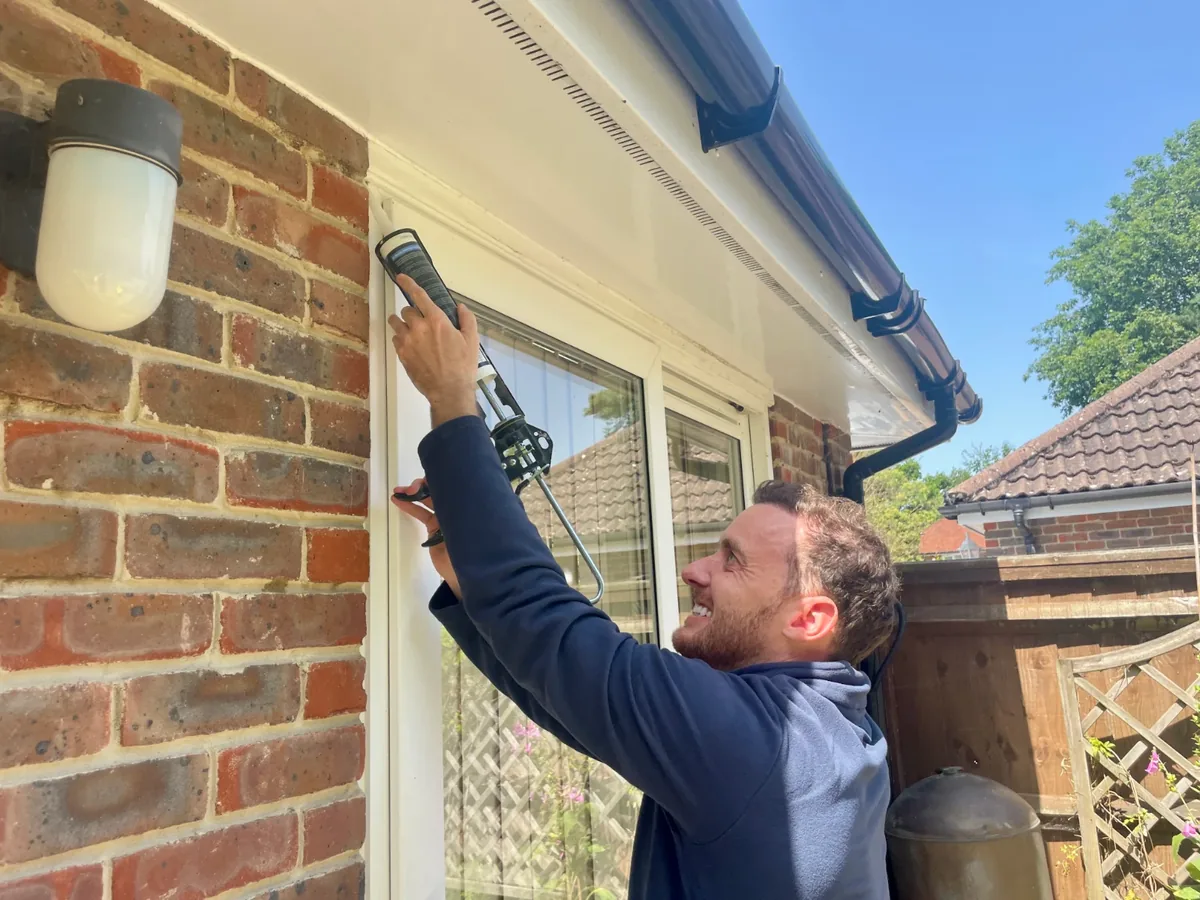
How the job changes by surface
Render joints
Render has movement joints and stop beads that need sealing. We reseal them with a flexible exterior sealant that suits the render colour.
Copings and trims
Joints in copings, parapets and trims are exposed to the worst of the weather. We reseal them with an exterior sealant suited to the material.
Towns and villages near Mill of Fintray
More services for Mill of Fintray
DIY versus a professional finish
Not every job suits DIY: work at height, external movement joints, fire-rated sealant and large areas need the right product, the right access and the right method.
A careful DIYer can reseal a simple joint, such as a straightforward joint indoors. Where it goes wrong is sealing over the old bead, working on a wet joint or overloading the gap.
What happens if it’s left?
An open joint keeps letting water into the wall with every downpour. In cold weather, frost can damage wet brick and render around the joint, so the problem grows beyond the joint itself. Out of town in Scotland, exposed walls take a lot of weather, and once water gets behind a failed joint, damp in stone or harled walls is slow to dry out.
No two jobs are quite the same, so each one gets its own quote. Size, access and the product the joint needs all play a part.
Why book with us
- Homes, businesses and hotels
- We are fully insured
- Trusted Arbo and Everbuild sealants
- Colour agreed with you before work begins
Take a look at our cost guide or our reviews.
What external mastic looks like in Mill of Fintray
Harled (roughcast) walls are common in Scotland, and joints where harling meets other materials need a sealant that can grip and flex. Under the Repairing Standard, private landlords in Scotland have to keep homes wind and watertight, and sound outside sealant is part of that.
Homes close to Fintray Parish Church include some older properties, and the joints between older walls, newer extensions and the roofline need a sealant that can move.
Mill of Fintray is about 5 miles south-east of Inverurie, in Aberdeen. Across the AB21 area, we can carry out external mastic at your property. 63 places in Aberdeen are on our list. Aberdeen is on our list too, about 8 miles from Mill of Fintray.
Work in AB21 works the same way as everywhere else we cover. Nearby, we also carry out external mastic in Hatton of Fintray (1 mile east), Blackburn (2 miles south), Kinmuck (2 miles north-west), Kinellar (3 miles south-west) and Kintore (3 miles west). We also work in nearby towns such as Aberdeen (8 miles south-east), Rosemount (9 miles south-east), Berryden (8 miles south-east), Ferryhill (10 miles south-east), New Aberdeen (9 miles south-east) and Dyce (4 miles south-east).
Local landmarks in Mill of Fintray
For rail, the closest station is Kintore station, roughly 2.8 miles west. Nearby you’ll also find Hallforest Castle (3.6 miles west) and Inverurie Hospital (4.6 miles north-west). For a walk, there’s Temple Hill.
How it works
Our applicators work methodically: protect, prepare, seal, tidy. For most jobs that takes a few hours for a handful of joints, longer for a whole elevation, and the area is left clean. For a place like Mill of Fintray, longer drives are planned in advance. Tell us about tracks, gates, a ferry crossing or anything unusual about getting there.
- We look at every joint and agree a colour to suit the wall.
- Failed sealant is removed back to clean, sound faces.
- Backing rod goes in so the sealant can stretch between the two faces.
- We prime the faces where required.
- We gun in low-modulus sealant and tool it neatly.
Before we arrive
- Move anything stored near the joints
- Let us know if you’ve seen damp or leaks
- On commercial sites, let us know about site rules
Getting a quote
A good description makes for an accurate quote. Tell us where the job is, what’s wrong and how much there is, and email pictures if that’s easy.
Related advice
Your questions about external mastic in Mill of Fintray
Do you cover Mill of Fintray for external mastic?
Yes. Our work covers the whole of Scotland, and Mill of Fintray is part of that. Just email us at info@mrmastic.co.uk with a few details of the job, and we will send you a clear quote.
Do you work for landlords with property near Kintore station?
Yes, rental work is part of what we do. You can email us at info@mrmastic.co.uk with the address and a few details, and we’ll give you a fixed price before we start.
Is the work guaranteed?
Yes. Each job is guaranteed for twelve months.
How long will you be here?
That depends on how much there is to do, but most jobs take a few hours to a few days, depending on the length of joint and the access. We’ll tell you when we quote.
Can you quote for more than one area?
Of course. Combining jobs makes good use of the visit, so mention them when you ask for a quote.
Are you an approved applicator?
Yes. We are ARBOMaster approved, the scheme for applicators of Arbo sealants.
Do I have to be there?
It depends on the job. For work indoors, someone needs to let us in.
What is backing rod for?
The foam is closed-cell backing rod. It stops the sealant going in too deep and bonding to three sides so it can flex with the joint.
When it isn’t the sealant
A few problems are outside what sealant work can do:
- Cracking across the wall rather than at a joint
- Render that is blown, hollow or coming away
- Subsidence or other structural problems
Not sure which it is? You can drop us a line at info@mrmastic.co.uk and we will tell you honestly.
Joints and surfaces we work on
- Concrete & block
- Copings & trims
- Joints between brick and frames
- Façade panels
- Render & cladding joints
- Brickwork movement joints
Keeping the joints in good condition
No joint lasts for ever, but care makes a real difference. Our tips:
- Get split or bare joints resealed while the damage is small
- Keep movement joints as flexible joints, not mortar
- Walk round the building once a year and look at the joints
- Keep water from gutters off the wall
Don’t let soil, plants or ivy build up against the new joints. Damp material against the sealant shortens its life.
A joint that has stopped moving pushes the movement elsewhere, usually as cracking in the brickwork or render nearby. Catch it early and you reduce the risk.
When to call us in Mill of Fintray
UV, rain and frost all age exterior sealant. In time it goes hard, crazes on the surface and stops stretching, so the joint eventually tears or comes away from one side.
Look out for any of the following:
- Rain getting behind render or cladding at a joint
- Joints where the bead has come unstuck
- Weathered mastic that no longer stretches
- Movement joints filled with mortar instead of sealant
Rented homes near Kintore station change hands often, and failed wall and movement joints let damp in, so they’re worth checking between tenancies.
Questions to ask before booking
- What guarantee comes with the work
- How the joint is cleaned and prepared
- What happens if the job turns out different
- How the colour is chosen