
Aberdeenshire · Scotland
Bathroom & kitchen resealing in New Deer, Aberdeenshire
Professional bathroom resealing in and around New Deer, with every bit of old sealant taken out first.
- A reseal done over the top of the old bead
- Lumpy, uneven sealant from a DIY attempt
- A joint torn by a bath that flexes
Bathroom resealing in New Deer
Showers work their sealant harder than baths. Tray edges, screen profiles and wet room joints all rely on silicone to stay watertight. They’re resealed with anti-fungal sanitary silicone, finished smooth so water drains away rather than collecting. If you have smears of silicone across the tiles and black spots spreading through the bead, we can help, whatever the surface.
Being further from a city does not change the work: old material out, joints cleaned and dried, and a fresh, even finish. The journey and access are simply planned in advance.
A 12-month guarantee comes as standard, so you’re covered after we have gone.
- Where
- New Deer (AB53)
- Wider area
- Aberdeenshire
- Cover
- 12 months on all our work
- Quote
- A clear quote up front
- info@mrmastic.co.uk
- Updated
- 26 October 2026
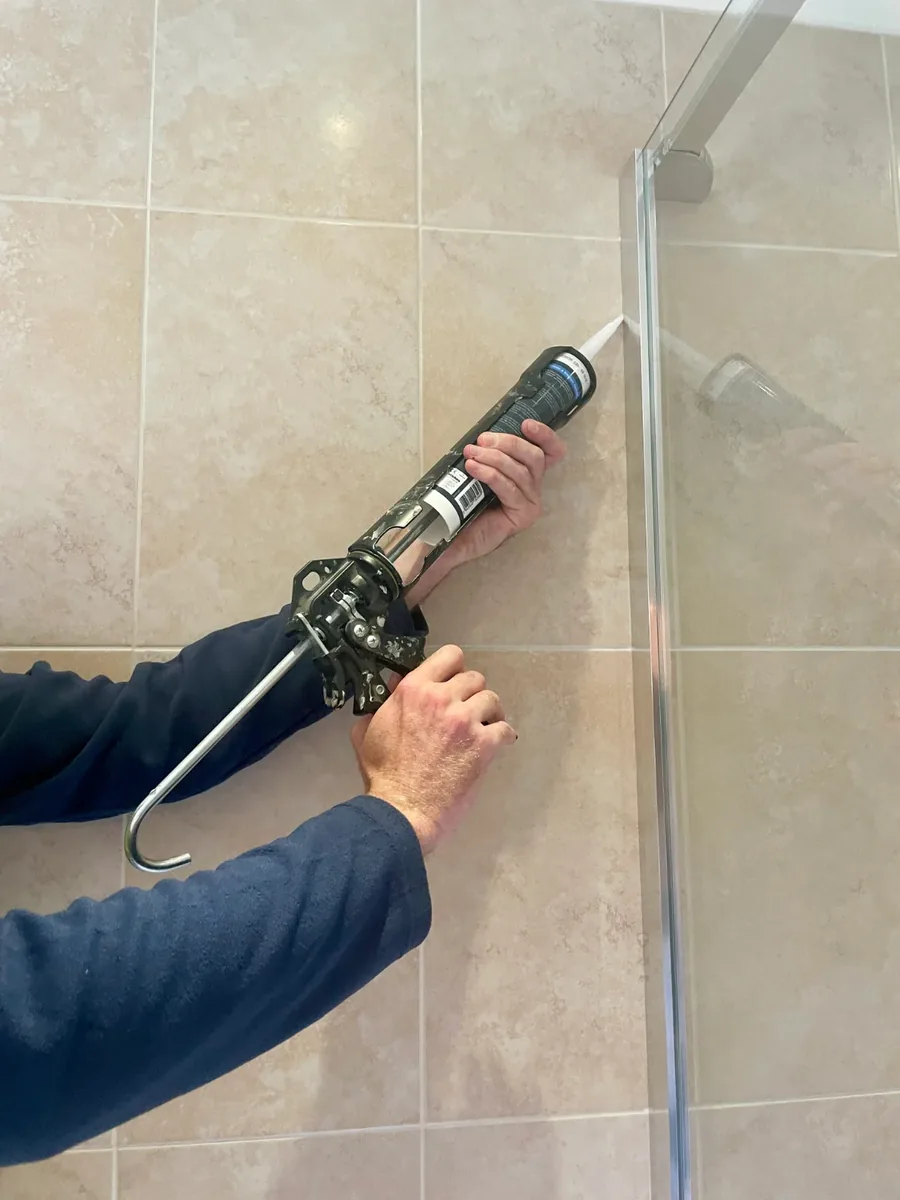
What bathroom resealing looks like in New Deer
Scotland’s water is generally soft, so sealant and grout see less limescale than in much of England. But mould still grows into sealant and grout in a room that does not dry out. In Scotland, private landlords have to meet the Repairing Standard, which covers keeping fixtures and fittings in a reasonable state of repair. Failed sealant around a bath or shower is worth sorting between tenancies.
Around New Deer, as everywhere, bathroom resealing is only as good as the preparation behind it. Homes close to New Deer Parish Church include some older properties, and older homes can move a little, which is hard on rigid grout and tired sealant.
New Deer is about 13 miles south-west of Fraserburgh, in Aberdeenshire. Across the AB53 area, our applicators can take on bathroom resealing. Across Aberdeenshire, we cover 161 places, New Deer among them. We also work in Aberdeen, about 25 miles from New Deer.
Here we cover the AB53 postcode area for bathroom resealing. Whether your property is on Main Street, High Street and Fordyce Avenue or anywhere close by, our applicators can take on the job. Neighbouring places we cover for bathroom resealing include Turfhill (1 mile west), Maud (2 miles east), Auchnagatt (4 miles south-east), New Pitsligo (5 miles north) and Cuminestown (6 miles west). Within a short drive, we also cover Peterhead (15 miles east), Fraserburgh (13 miles north-east), Ellon (11 miles south-east), Turriff (10 miles west), Roanheads (15 miles east) and Clerkhill (15 miles east). Island and remote addresses take a little more planning, so tell us where you are when you ask for a quote.
Landmarks near New Deer
Other landmarks nearby include Maud Hospital (2.5 miles east) and Maud Junction railway station (2.5 miles east).
Towns and villages near New Deer
What else we do in New Deer
New Deer: your questions answered
Do you cover smaller places like New Deer?
Yes. New Deer is within the area we cover, which takes in towns, villages and rural addresses. Our work covers the whole of Scotland. Just mention lanes, gates or anything else about the route when you book.
Can you do bathroom resealing in New Deer?
Yes. We work across all of Scotland, and New Deer is part of that. You can email us at info@mrmastic.co.uk and tell us what needs doing.
Is it messy?
Very little: the area around the joints is protected first, and we tidy up before we go.
What information do you need?
Tell us what needs doing and where, with photos by email if possible. We’ll ask anything else we need to know.
Do you work for letting agents?
Yes. We work in homes, commercial premises and hotels, and we’re fully insured.
What colours of sealant can you use?
White and clear are the most common choices, and other colours are available to suit tiles, trays and worktops. Let us know your preference when you ask for a quote.
Do I need to be at home?
We need access to the joints, so we will agree that with you when we book. For inside work, that normally means someone being in.
Do you remove the old sealant?
Always. Sealing over old sealant is the main reason resealing fails early, and it’s something we never do.
What sealant work cannot fix
Before booking, it’s worth knowing the limits:
- A leaking waste, trap or valve
- Movement from a bath with loose feet or no proper support
- A cracked shower tray or bath (that needs repair or replacement)
If you’re not sure, just email us at info@mrmastic.co.uk and we will give you a straight answer before you book.
Surfaces we seal
- Basins & vanity units
- Kitchen worktops & upstands
- Baths
- Wet rooms
- Sinks & splashbacks
- Shower trays & enclosures
Leave it or put it right?
Most of the work in a good reseal happens before any silicone goes on: removing all the old sealant, degreasing the joint, treating mould and drying it properly. Skip those steps and even the best silicone fails early. When the nearest tradesperson is a drive away, it’s tempting to leave a small leak, but water behind a failed seal does the most damage when nobody’s watching.
Doing several joints on one visit is usually more efficient than separate visits. We will send you a clear quote for the lot.
Why New Deer customers choose us
- Colour picked to suit the job
- You choose the colour before work begins
- Tidy, careful work
- Fully insured
Take a look at how sealant jobs are priced and customer reviews.
How we quote for bathroom resealing
For a quick quote, just ask. The main things that affect it are:
- Which sealant suits the joint
- Access and height
- Working hours on commercial sites
- How many areas need sealing
Rather than a set price list, we look at what your job involves: how many joints, what’s in them now and how we reach them. The price is agreed before we begin.
Asking for a quote
The more you tell us, the more accurate the quote. When you ask for a quote, tell us:
- Access, such as stairs, a lift or height
- The address or postcode of the job
- If it’s domestic, commercial or a hotel
- If someone has resealed it before
Asking for a quote is easy: let us know what needs doing and where, and roughly how big it is. Photos by email help us understand the job, and we will take it from there.
DIY versus a professional finish
If you’ve already had a go yourself, that is fine. We remove it and do the joint properly.
The biggest DIY mistake is sealing over old sealant. New silicone won’t bond to old, so it lifts and traps water and mould underneath. Everything old must be removed first.
Work for landlords, hotels and businesses
Letting agents often deal with us directly. Send the address, what’s needed and the access arrangements.
Landlords and letting agents in New Deer can book us as well as householders. Sealant work between tenants keeps a property looking cared for.
How it works
You don’t need to clear the whole room or building, just the space around the work. We protect the rest, and the work takes around two hours for one bath or shower, longer for a whole bathroom for a typical job. In smaller Scottish places, parking is normally less of an issue than access and distance. Tell us how to find the property and how to reach the work, and the visit is planned around that.
- We start by protecting the area and stripping out the old bead.
- The joint is cleaned, degreased and treated for mould.
- The joint is left to dry, and baths are filled with water first.
- A single bead of anti-fungal sanitary silicone is applied and tooled smooth.
- We tidy up and give you the cure time, generally around 24 hours.
Getting ready for the visit
- Let us know if you’ve seen damp or leaks
- Let us know about parking restrictions
- Move anything stored near the joints
Getting a quote
We quote each job on its own, so start by telling us what you need. Just drop us a line at info@mrmastic.co.uk with the details and send pictures if you have them.
Advice
Different surfaces, different methods
Kitchen worktops & upstands
Kitchen joints need more degreasing than bathroom ones, because cooking grease stops sealant bonding. Proper degreasing is what helps the new joint last.
Baths
Acrylic baths give a little under load, and even steel and cast iron baths settle slightly when full. Filling the bath first allows for that movement.