
Greater London · England
Burnt Oak Sand Mastic
Window and door surrounds in Burnt Oak need attention? We cut out the old, prepare the joints and apply the right sealant, and the work is guaranteed for a year.
- Modern sealant on a period surround
- Cement or filler used on old window joints that has cracked
- Cracked mastic round a front door frame
What happens if it’s left?
Draughts round a sash window aren’t always the sashes. Gaps between the frame and the wall can be just as bad and new mastic seals them. Converted houses in London often have a bathroom above someone else’s living room, so a small leak from tired sealant can mean a neighbour’s ceiling and a lot of disruption. Dealing with it early is far simpler.
What it costs depends on the size of the job, how much old material has to come out and how easy the joints are to reach. You’ll have a clear quote before any work starts.
Why us?
- Domestic, commercial and hotel work
- Any old sealant cut out fully, not covered over
- 180+ five-star Google reviews
- 20+ years of sealant experience
See our cost guide and customer reviews.
About our sand mastic in Burnt Oak
For a listed home or one in a conservation area, ask your local planning authority whether consent is needed for work to windows. Like-for-like sand mastic is often the preferred finish. Typical jobs include crumbling sand mastic round a window and a silicone bead on a sash window that spoils the look, on tenement windows, sash and case windows and brick reveals.
London’s Victorian and Edwardian terraces were built with timber sash windows, and many still have them or their replacements. Either way, the mastic between frame and brickwork is what stops draughts and rain getting in.
Your job is guaranteed for a year, as with all our work.
- Where
- Burnt Oak (HA8, NW9, NW7)
- Wider area
- Greater London
- Guarantee
- A year, on every job
- Price
- A clear quote up front
- Telephone
- 0345 464 0079
- Updated
- 26 October 2026
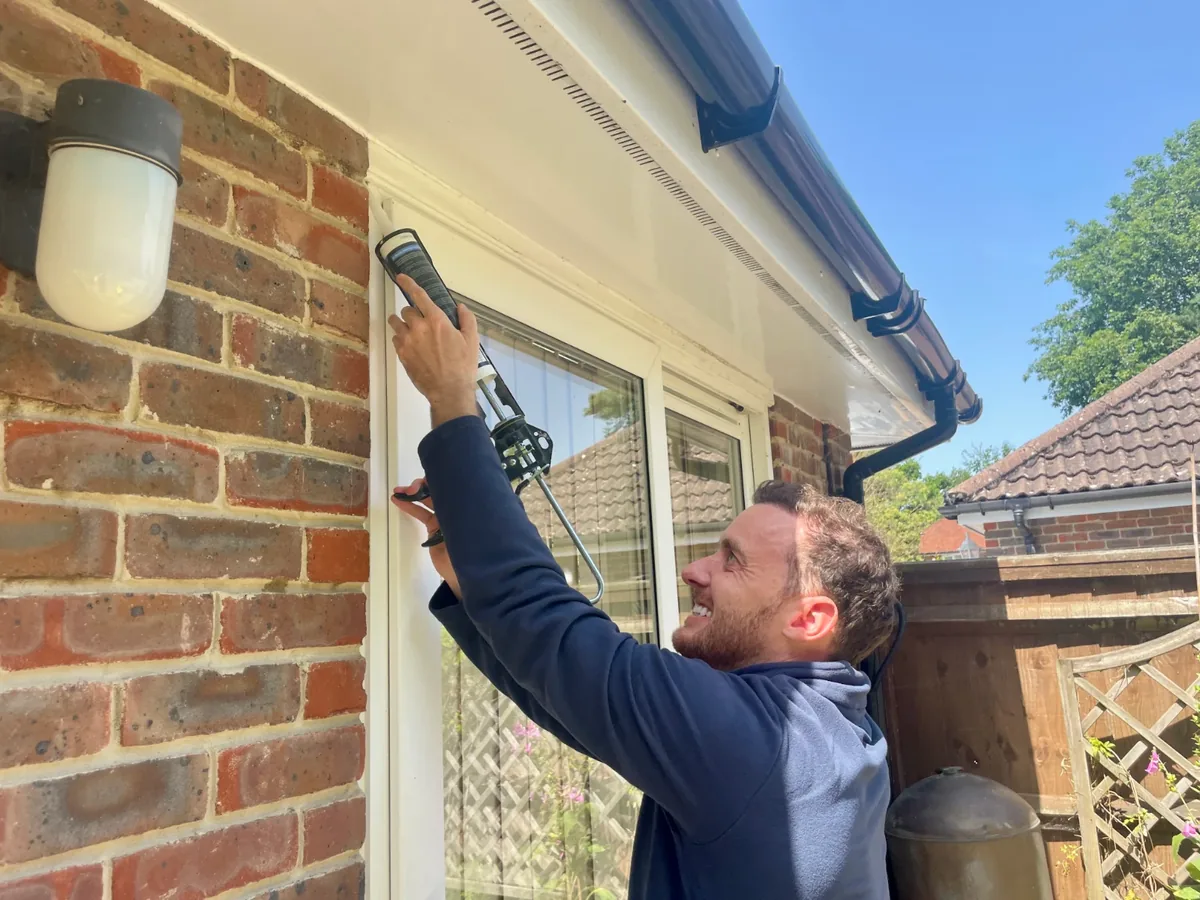
What the job involves on each surface
Brick reveals
We rake out the old mastic and pack deep voids before the new mastic goes in.
Sash and case windows
Most of our sand mastic work is on sash windows. Each joint round the box is raked out and renewed.
What we are called out for in Burnt Oak
Sand mastic slowly weathers. It hardens, cracks and starts to come away on the stone or timber.
The most common problems we see are:
- Tired mastic found when preparing windows for paint
- Silicone on a period window that looks wrong
- Draughts and rain around sash boxes
- Crumbling sand mastic round a window
For landlords with property near Mill Hill Broadway station, any sash windows need sound mastic to keep draughts and rain out.
Before you book anyone
- How the colour is chosen
- What product goes in the joint
- Are they insured?
- Is VAT in the price?
Common questions in Burnt Oak
Can you do sand mastic in Burnt Oak?
Yes, Burnt Oak is within the area we cover. Our work covers London and the South East. You can call 0345 464 0079 or email us and let us know what needs doing.
Can parking be tricky for a visit in Burnt Oak?
In much of London, parking needs planning: a visitor permit or a bay close to the door helps a lot, so mention what’s available when you book.
Which is right for my windows, sand mastic or modern sealant?
We’ll talk it through with you. Sand mastic suits many period homes, and modern sealants suit newer frames.
When will the new mastic be hard?
It takes a while. It skins first and hardens fully later and we’ll give you an idea for your job.
Can I choose the sealant colour?
Yes. Sealants come in white, clear, grey and other colours for many products, and we’ll agree it with you first.
Do you take out the old sealant first?
Always. Sealing over old sealant is the main reason resealing fails early, so we never do it.
Can you do several jobs on one visit?
Yes. Just list everything you need.
Can you replace silicone on a period window with sand mastic?
In most cases. The silicone is cut out and the joint cleaned, then point it with sand mastic.
Landlord and commercial work in Burnt Oak
Hotels need rooms back in use, so we plan the work room by room. Hotel work is part of what we do, alongside homes and businesses.
Whether it’s one flat or a portfolio, the work is the same standard: the old material taken out, careful preparation and a 12-month guarantee.
The process
On the day, there’s very little for you to do. Show us the job and we will take it from there. The work itself takes anything from a few hours to a full day, depending on how many windows. For a job in Burnt Oak, parking and access are the things to plan: let us know about parking, the floor we will be working on and any lift or shared entrance.
- We check each window surround and the condition of the joint.
- The joint is raked out and cleaned.
- Large voids are packed out.
- New sand mastic is applied and shaped by hand.
- The finish is dressed neatly.
How to prepare
- For business premises, tell us about site rules or sign-in
- Keep pets and children clear of the area while we work
- Where the joints are inside, avoid wetting them before we arrive
How to get a quote
We don’t publish a price list, as no two jobs are quite the same. Instead, we give you a clear price for your job. To arrange one, ring 0345 464 0079 or send us an email.
Read more
What we cannot put right
Before booking, it’s worth knowing the limits:
- Cracked or broken glass
- Decisions on consent for listed homes
- Sash cords, weights and draught-proofing of the sashes
If in doubt, phone 0345 464 0079 or email us and we’ll say what we think.
Surfaces we seal
- Tenement windows
- Sash and case windows
- Stone surrounds
- Period & listed homes
- Brick reveals
- Timber door frames
Sand mastic in Burnt Oak: local notes
In London conversions and blocks, the lease decides who is responsible for the frames, so check that before booking. With historic houses such as Headstone Manor (about 4.2 miles west) nearby, there’s older building stock in the area around Burnt Oak as well as newer homes. In older buildings, older frames set in brick or stone need a sealant that suits them, and sometimes that is traditional sand mastic.
Burnt Oak is in London, so parking needs planning: tell us about permits, visitor bays or off-street space when you book. Managing a site like The Annunciation RC Junior School? Then the mastic around its windows and doors needs looking after like any other building’s.
Burnt Oak is about 7 miles south-east of Watford, in Greater London. Wherever you are in the HA8 postcode area, our applicators can take on sand mastic. Burnt Oak is one of 764 towns and villages in Greater London we cover. There’s also a page for London, about 10 miles away.
Every address in HA8, NW9 and NW7 is within our area for sand mastic, from the main roads to the quietest streets. Local streets include East Road, Back Lane and Rill Lane, all of which we cover. Burnt Oak is on the A5100, which makes it straightforward to reach with everything needed for sand mastic. Other places close to Burnt Oak include The Hale (1 mile north), Edgware (1 mile north-west), Grahame Park (1 mile south-east), Little Stanmore (1 mile west) and Canons Park (1 mile west). Further out, we also cover London (10 miles south-east), City of Westminster (8 miles south-east), Marylebone (8 miles south-east), Kensington (8 miles south), St Pancras (8 miles south-east) and Shoreditch (10 miles south-east).
Around Burnt Oak
We work in homes and buildings around St Martin's School Brentwood, Railway Hotel and Watling Park. Burnt Oak’s nearest station is Mill Hill Broadway station, roughly 0.5 miles north-east. A little further out are Church Farmhouse Museum (1.8 miles south-east) and Edgware Community Hospital (0.5 miles west). The countryside around Burnt Oak includes Darland's Lake and Mill Hill Old Railway Nature Reserve.
Towns and villages near Burnt Oak
Also in Burnt Oak
Should I try it myself first?
A careful DIYer can reseal a simple joint, like a short, easy-to-reach joint indoors. The common mistakes are sealing over old sealant, sealing a damp joint and using far too much.
Overfilling a joint is a classic DIY mistake. A heavy bead looks messy and copes badly with movement, and getting the depth right matters as much as the look.