
Slough · England
Glazing & conservatory sealant in Slough
Glazing silicone across Slough and nearby, with every bit of old sealant taken out first.
- Leaks from the base of a shower screen
- Cracked silicone between glass panels
- Water tracking down the inner face of the glass
Glazing silicone in Slough
We work across Slough on glazing joints for homes and businesses. Conservatories, rooflights, glass panels and shower screens are all part of the job. Typical jobs include glass-to-glass joints that have split and sealant that was laid over old silicone and failed, across rooflights, shower screens and glass-to-glass joints.
A place the size of Slough has every kind of window, from older timber frames to uPVC and aluminium in newer homes, plus conservatories, patio doors and rooflights. Each needs the right sealant, and each joint wears out eventually.
You are covered for a year from the day we finish. If there’s a problem with it, please ring 0345 464 0079 or send us an email.
Your questions about glazing silicone in Slough
Do you work for landlords with property near Slough station?
Yes, landlords and agents are among the people we work for, and several properties can go on one quote. You can phone 0345 464 0079 or drop us an email with the details for a clear quote.
Can you do glazing silicone in Slough?
Yes. We work across London and the South East, and Slough is part of that. You can ring 0345 464 0079 or send us an email and let us know what needs doing.
How long does glazing silicone take?
As a guide, most jobs take anything from an hour or two to most of a day, depending on the size of the job. Bigger jobs take longer, and we will say how long yours will take.
Can I do it myself?
You can, for simple jobs. The key is preparation: remove all the old material and work on a clean, dry joint. If it does not work out, we can redo it.
Which silicone is used for glass joints?
A neutral-cure glazing silicone suited to glass and the frame. Shower screens get anti-fungal silicone.
What do you put in the joint?
Each joint gets the product that suits it. Where it moves, gets wet or faces the weather makes a difference, and we will tell you what we are using.
What information do you need?
The location, the problem and the rough size of the job. If you can, email a few pictures.
Do you do commercial work?
Yes, regularly. Larger jobs can be planned room by room or area by area.
How the visit works
There isn’t much for you to do on the day. Point us to the joints and we’ll get on with it. The work itself takes anything from an hour or two to most of a day, depending on the size of the job. Commercial jobs in Slough can be planned out of hours where a building can’t close, while home visits are arranged within our normal working hours, Monday to Saturday.
- We start by finding the leak and making sure sealant is the cause.
- The old sealant is removed from the glass and frame without scratching them.
- We clean the joint with a solvent that suits the glass and frame.
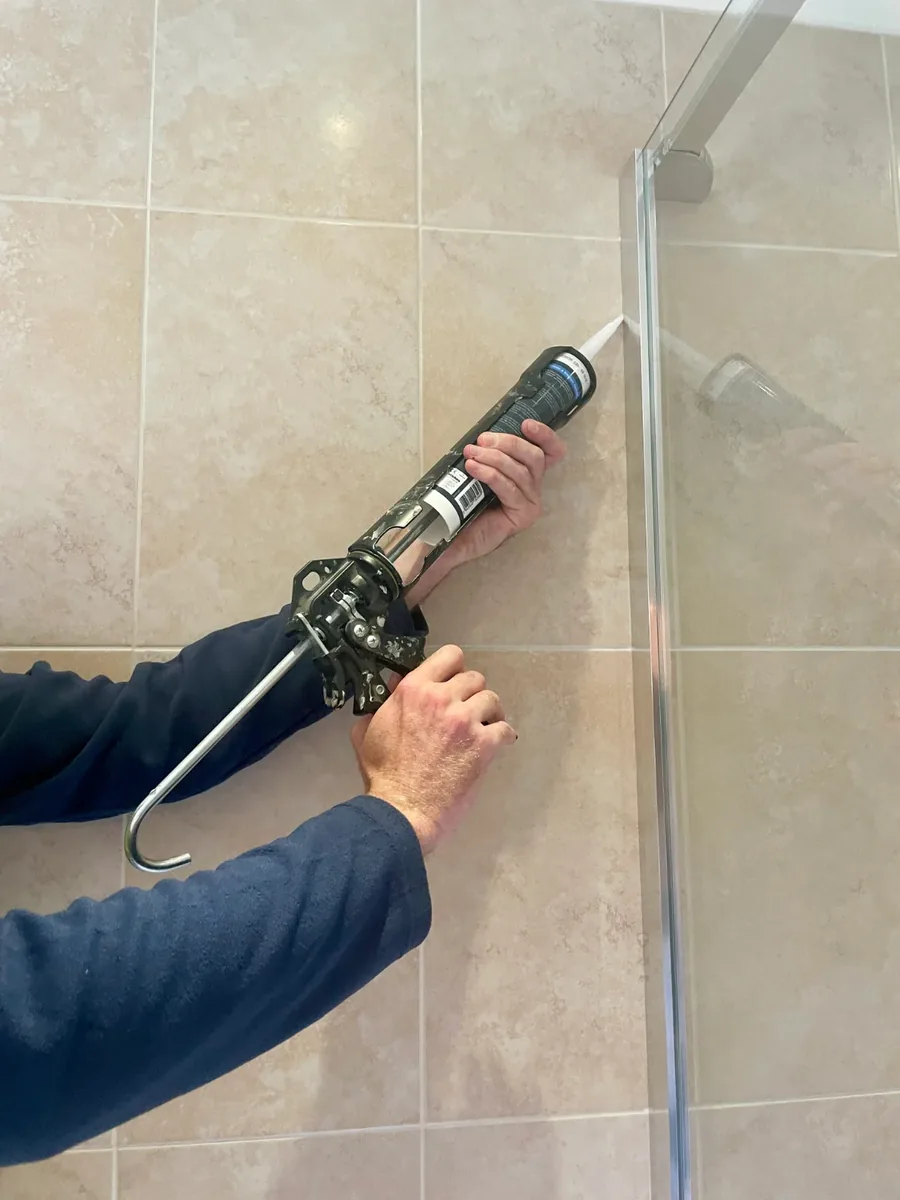
- We apply a neutral-cure glazing silicone and tool it smooth.
- The finished joints are checked and, where it’s safe, tested with water.
Getting ready for the visit
- Mention any sign-in or site rules at work premises
- Keep children and pets away from the work area
- Move anything stored near the joints
How to get a quote
A good description makes for an accurate quote. Let us know the location, the problem and roughly how many joints.
Related advice
How the job changes by surface
Rooflights
A rooflight faces rain and sun from above. Its sealant ages faster than vertical joints.
Glass-to-frame joints
We cut the old silicone from the glass without scratching it before new glazing silicone goes in.
Landlord and commercial work in Slough
We work for letting agents and landlords as well as householders. Sealant work between tenants keeps a property looking cared for.
Whether it’s one flat or a portfolio, you get the same standard of work: old sealant fully removed, joints prepared properly and a 12-month guarantee.
When to call us in Slough
Silicone won’t bond to a dirty surface. Where the joint wasn’t cleaned and degreased, the bead can peel away early.
The most common problems we see are:
- Water escaping where a screen meets the wall
- Sealant that was laid over old silicone and failed
- Split or lifting silicone on glass
- Leaks where conservatory glass meets the frame
Letting a property close to Slough station? Then leaking glazing joints, shower screens or conservatory seals are worth sorting between tenancies.
Comparing quotes
- What the quote includes, VAT included or not
- What product goes in the joint
- What insurance they hold
- How long the guarantee is
What we cannot put right
New sealant cannot fix everything, and we’d rather say so up front. It will not solve:
- A roof that has moved or dropped
- Frames that have decayed or split
- Leaks from the roof covering or flashing (a roofer’s job)
If in doubt, ring 0345 464 0079 or drop us an email and we will say what we think before booking.
Where we work in Slough
- Glass-to-frame joints
- Glass-to-glass joints
- Rooflights
- Conservatory frames
- Shower screens
- Glass balustrade bases
Keeping the joints in good condition
Joint life depends on how it’s used and looked after. Here’s what we suggest:
- Use gentle products around the joints
- Run a squeegee over the glass when you’re done
- Keep conservatory gutters clear of leaves
- Clean glass with a mild cleaner and a soft cloth
Avoid scraping near the new silicone when cleaning the glass. A soft cloth or sponge is best.
A leaking shower screen may not show at first. It can damage the floor or the ceiling below before you spot it.
Frames and glazing around Slough
Rainfall in the South East is lower than in much of the UK, yet outdoor joints still have to be sealed dry, so jobs are booked with the weather in mind. With historic houses such as Windsor Castle (about 2.1 miles south) nearby, there’s older building stock in the area around Slough as well as newer homes. In older buildings, older frames set in brick or stone need a sealant that suits them, and sometimes that’s traditional sand mastic.
If you live in an older home near St Michael and All Angels, replacement windows fitted into old openings often leave uneven gaps that need backing and a flexible joint. Schools such as Herschel Grammar School are buildings too, and its window and door frames need their mastic kept sound, just like a home’s.
Slough is about 22 miles west of London, in Slough. Slough gets the same service as everywhere we cover: the old material taken out, joints prepared properly and a 12-month guarantee. We cover 31 towns and villages across Slough, large and small. For nearby work, see our Reading page.
Here we cover the SL1, SL3, SL2 and SL6 postcode area for glazing silicone. That includes homes and businesses on High Street, Station Road and London Road. Main roads around Slough include the A4 and A332, which makes travel easy. If you’re just outside Slough, we cover Chalvey (1 mile south), Cippenham (1 mile west), Britwell (1 mile north-west), Farnham Royal (2 miles north) and Huntercombe (2 miles west). Larger places within reach include Datchet (3 miles south-east), Farnham Common (3 miles north), Poyle (5 miles south-east) and Colnbrook (4 miles south-east).
What’s near Slough
Around Slough, our work takes us to homes and buildings near Westgate School, Herschel Park and The Moon and Spoon pub, among other places. The nearest railway station is Slough station, roughly 0.7 miles east. Nearby you will also find Upton Hospital (0.9 miles south-east) and Windsor Castle (2.1 miles south). For a walk, there’s Taplow Lake and Burnham Beeches.
Nearby places to Slough
Other services in Slough
Should I try it myself first?
A careful DIYer can reseal a simple joint, like a short, easy-to-reach joint indoors. Where it goes wrong is sealing over the old bead, working on a wet joint or overloading the gap.
The biggest DIY mistake is sealing over old sealant. Silicone does not stick to old silicone, so it peels away and traps moisture behind it. All the old material has to come out first.