
Glasgow · Scotland
Glazing & conservatory sealant in Parkhouse, Glasgow
Glazing silicone in Parkhouse from a team with over 20 years’ experience. Rated 4.9 on Google from 180+ five-star reviews.
- Water tracking down the inner face of the glass
- Shower screens leaking along the wall or tray
- New silicone smeared over old sealant
Glazing silicone in Parkhouse, done properly
Cracked, stained or lifting silicone on glass spoils the look and lets water in. It comes off cleanly, without marking the glass before the new bead goes in. We’re often asked to deal with glass-to-glass joints that have split and silicone pulling away from the glass, across conservatory frames, glass-to-frame joints and shower screens.
Many older Scottish homes still have timber windows set into stone walls. The sealant has to suit the stone, which rules out acetoxy silicones that can mark or attack it.
Our work is backed for twelve months, and the guarantee is the same wherever you are.
- Where
- Parkhouse (G22, G20, G21)
- Region
- Glasgow
- Cover
- 12 months on all our work
- Quote
- A clear price before any work starts
- info@mrmastic.co.uk
- Updated
- 26 October 2026
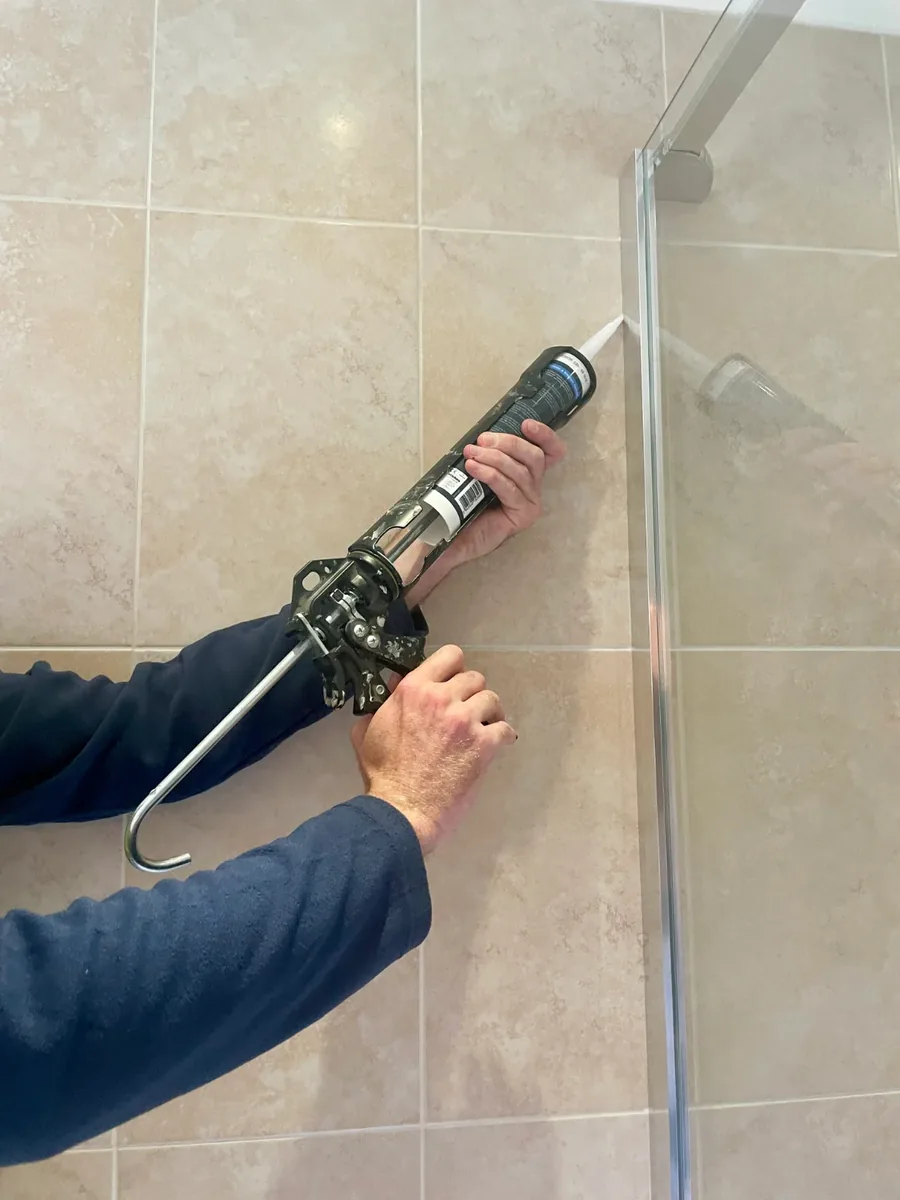
What glazing silicone looks like in Parkhouse
The west of Scotland is wetter than the east, so there’s plenty of rain for glazing joints and frame seals to keep out. Under the Repairing Standard, private landlords in Scotland have to keep homes wind and watertight, and sound outside sealant is part of that.
Schools such as St. Roch's Secondary School are buildings too, and the mastic around its windows and doors needs looking after like any other building’s. For landlords with property near Ashfield station, leaking glazing joints, shower screens or conservatory seals are worth sorting between tenancies.
Parkhouse is about 1 mile north-east of North Kelvinside, in Glasgow. Our applicators cover glazing silicone for homes and businesses in Parkhouse, as part of our work across Glasgow. Across Glasgow, we cover 183 places, Parkhouse among them.
Every address in G22, G20 and G21 is within our area for glazing silicone, from the main roads to the quietest streets. That includes homes and businesses on Birsay Road, Walnut Road and Balmore Road. Parkhouse is on the A879, so it’s easy for us to get to with everything needed for glazing silicone. We also cover Possilpark (1 mile south), Milton (1 mile north), Lambhill (1 mile west), Cowlairs (1 mile south-east) and Ruchill (1 mile west). Within a short drive, we also cover Glasgow (3 miles south), Calton (3 miles south), Langside (5 miles south), Yoker (5 miles west), Partick (3 miles south-west) and Mount Florida (5 miles south).
Local landmarks in Parkhouse
Typical jobs here are in homes near Glasgow University Library and Springburn Park, among other places. There’s a railway station in Parkhouse itself: Ashfield station. Well-known places in the area include Ruchill Hospital (0.6 miles south-west) and Heatherbank Museum of Social Work (1.6 miles south). Open spaces near Parkhouse include Hogganfield Loch and Castle Hill.
Also near Parkhouse
Other services in Parkhouse
How the visit works
All our tools and materials come with us in the van. Once we’ve agreed what’s being done, the area is protected and the work begins. Most jobs take anything from an hour or two to most of a day, depending on the size of the job. In smaller Scottish places, parking is generally less of an issue than access and distance. Let us know how to find you and how to reach the joints, and the visit is planned around that.
- We find where water is getting in and check whether it’s a sealant joint.
- The old sealant is removed from the glass and frame without scratching them.
- The glass and frame are cleaned and degreased.
- We apply a neutral-cure glazing silicone and tool it smooth.
- The finished joints are checked and, where it’s safe, tested with water.
Before we arrive
- Tell us about any water getting in
- Tell us about access, such as stairs, a lift or high-level joints
- Try not to wet indoor joints just before the visit
How to get a quote
It all starts with a short chat. Tell us what’s wrong, where it is and how much there is. When it suits you, send an email to info@mrmastic.co.uk.
Read more
Landlord and commercial work in Parkhouse
Whether it’s one flat or a portfolio, you get the same standard of work: old sealant fully removed, joints prepared properly and a 12-month guarantee.
Businesses can book us for washrooms, kitchens, offices and more. For commercial premises, we can talk through working times when we quote.
What we’re called out for in Parkhouse
Heat and cold make glass and frames move at different rates. In time, the sealant splits or pulls away.
The most common problems we see are:
- Conservatory leaks at frame and glazing joints
- Drips on the inside of a conservatory window
- New silicone smeared over old sealant
- Stained, discoloured glazing silicone
Tenement House, about 1.7 miles south-west, is one of the historic houses in the wider area around Parkhouse, and older homes nearby need a sealant that suits their walls.
What to look for in a quote
- What the quote includes, VAT included or not
- What guarantee comes with the work
- How much experience the applicator has
- Which colour the sealant will be
Different surfaces, different methods
Glass balustrade bases
The base joint is cut out and resealed. We do not install or replace glass.
Shower screens
Mouldy or lifting sealant on a screen leaks. Cutting it out and resealing fixes it.
Why it’s worth doing now in Parkhouse
You don’t need new glazing because the sealant has gone. Sound glass and frames generally just need resealing, and we’ll tell you if that is not the case. Around Parkhouse, water from a failed joint in an older stone home can soak into timber and plaster.
Combining jobs into one visit is normally more efficient than separate visits. We will give you a clear price for the lot.
What you get with us
- 20+ years of sealant experience
- Full insurance on every job
- Tidy, careful work
- Old sealant always removed completely
Take a look at how sealant jobs are priced or our reviews.
Keeping the joints in good condition
Simple care keeps the joints in good condition. Our advice:
- Squeegee the shower screen after each use
- Clear the conservatory gutters regularly
- Use a gentle glass cleaner and a soft cloth
- Check the silicone on glass every year or so
Avoid scraping near the new silicone when you clean. A soft cloth or sponge is best.
Drips or damp near a glazing joint shouldn’t be ignored. It may be sealant, or something else and we’ll find out which.
DIY versus a professional finish
A careful DIYer can reseal a simple joint, such as a straightforward joint indoors. The common mistakes are sealing over old sealant, sealing a damp joint and using far too much.
Too much sealant is as bad as too little. A heavy bead looks messy and copes badly with movement, and getting the depth right matters as much as the look.
Questions from Parkhouse
Will you come out to Parkhouse?
Yes, we do. Our work covers the whole of Scotland, from towns to the smallest places. The journey is planned ahead, so it helps to know about access.
Can you do glazing silicone in Parkhouse?
Yes, Parkhouse is within the area we cover. We work across all of Scotland. You can email us at info@mrmastic.co.uk and tell us what needs doing, and we’ll send you a clear quote.
Do you offer different sealant colours?
Most of the time, yes. We’ll tell you which colours the right product comes in and agree one before we start.
How do I get a quote for glazing silicone in Parkhouse?
It depends on the job, so we quote each one individually. For a quick quote, send an email to info@mrmastic.co.uk and let us know what needs doing and where.
What guarantee do I get?
All our work has a one-year guarantee.
How long does the job take?
It depends on the size of the job, but as a guide it takes a few hours for most jobs. We will give you a better idea when we quote.
Is a special sealant needed for glass?
Glass needs a sealant made for glazing. We use neutral-cure glazing silicone and anti-fungal silicone in wet areas.
Will the old sealant be removed?
Yes. Sealing over the old bead is the commonest cause of early failure, so we never do it.