
Greater London · England
Glazing Silicone in Crouch End
Glazing silicone for conservatories, rooflights, glass panels and shower screens for homeowners, landlords and businesses in Crouch End. Fully insured, ARBOMaster approved and guaranteed for a year.
- Water running down inside the glass
- Glass-to-glass joints that have split
- Black or yellowed silicone on glass joints
Glazing silicone in Crouch End
We renew glazing silicone on conservatories, rooflights and glass panels, as well as frameless shower screens and glass balustrade bases. The old sealant comes out, the joint is cleaned and new silicone goes in. We work on glass-to-glass joints, rooflights and glass-to-frame joints, and common reasons people get in touch are new silicone smeared over old sealant and water getting into a conservatory at the joints.
London homes have every kind of window, from timber sashes in period terraces to aluminium and uPVC in newer blocks. The mastic around them dries out and cracks with age, letting in draughts and water.
Whatever the size of the job, you get the same 12-month guarantee in Crouch End and across Greater London.
- Place
- Crouch End (N8, N19, N4)
- Wider area
- Greater London
- Guarantee
- One year on every job
- Price
- A clear price before work begins
- Phone
- 0345 464 0079
- Page updated
- 26 October 2026
When it is not the sealant
To be straight with you, there are a few things sealant will not fix:
- Water coming through the roof rather than a sealant joint
- Frames that have decayed or split
- A broken pane or roof panel
If in doubt, phone 0345 464 0079 or email us and we’ll say what we think.
What we seal
- Conservatory frames
- Rooflights
- Glass-to-glass joints
- Glass-to-frame joints
- Glass balustrade bases
- Shower screens
When to call us in Crouch End
Not every leak is a sealant problem: failed roof panels, slipped glazing bars and blocked gutters cause them too. That’s why we trace the leak first.
If you can see any of these, it’s time to have the joints looked at:
- Drips on the inside of a conservatory window
- Leaks from the base of a shower screen
- Rooflight joints letting water in
- Cracked silicone between glass panels
Crouch End is in London, so parking needs planning: tell us about permits, visitor bays or off-street space when you book.
Questions to ask before you book
- What insurance they hold
- How much experience the applicator has
- Which sealant they’ll use, and why
- Whether you can choose the colour
Places near Crouch End
Other services in Crouch End
Crouch End: your questions answered
Can you help a landlord with a rental near Crouch Hill station?
Yes, we work for landlords and agents. You can ring 0345 464 0079 or send us an email with the address and a few details, and we’ll give you a fixed price before we start.
Is parking a problem for a job in Crouch End?
Parking in Crouch End, as in most of London, takes a little planning: a visitor permit or a bay close to the door helps a lot.
Do you cover Crouch End?
Yes. We are based in Crawley and work across South East England, London and Scotland, Crouch End included.
Are you an approved applicator?
Yes. We’re an ARBOMaster approved applicator, which is run for the Arbo sealant brand.
Do you guarantee glazing sealant work?
Every job comes with our one-year guarantee, and we’re fully insured.
How long will you be here?
It depends on the size of the job, but most jobs take a few hours for most jobs. We’ll give you a better idea when we quote.
Can I add another job to the visit?
Yes. More than one area can be quoted together.
Can you reseal a frameless shower screen?
Yes. We remove the old silicone carefully, and the joints are cleaned and resealed.
DIY versus a professional finish
The biggest DIY mistake is sealing over old sealant. Silicone doesn’t stick to old silicone, so it peels away and traps moisture behind it. All the old material has to come out first.
If you’ve already had a go yourself, that is fine. We remove it and do the joint properly.
Glazing silicone in Crouch End: local notes
Rainfall in the South East is lower than in much of the UK, yet outdoor joints still have to be sealed dry, so jobs are booked with the weather in mind. With historic houses such as Witanhurst (about 1.5 miles south-west) nearby, there’s older building stock in the area around Crouch End as well as newer homes. In older buildings, older frames set in brick or stone need a sealant that suits them, and sometimes that’s traditional sand mastic.
Schools such as Rokesly Infant & Nursery School are buildings too, and its window and door frames need their mastic kept sound, just like a home’s. Homes close to Christ Church include some older properties, and replacement windows fitted into old openings often leave uneven gaps that need backing and a flexible joint.
Crouch End is about 2 miles north-west of Highbury, in Greater London. For glazing silicone in and around Crouch End, please phone 0345 464 0079 or send us an email for a quick quote. We’re based in Crawley and cover Greater London, Crouch End included. We cover 764 towns and villages across Greater London. You can also see our page for London, roughly 6 miles from Crouch End.
Postcode districts we cover here for glazing silicone: N8, N19 and N4. You will find streets such as New Road, Park Road and Ella Road, all of which we cover. We also cover Hornsey (1 mile north-east), Stroud Green (1 mile east), Turnpike Lane (1 mile north-east), Highgate (1 mile south-west) and Upper Holloway (1 mile south). Within a short drive, we also cover London (6 miles south), City of Westminster (5 miles south), Marylebone (4 miles south), Kensington (6 miles south-west), St Pancras (4 miles south) and Shoreditch (4 miles south-east).
Near you in Crouch End
Locally, jobs take us to homes and businesses close to Asanté Academy of Chinese Medicine, Hornsey School for Girls and Queens pub. The nearest railway station is Crouch Hill station, about 0.7 miles south-east of the centre. A little further out are Montfichet's Tower (4.7 miles south) and Hornsey Central Hospital (under half a mile north-west). Open spaces near Crouch End include Parkland Walk and Darland's Lake.
Different surfaces, different methods
Glass-to-frame joints
Where glass sits in a frame, silicone keeps water out. When it splits, water can get into the frame.
Glass balustrade bases
Balustrade bases are exposed outdoors. A sound sealant joint keeps them tidy and dry.
For landlords and businesses
We work for landlords and letting agents as well as householders. Sealant work between tenants is a simple way to keep a property in good order before the next move-in.
Whether it’s one flat or a portfolio, the work is the same standard: the old material taken out, careful preparation and a 12-month guarantee.
How it works
Every visit runs the same way: we check the joints, mask and protect the surrounding surfaces, do the work and tidy away. It usually takes anything from an hour or two to most of a day, depending on the size of the job. In a London area like Crouch End, the main things to plan are parking and access: tell us about permits, visitor bays or off-street space, which floor we are working on and whether there’s a lift.
- First, we check where the water gets in.
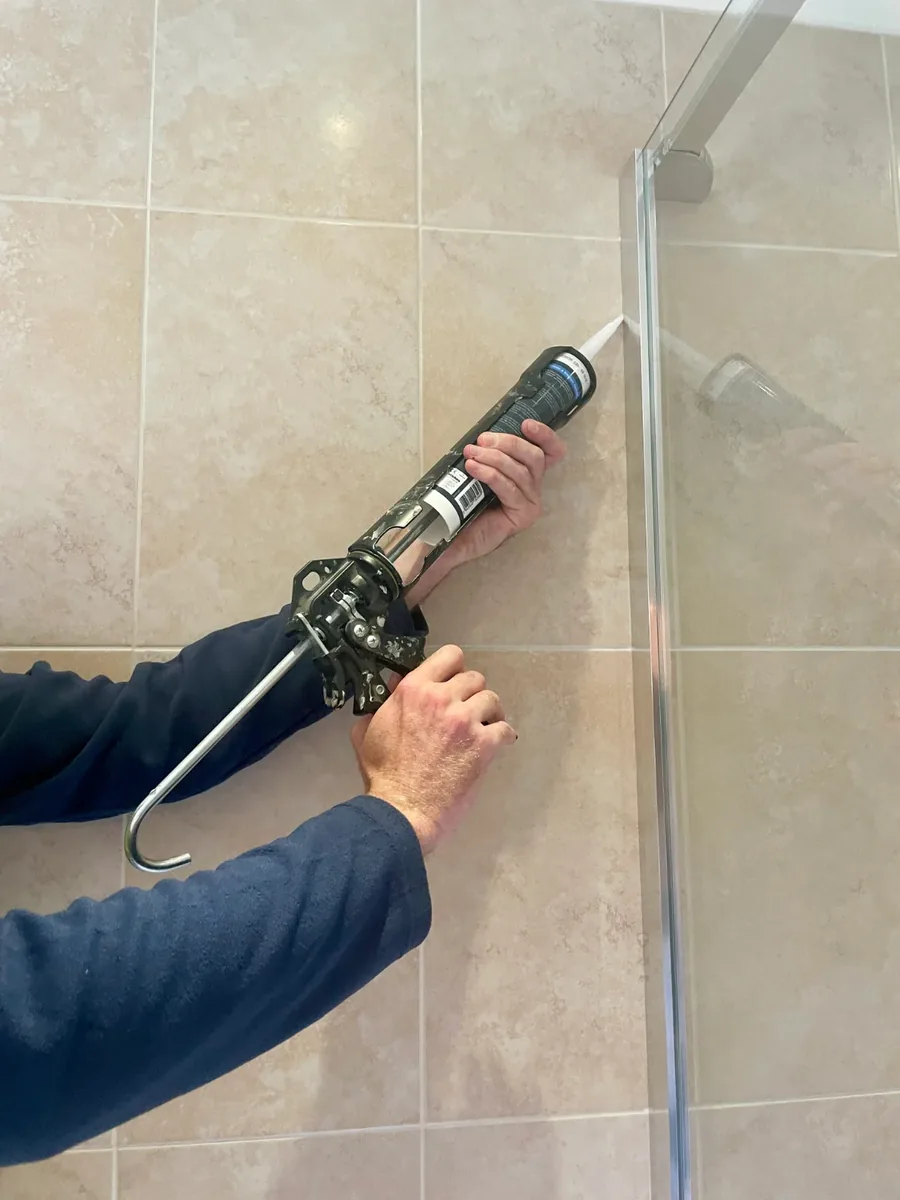
- The failed silicone is cut out without marking the glass or frame.
- The joint is cleaned and degreased.
- A neutral-cure glazing silicone is applied and tooled.
- We check the finished joints and test with water where it’s safe.
How to prepare
- Keep children and pets away from the work area
- Mention if the joints have been sealed before
- Let us know about parking restrictions
Ask for a quote
A good description makes for an accurate quote. Tell us where the job is, what’s wrong and how much there is, and add pictures by email if you can.
Read more
How to look after the new joints
Aftercare is simple, and it makes a real difference:
- Keep conservatory gutters clear of leaves
- Avoid scraping close to the bead
- Do not leave a drip for the next storm
- Open vents or windows to let moisture out
Do not use blades or scrapers near the bead when cleaning the glass. Stick to a soft cloth.
Do not leave lifting or mouldy silicone on glazing. Peeling silicone lets water in behind and the leak gets worse.