
Surrey · England
Glazing & conservatory sealant in Claygate, Surrey
Glazing silicone for Claygate, by sealant specialists with 20+ years’ experience. Rated 4.9 on Google from 180+ five-star reviews.
- Water tracking down the inner face of the glass
- Failed sealant around rooflight glass
- Split or lifting silicone on glass
Leave it or put it right?
Replacing a conservatory roof is major work. Where the water is getting in through sealant renewing the joint is the simpler fix. If the roof is the problem, we will say so. Homes in smaller places like Claygate can face more weather, and failed outside joints let damp into walls. Indoors, a failed seal lets water into floors and panels as it would anywhere.
Homes and businesses are quoted the same way: the amount of work, the access and the products needed, plus any working-time requirements on site. Ask us for a quote and we’ll explain what it covers.
Why book with us
- Tidy, careful work
- 20+ years of sealant experience
- Arbo and Everbuild products
- Colour picked to suit the job
Take a look at what affects the cost or customer reviews.
Glazing silicone in Claygate, done properly
Glazing joints need a sealant made for glass. Our applicators use neutral-cure glazing silicone, which suits glass and most frame materials, finished with a neat, even bead. Common call-outs are for water escaping where a screen meets the wall and failed joints on frameless glass, on glass-to-frame joints, shower screens and glass balustrade bases.
Houses in smaller places like Claygate can stand more in the open than those in a built-up town. That is hard on the mastic around frames and sills.
The work is covered for a year after we finish. If anything is not right with it, phone 0345 464 0079 or drop us an email.
- Location
- Claygate (KT10)
- Region
- Surrey
- Cover
- 12 months on all our work
- Quote
- A clear quote up front
- Call
- 0345 464 0079
- Updated
- 26 October 2026
Frames and glazing around Claygate
Historic houses like The Homewood (about 2.3 miles west) are a reminder that the area around Claygate has older buildings as well as new. In older buildings, older frames set in brick or stone need a sealant that suits them, and sometimes that is traditional sand mastic. Rainfall in the South East is lower than in much of the UK, though outdoor sealant still has to go onto a dry joint, so the forecast decides the day.
If you let a flat or house near Claygate station, glazing joints are worth checking at the end of a tenancy, before a small leak grows. Schools such as Claygate Primary School are buildings too, and its window and door frames need their mastic kept sound, just like a home’s.
Claygate is about 3 miles south-west of Surbiton, in Surrey. Jobs in Claygate get the same care as everywhere else we work: old sealant removed completely, careful preparation and a one-year guarantee. Across Surrey, we cover 395 places, and Claygate is one of them. For nearby work, see our London page, about 14 miles away.
We work across KT10 for glazing silicone. Local streets include Church Road, High Street and Station Road. If you are just outside Claygate, we cover Barwell (1 mile south-east), Hinchley Wood (1 mile north), Esher (1 mile north-west), Hook (1 mile east) and Malden Rushett (2 miles south-east). Larger places within reach include Guildford (13 miles south-west), Woking (11 miles west), Epsom (3 miles south-east), Horley (15 miles south-east), Redhill (11 miles south-east) and Ewell (4 miles east).
What’s near Claygate
In Claygate, that means homes and buildings near Milbourne Lodge School, Claygate Common and Chessington Community College, among other places. Claygate has its own railway station: Claygate station. Other landmarks nearby include The Ashley Centre (3.6 miles south-east) and Epsom Cottage Hospital (2 miles south-east). Not far away are The Lake and Jubilee Wood.
Different surfaces, different methods
Glass-to-frame joints
Where glass sits in a frame, silicone keeps water out. A failed bead lets water in.
Conservatory frames
The joints where the conservatory meets the house take a lot of movement. We reseal them with a sealant suited to the frame.
Signs you need glazing silicone in Claygate
Dirt and grease stop silicone sticking. Where the joint wasn’t cleaned and degreased the sealant may lift within a few years.
People generally contact us when they notice something like this:
- Conservatory leaks at frame and glazing joints
- Black or yellowed silicone on glass joints
- Water running down inside the glass
- Cracked silicone between glass panels
If you live in an older home near Church of Holy Trinity, the joint between an old wall and a newer frame is normally the first place rain gets in.
Comparing quotes
- What happens if the job turns out different
- What guarantee comes with the work
- Whether the sealant suits the joint
- Whether VAT is included
Also near Claygate
What else we do in Claygate
Questions from Claygate
Do you cover smaller places like Claygate?
Yes, smaller places are covered as well as towns. Our work covers London and the South East. Let us know about access, parking and anything unusual about getting there when you book.
Do you work for landlords with property near Claygate station?
Yes, rental work is part of what we do. Just call 0345 464 0079 or email us and tell us about the property, and we’ll give you a clear quote.
Is it possible to redo the silicone on a shower screen?
We can. We remove the old silicone carefully, and the joints are cleaned and resealed.
Can you fix a leaking conservatory?
Often, if the leak is at a sealant joint. We find where the water gets in first before any sealing.
Is a special sealant needed for glass?
We pick a glazing silicone to suit the materials. Neutral-cure products suit most glass and frames.
Do you work for hotels and businesses?
Yes. We can plan bigger jobs in stages.
Why not top up the existing silicone?
Silicone does not stick to silicone and water gets between the layers. The old bead always comes out first.
Do you remove the old sealant?
Yes, always, and completely. New silicone does not stick to old silicone, so the joint is cleaned back first.
Keeping the joints in good condition
Aftercare is simple, and it makes a real difference:
- Look over the glazing joints once a year
- Act on drips or damp patches early
- Squeegee the shower screen after each use
- Don’t use a blade near the sealant
Don’t use blades or scrapers near the bead when you clean. A soft cloth or sponge is best.
Shower screen leaks can go unnoticed. Water can soak into the floor or reach the room below long before you see it.
When it is not the sealant
In fairness, some problems need a different trade:
- A roof that has moved or dropped
- Leaks from the roof covering or flashing (a roofer’s job)
- A broken pane or roof panel
If in doubt, phone 0345 464 0079 or drop us an email and we will say what we think.
Surfaces we seal
- Glass balustrade bases
- Glass-to-frame joints
- Conservatory frames
- Rooflights
- Glass-to-glass joints
- Shower screens
DIY sealant or a professional job?
If you are set on DIY, put the effort into preparation: remove every trace of old sealant, clean and dry the joint, and follow the product’s cure time. If it fails, we can still redo it.
If you’ve already had a go yourself, that is fine. We remove it and do the joint properly, so tell us about it when you ask for a quote.
The process
There’s no need to move everything out, only the area right around the joints. Everything nearby is protected, and the work takes a few hours for most jobs for a typical job. Parking around Claygate is usually easier than in a town centre, but mention any lanes, gates or long drives. If the job is outside, tell us about side access and how high the joints are.
- First, we check where the water gets in.
- The failed silicone is cut out without marking the glass or frame.
- We clean the glass and frame so the new silicone bonds.
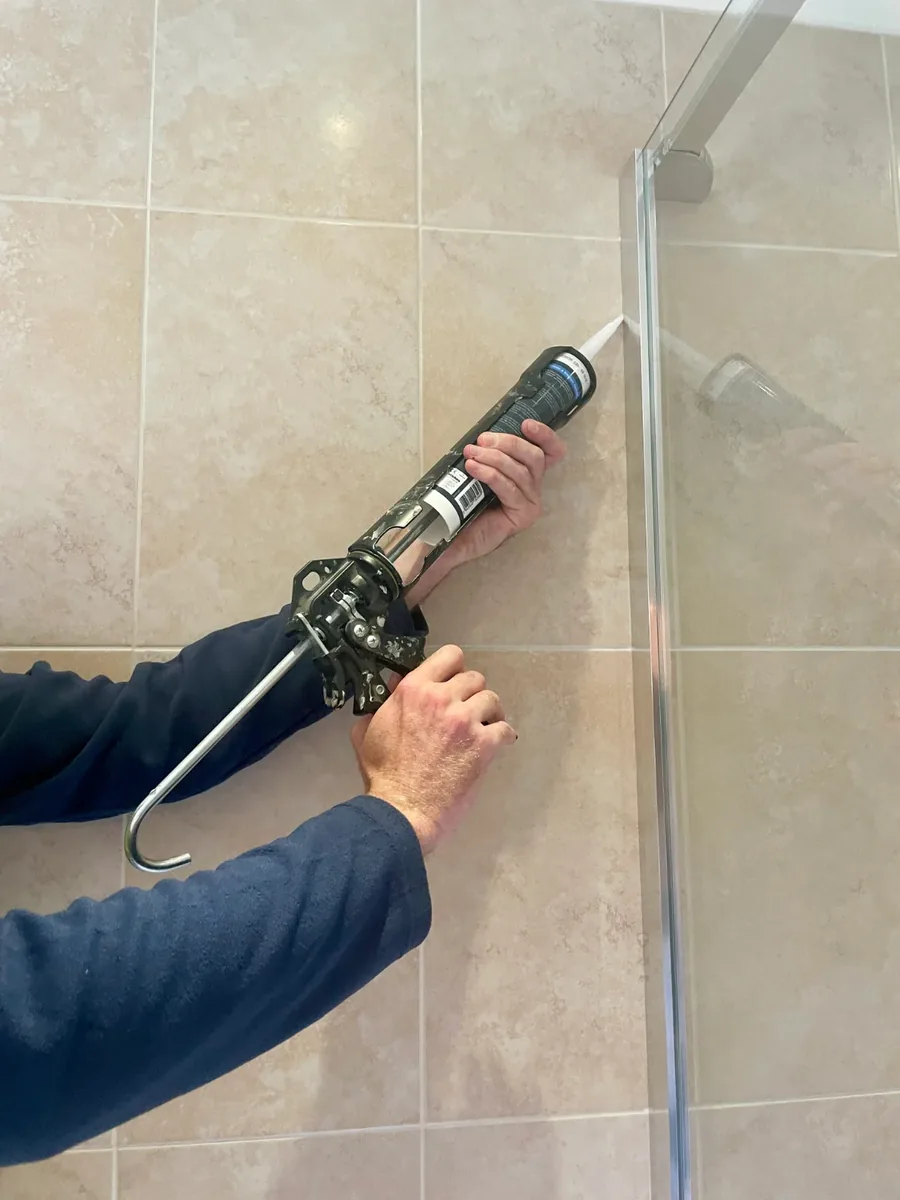
- A neutral-cure glazing silicone is applied and tooled.
- Each joint is checked and, where possible, water-tested.
Getting ready for the visit
- Let us know about earlier repairs to the joints
- Mention any tricky access
- Try not to wet indoor joints just before the visit
How to get a quote
It all starts with a short chat. Describe the problem, the location and the size of the job, and we will explain how we’d tackle it. When it suits you, ring 0345 464 0079 or drop us an email.