
Slough · England
Longford Bathroom Resealing
Bath, shower, basin, wet room, worktop and sink resealing in Longford, with a 12-month guarantee on every job. Call for a quick quote.
- Two layers of silicone, both failing
- Mouldy sealant that has gone black
- Splits where the tray meets the wall
Bathroom resealing in Longford
Homes in Longford have the same weak spots as anywhere else: bath edges, tray joints, basin backs and kitchen upstands. Each one is stripped, cleaned and dried before new silicone goes in. If you have new sealant laid over old sealant that is now lifting and cracked, shrunken or lifting silicone, we can help, whatever the surface.
Around Longford, it’s houses and cottages rather than flats. The work is the same as anywhere: everything old comes out before the new sealant or grout goes in.
All our work is covered by a one-year guarantee, wherever you are in Slough.
- Location
- Longford (SL3, UB7, TW6)
- Region
- Slough
- Cover
- A year, on every job
- Price
- Quoted before any work starts
- Telephone
- 0345 464 0079
- Last updated
- 26 October 2026
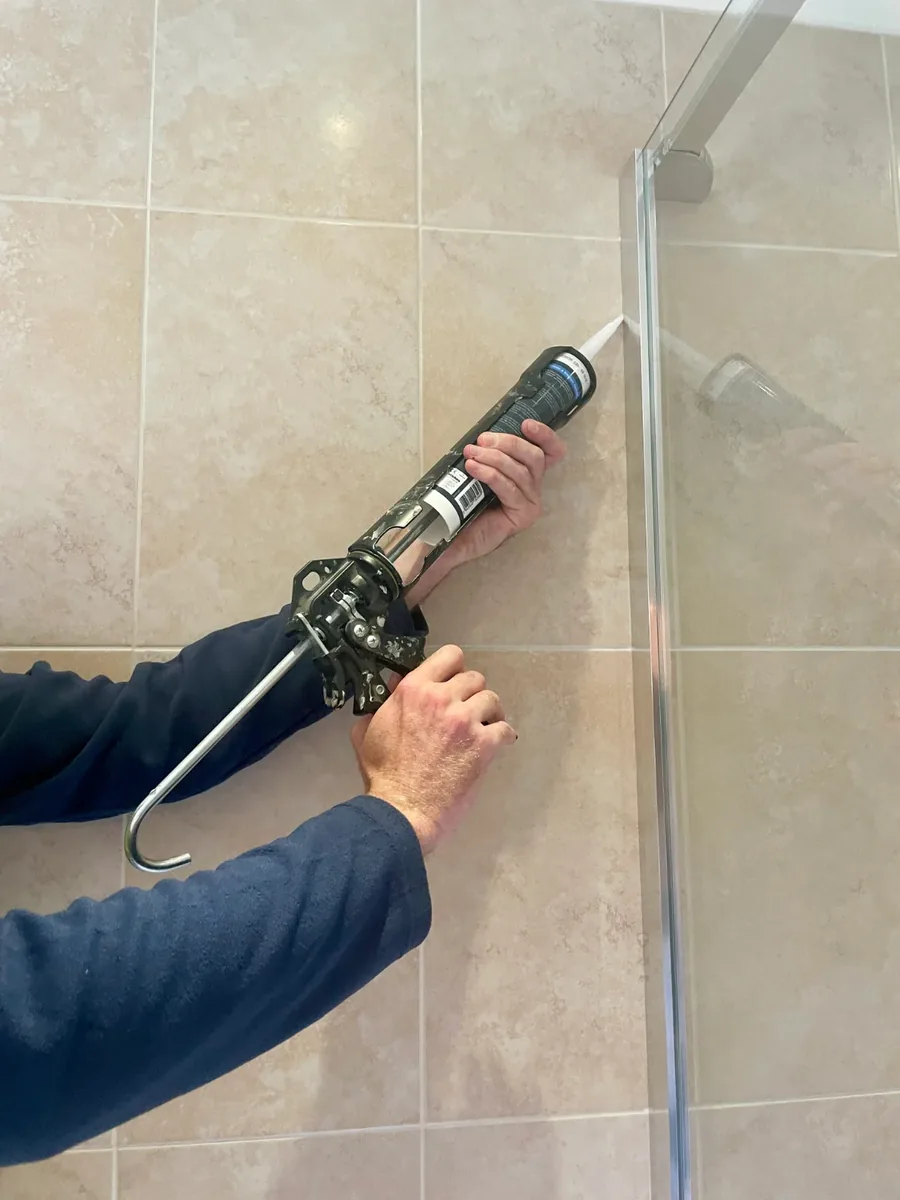
What bathroom resealing looks like in Longford
There are hotels and other places to stay in and around Longford. Hotel bathrooms are part of our work as well as homes, and can be done room by room. Most of the South East has hard water, which leaves limescale on sealant, grout and fittings.
For landlords with property near Heathrow Terminal 5 Rail station, fresh sealant around the bath, shower and sink between tenancies helps a property present well and keeps leaks at bay. Schools such as Pippins School are buildings too, and we reseal washrooms and kitchens in schools and businesses as well as homes.
Longford is about 2 miles south-west of West Drayton, in Slough. We provide bathroom resealing to homes and businesses in Longford. Longford is one of 31 places in Slough where we work. London is on our list too, about 17 miles from Longford.
Every address in SL3, UB7 and TW6 is covered for bathroom resealing. That includes homes and businesses on Wallis Road, Widgeon Road and Stanwell Moor Road and the roads around them. Longford sits on or near the A3044. We also cover the places around Longford: Harmondsworth (1 mile north-east), Stanwell (2 miles south-east), Heathrow (2 miles east), Sipson (2 miles north-east) and West Bedfont (2 miles south-east). Larger places within reach include Slough (6 miles north-west), Cippenham (7 miles north-west), Chalvey (5 miles west), Britwell (7 miles north-west), Langley (3 miles north-west) and Upton (5 miles north-west).
Local landmarks in Longford
In Longford, that means homes and buildings near The Kings Arms and Arthur Jacob Nature Reserve and the streets around them. The closest station to Longford is Heathrow Terminal 5 Rail station, about 0.5 miles south-east of the centre. Nearby you’ll also find Windsor Castle (4.8 miles west) and Harlington (2.1 miles north-east). Green spaces nearby include Crane Meadows and Staines Reservoirs.
FAQs for Longford
Will you come out to Longford?
Yes. Longford is within the area we cover, which takes in towns, villages and rural addresses. We work across London and the South East. Let us know about access, parking and anything unusual about getting there when you book.
I let a flat near Heathrow Terminal 5 Rail station. Can you help?
Yes, landlords and agents are among the people we work for. You can phone 0345 464 0079 or email us with the details for a clear quote.
Will the old sealant be removed?
Always. Sealing over the old bead is the commonest cause of early failure, so we never do it.
How much does bathroom resealing cost in Longford?
Size, access and the old material all affect the cost. Call for a quick quote and we will talk you through it.
Will you leave a mess?
Not at all. The area is protected while we work and cleaned up afterwards.
Where are you based?
We work from Crawley. We cover Longford and the rest of Slough.
Do I need to be at home?
Access is agreed with you when the job is booked. For inside work, that normally means someone being in.
Do you do kitchens as well as bathrooms?
Yes. Kitchen joints get extra degreasing before the new bead goes on, then a colour-matched bead is laid.
When to call us in Longford
Mould is the reason many people want their sealant replaced. Bathrooms without good ventilation keep the silicone damp for hours, and once it has grown into the bead, cleaning rarely gets it out.
These are the problems we are asked about most:
- Black spots spreading through the bead
- Cracked, shrunken or lifting silicone
- Gaps where the bath or tray has moved
- Water escaping at the shower enclosure
For an older house near a landmark such as Church of St Mary, older homes can move a little, which is hard on rigid grout and tired sealant.
Questions to ask before booking
- Whether they’re fully insured
- What product goes in the joint
- Whether you can choose the colour
- How the surfaces are prepared before sealing
What sealant work can’t fix
A few problems are outside what sealant work can do:
- Tiles that have come away from the wall
- Leaks from a shower valve, waste or pipework (a plumber’s job)
- A tray or bath that is cracked through
Not sure which it is? You can call 0345 464 0079 or send us an email and we will tell you honestly.
Joints and surfaces we work on
- Kitchen worktops & upstands
- Baths
- Basins & vanity units
- Wet rooms
- Shower trays & enclosures
- Sinks & splashbacks
How the job changes by surface
Kitchen worktops & upstands
Upstands and back edges are cut out, cleaned of grease and resealed, since cooking leaves a film that stops silicone sticking. Proper degreasing is what helps the new joint last.
Shower trays & enclosures
The vertical joint where a screen profile meets the wall is a common leak point. It’s resealed along with the tray joints, sealing the side the enclosure’s instructions call for.
Places near Longford
Also in Longford
What we do, step by step
Before we leave, we go over the finished joints with you and tell you how long to leave it. The work normally takes around two hours for one bath or shower, longer for a whole bathroom, depending on the size of the job. For a village or hamlet like Longford, the journey is planned in advance: let us know about lanes, gates and parking. We bring what the job needs, so it can be finished in one trip where possible.
- Protection goes down around the bath, shower or worktop.
- We cut away the old sealant and clean off what’s left.
- Mould is treated, then the joint is left to dry thoroughly.
- Any bath is filled with water, then we lay a bead of anti-fungal silicone in white, clear or a matching colour.
- The joint is finished neatly and we explain when it can get wet.
Preparing for the visit
- Let us know about stairs, lifts or work at height
- Try not to wet indoor joints just before the visit
- For business premises, tell us about site rules or sign-in
Getting a quote
For a quick quote, get us on the phone, or send an email if you’d rather. Describe what needs sealing and we’ll explain what’s involved before giving you a price.
Related advice
For landlords and businesses
We regularly work with letting and managing agents. Send the address, what’s needed and the access arrangements and we’ll quote.
Housing providers, facilities teams and property managers book us too. We can quote a run of properties together.
Looking after it afterwards
A little care helps the new joints last. We recommend:
- Give the silicone its full cure time
- Clean with a mild bathroom cleaner and a soft cloth
- Avoid abrasive pads on the sealant
- Open a window or run the fan so the room dries
Give the silicone time to cure before it gets wet, following the cure time we give you. After that, a quick wipe after showering helps keep it clean.
Watch for the early signs: lifting ends, gaps, dark shadows under the bead or a stain downstairs. If you spot one, it’s time to reseal.
Should I try it myself first?
The biggest DIY mistake is sealing over old sealant. New silicone won’t bond to old, so it peels away and traps moisture behind it. All the old material has to come out first.
Overfilling a joint is a classic DIY mistake. A thick, smeared bead looks untidy and does not move well, and the joint depth matters as much as the finish.