
Essex · England
Bathroom & kitchen resealing in Havering-atte-Bower, Essex
Bathroom resealing across Havering-atte-Bower and nearby, with old sealant always removed completely.
- A bead that has pulled away from the tiles
- Splits where the tray meets the wall
- A reseal done over the top of the old bead
Bathroom resealing in Havering-atte-Bower
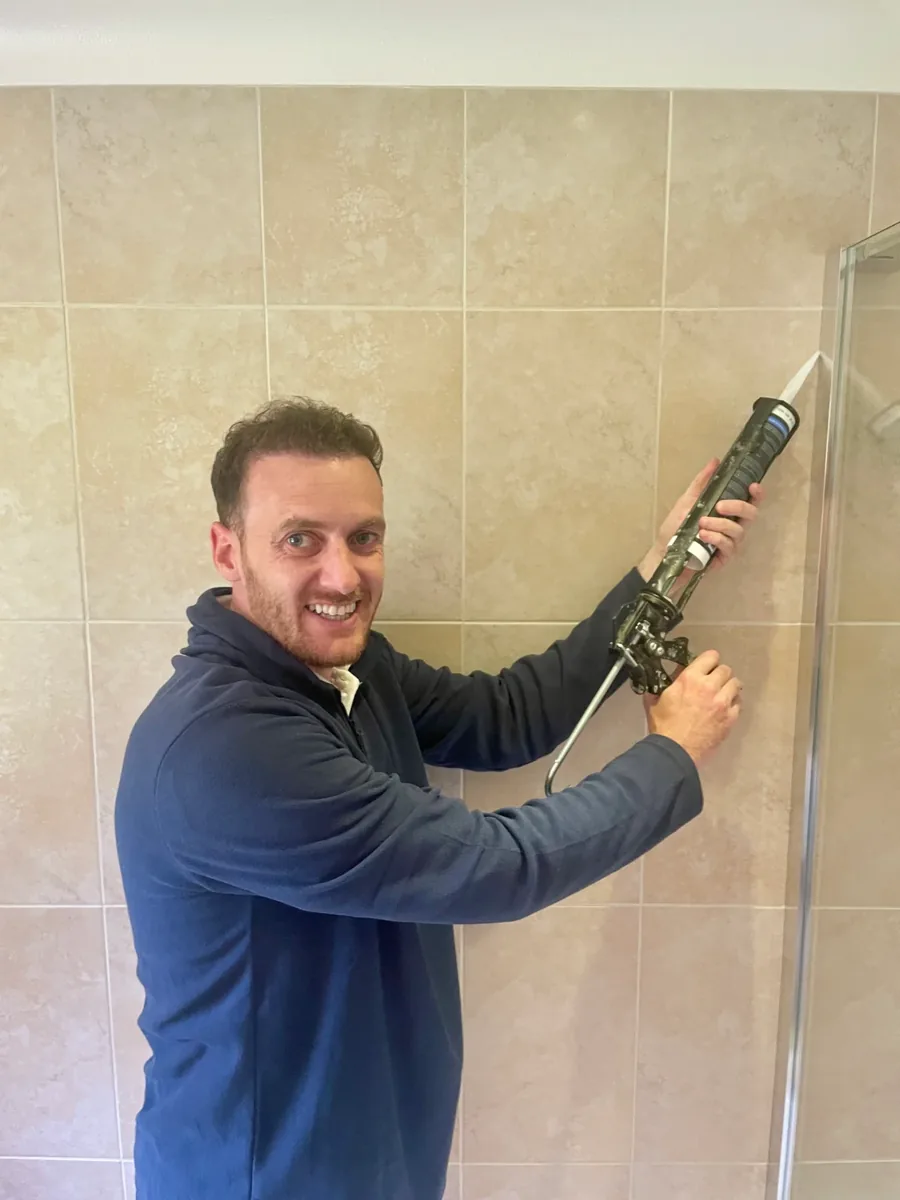
The bead of silicone around a bath, tray or worktop is what keeps water out of the gaps. Once it cracks or goes mouldy, water starts to find its way through. Our team cut the old bead out completely and lay a new one in anti-fungal sanitary silicone. Typical jobs include lumpy, uneven sealant from a DIY attempt and new sealant laid over old sealant that is now lifting, across baths, wet rooms and kitchen worktops & upstands.
For a small place like Havering-atte-Bower, bathroom resealing is planned like any other job: it just means planning the journey and access beforehand. Once we’re there, the bathroom or kitchen gets the same care as anywhere else.
Our work is backed for twelve months.
- Location
- Havering-atte-Bower (RM4)
- Wider area
- Essex
- Cover
- 12 months on all our work
- Quotes
- Quoted before any work starts
- Phone
- 0345 464 0079
- Page updated
- 26 October 2026
Havering-atte-Bower questions
Can you do bathroom resealing in Havering-atte-Bower?
Yes, Havering-atte-Bower is within the area we cover. We work across London and the South East. You can ring 0345 464 0079 or send us an email and tell us what needs doing.
Can you help a landlord with a rental near Harold Wood station?
Yes, we work for landlords and letting agents. Just phone 0345 464 0079 or send us an email and tell us about the property, and we’ll give you a clear price.
What does bathroom resealing cost?
We do not publish prices, because the cost depends on the job: its size, the old material, access and the product needed. You’ll get a clear quote before any work starts.
Do I need to be at home?
If the work is inside, we need someone to let us in. Once we’ve agreed the job, you don’t need to watch us work.
Can you just seal over the old silicone?
No. It’s a common reason for reseals failing. The old joint is stripped, cleaned and resealed from scratch.
Are you fully insured?
Yes. We are fully insured.
Can you work on commercial sites?
Yes, regularly. We can plan bigger jobs in stages to suit the site.
How long does the new silicone need before I use the shower?
Generally after around 24 hours. You’ll get the exact cure time before we leave.
What happens on the day
When we get to you, we compare the joints with what we discussed. If anything is different, we explain it before carrying on. After that, the work takes a couple of hours for a single bath or shower. For a village or hamlet like Havering-atte-Bower, the journey is planned in advance: tell us about narrow lanes, gates, long drives and where we can park. We bring what the job needs, so it can be finished in one trip where possible.
- We protect the area and cut out all of the old sealant.
- The joint is cleaned, degreased and treated for mould.
- The joint is left to dry, and baths are filled with water first.
- We apply anti-fungal sanitary silicone in one even bead and tool it neatly.
- We tidy up and give you the cure time, generally around 24 hours.
Getting ready for the visit
- Tell us about any previous sealing or DIY attempts
- Let us know about parking restrictions
- Move anything stored near the joints
How to get a quote
For a quote, ring 0345 464 0079 or drop us an email with the location and a short description of the problem. You’ll have a clear quote before work begins.
Related advice
What we cannot put right
In fairness, there are a few things sealant will not fix:
- Cracks in the tray itself rather than the joint
- Leaks from a shower valve, waste or pipework (a plumber’s job)
- Damage behind the tiles that needs a tiler
Not sure which it is? You can call 0345 464 0079 or email us and we will tell you honestly.
Surfaces we seal
- Sinks & splashbacks
- Shower trays & enclosures
- Wet rooms
- Basins & vanity units
- Baths
- Kitchen worktops & upstands
Bathroom resealing around Havering-atte-Bower
Most of the South East has hard water, which leaves limescale on sealant, grout and fittings.
Managing a site like Dame Tipping Church of England Primary School? Then we reseal washrooms and kitchens in schools and businesses as well as homes. For landlords with property near Harold Wood station, fresh sealant around the bath, shower and sink between tenancies helps a property present well and keeps leaks at bay.
Havering-atte-Bower is about 3 miles north-west of Harold Wood, in Essex. Our applicators cover bathroom resealing for homes and businesses in Havering-atte-Bower and the surrounding area. Havering-atte-Bower is one of 644 places in Essex we cover. There’s also a page for London, about 15 miles away.
Postcode districts we cover here for bathroom resealing: RM4. Whether your property is on North Road, Broxhill Road and Bower Farm Road or a nearby road, our applicators can take on the job. Other places close to Havering-atte-Bower include Chase Cross (1 mile south-west), Stapleford Abbotts (1 mile north-west), Redbridge (2 miles west), Lambourne End (2 miles west) and Lambourne (3 miles north-west). We also work in nearby towns such as Chelmsford (15 miles north-east), Basildon (12 miles east), Harlow (11 miles north), Brentwood (5 miles east), Billericay (10 miles east) and Loughton (6 miles west).
Around Havering-atte-Bower
Around Havering-atte-Bower, our work takes us to homes and buildings near Bower Park Academy, The Top Oak pub and Havering Country Park. Havering-atte-Bower’s nearest station is Harold Wood station, about 2.7 miles south-east of the centre. Nearby you will also find Harold Wood Hospital (2.5 miles south-east) and Romford Shopping Hall (2.8 miles south). Not far away are Bedfords Park.
Different surfaces, different methods
Kitchen worktops & upstands
The joint between worktop and wall takes splashes, crumbs and cleaning sprays. We seal them in a colour that suits the worktop.
Sinks & splashbacks
The edge of an inset sink is a common place for water to get under the worktop. Where the sealant around the visible edge has failed, we renew it.
Common problems we fix in Havering-atte-Bower
No sealant lasts indefinitely. Daily water, heat and cleaning products slowly wear it down, and how long it lasts comes down to use, cleaning and ventilation.
Common reasons people contact us are:
- A joint torn by a bath that flexes
- Leaking joints on a shower screen
- Two layers of silicone, both failing
- Shrunken sealant along the back of a worktop
For an older house near a landmark such as Church of St John the Evangelist, bathrooms in older houses have often been refitted more than once, with sealant laid over sealant.
What your quote should include
- How the surfaces are prepared before sealing
- When the joint can take water or movement
- Who does the work, and how experienced they are
- The length of the guarantee
Keeping the joints in good condition
Joint life depends on how it’s used and looked after. We suggest:
- Dry worktop joints after washing up
- Run the extractor fan during and after every shower
- Keep bottles off the sealant line
- Clean with a mild bathroom cleaner and a soft cloth
Good ventilation does more than any cleaner. Run the extractor fan during and after a shower, so the bead dries out between uses.
Mould that starts as a few spots spreads through the bead. Once it’s deep in the silicone, cleaning normally will not remove it. Replacing the sealant early keeps the job small.
Landlord and commercial work in Havering-atte-Bower
We regularly work with letting and managing agents. Tell us the address, the job and how access works and we will give you a quote.
A neglected joint can let water reach the structure, which matters even more when someone else lives there. Resealing at the right time is simple maintenance that we can handle for you.
Towns and villages near Havering-atte-Bower
What else we do in Havering-atte-Bower
DIY versus a professional finish
If you’ve already had a go yourself, that’s fine. We remove it and do the joint properly.
Overfilling a joint is a classic DIY mistake. A heavy bead looks messy and copes badly with movement, and the joint depth matters as much as the finish.