
Mr Mastic · South East, London and Scotland
Bath resealing
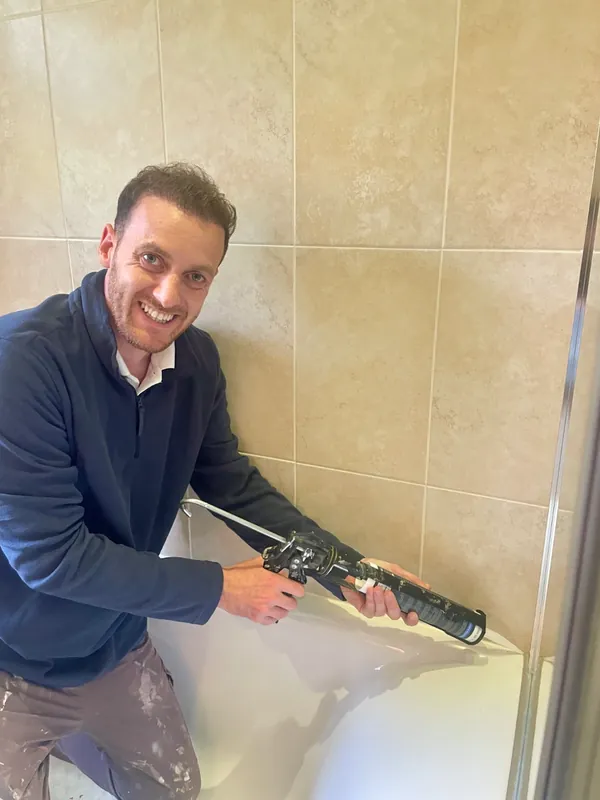
Mouldy, split or leaking bath sealant cut out completely and replaced with a neat bead of anti-fungal silicone, laid with the bath full so it lasts.
- Black mould in the sealant
- Gaps where the bath has dropped
- Water behind the bath panel
What a bath reseal involves
A bath reseal replaces the flexible joint between the bath and the wall, and between the bath and the panel where needed. It sounds like a small job, and in time it is: most single baths take a couple of hours. What makes it last is the preparation.
- We cut out every bit of the old sealant, including any layers someone has sealed over the top, and scrape off the thin film it leaves on the tiles and the bath.
- We clean and degrease the joint and treat any mould.
- We let the joint dry fully.
- We fill the bath with water, so the new bead is laid with the bath at its heaviest. When you get in later, the bath doesn’t pull the new seal apart.
- We lay a single, even bead of anti-fungal sanitary silicone and tool it neatly, then tell you how long to leave it before using the bath (usually around 24 hours).
Why bath sealant fails
- Mould: black spots grow into the silicone in a steamy room and can’t be cleaned out.
- Movement: baths, especially acrylic ones, flex and drop slightly when full, which tears a bead laid with the bath empty.
- Sealing over old sealant: new silicone won’t bond to old silicone, so a bead laid over the top lifts within weeks and traps mould underneath.
- Wet or dirty joints: sealant laid onto damp or soapy surfaces never grips properly.
- Age: sealant is a maintenance item; it shrinks, hardens and splits over the years.
A real bath reseal: Crossways, Three Bridges
In a 1950s terrace on Crossways in Three Bridges, Crawley, black mould kept coming back around the bath however often it was cleaned. Someone had sealed straight over the old, failed sealant, so the mould was underneath from the start. We took both layers out, cleaned and dried the joint and applied Everbuild anti-fungal white silicone. The job took under three hours. The customer’s words: “Mr Mastic stripped it all back and did it properly. Bathroom looks brand new.”
Bath reseal or something else?
Sometimes water around a bath isn’t the sealant. A leaking waste, overflow or tap, or a cracked acrylic bath, needs a plumber or a repair first. If we find something like that, we’ll tell you before we start, rather than reseal a joint that won’t fix the leak. If the tiles above the bath have failed grout too, regrouting at the same visit makes sense.
Looking after a resealed bath
Run the extractor fan or open a window after bathing, wipe the joint dry when you can, and clean it with a mild bathroom cleaner rather than harsh bleach sprays every day. Leave the new sealant for the full cure time before the bath gets wet. Our guide to why sealant goes mouldy explains more, and how to reseal a bath walks through the job step by step if you’d like to try it yourself.
Bath resealing near me
Searching for bath resealing near you? We cover London, the South East and all of Scotland, from city flats to village homes. Pick your town below, see all areas, or call and tell us your postcode.
What it costs
We don’t publish set prices, because it depends on how much old sealant there is, whether there are several layers to remove, mould, and whether the panel or nearby joints need doing too. Call or email with a few details (photos help) and we’ll give you a clear quote before any work starts. Published guides give a feel for the market; see our mastic man cost guide.
What customers say
Rated 4.9 on Google from 180+ five-star reviews. Read the reviews on Google.
“Called for a bathroom reseal and the mastic man showed up on time with all the right equipment. Brilliant attention to detail. The sealant looks perfect and they kept everything tidy.”
“We had old mastic that needed replacing throughout our kitchen and bathrooms. The mastic man professional was knowledgeable, quoted fairly, and delivered excellent quality work. Highly recommend!”
“Professional mastic man service from start to finish. They assessed the work properly, gave a clear quote, and executed the job perfectly. Very satisfied with the results.”
Bath resealing: common questions
How long does a bath reseal take?
Usually a couple of hours for a single bath, including removing the old sealant.
How long before I can use the bath?
Usually around 24 hours. We’ll tell you the cure time for the product we used before we leave.
Why fill the bath with water before resealing?
A full bath drops slightly. Sealing it full means the bead isn’t stretched when you get in, so it doesn’t tear.
Can you get the black mould out of my bath sealant?
Not if it has grown into the silicone. The lasting fix is to cut it out, treat the joint and reseal with anti-fungal silicone.
Do you reseal the bath panel too?
Where the panel joint needs it, yes. Tell us when you ask for a quote.
Is a bath reseal guaranteed?
Yes. Every job comes with our one-year guarantee.