
Isle of Wight · England
Glazing & conservatory sealant in Thorley Street, Isle of Wight
Problem with your glazing joints in Thorley Street? We cut out the old, prepare the joints and apply the right sealant, and the work is guaranteed for a year.
- Mouldy sealant around glass panels
- Leaks from the base of a shower screen
- New silicone smeared over old sealant
Why it’s worth doing now in Thorley Street
A new conservatory roof is a big job. Where the water is getting in through sealant, resealing is far simpler. If the roof is the problem, we’ll say so. Older cottages and farmhouses around Thorley Street can have timber floors and frames, and water through a failed joint can rot timber if it’s left.
Leaving a failed joint normally makes the job bigger, not smaller, because water and mould keep working on it. If you’re not sure whether it needs doing, call 0345 464 0079 or send us an email for an honest opinion and a quote.
Why us?
- Homes, businesses and hotels
- White, clear, grey or coloured to suit, where the product allows
- ARBOMaster approved applicator
- Every job guaranteed for a year
See our cost guide and our reviews.
Glazing silicone in Thorley Street, done properly
Many conservatory leaks come down to failed sealant, where glass meets frame or frame meets wall. We find the joint that’s letting water in and renew it and tell you plainly if the cause is something else. We are often asked to deal with black or yellowed silicone on glass joints and cracked silicone between glass panels, across conservatory frames, rooflights and glass balustrade bases.
Mastic can only go onto a dry, clean joint, so window work in Thorley Street is booked around the forecast. Tell us about access to every side of the house, including upper-floor windows.
A one-year guarantee comes with the work, just as it does everywhere we cover.
- Location
- Thorley Street (PO41)
- Region
- Isle of Wight
- Guarantee
- 12 months on all our work
- Quotes
- A clear price before work begins
- Call
- 0345 464 0079
- Updated
- 26 October 2026
Other services in Thorley Street
What affects the quote in Thorley Street
Your quote is based on your job. We look at:
- Any working-time requirements on site
- How many areas need sealing
- The amount of work
- Access and height
What you pay reflects the work, not a rough estimate. That is why we ask a few questions first and give you a clear quote before any work starts.
Helping us quote
Photos by email are helpful but not essential. Please mention:
- Access, such as stairs, a lift or height
- The address or postcode of the job
- Whether it has been sealed before
- Pictures of the joints, sent by email
Need a quote? Please call 0345 464 0079 or send us an email with a few details. You’ll know what we plan to do, and what it will cost, before any work begins.
For landlords and businesses
Water getting past a failed joint can damage the building, which is a bigger problem in a rented property. Resealing at the right time is simple maintenance.
Mouldy or split sealant often shows up at the end of a tenancy, and it’s easy to sort out between tenants. Several properties can go on one quote.
What happens on the day
Good joint work is mostly preparation, and we do not rush it. Joints are cleaned back and dried before anything new goes in. In total, it normally takes a few hours for most jobs. Somewhere as small as Thorley Street, access is often the only tricky part. For outside work, also let us know about exposed walls and any outbuildings involved.
- We start by finding the leak and making sure sealant is the cause.
- We cut out the failed silicone, taking care of the glass and frame.
- The glass and frame are cleaned and degreased.
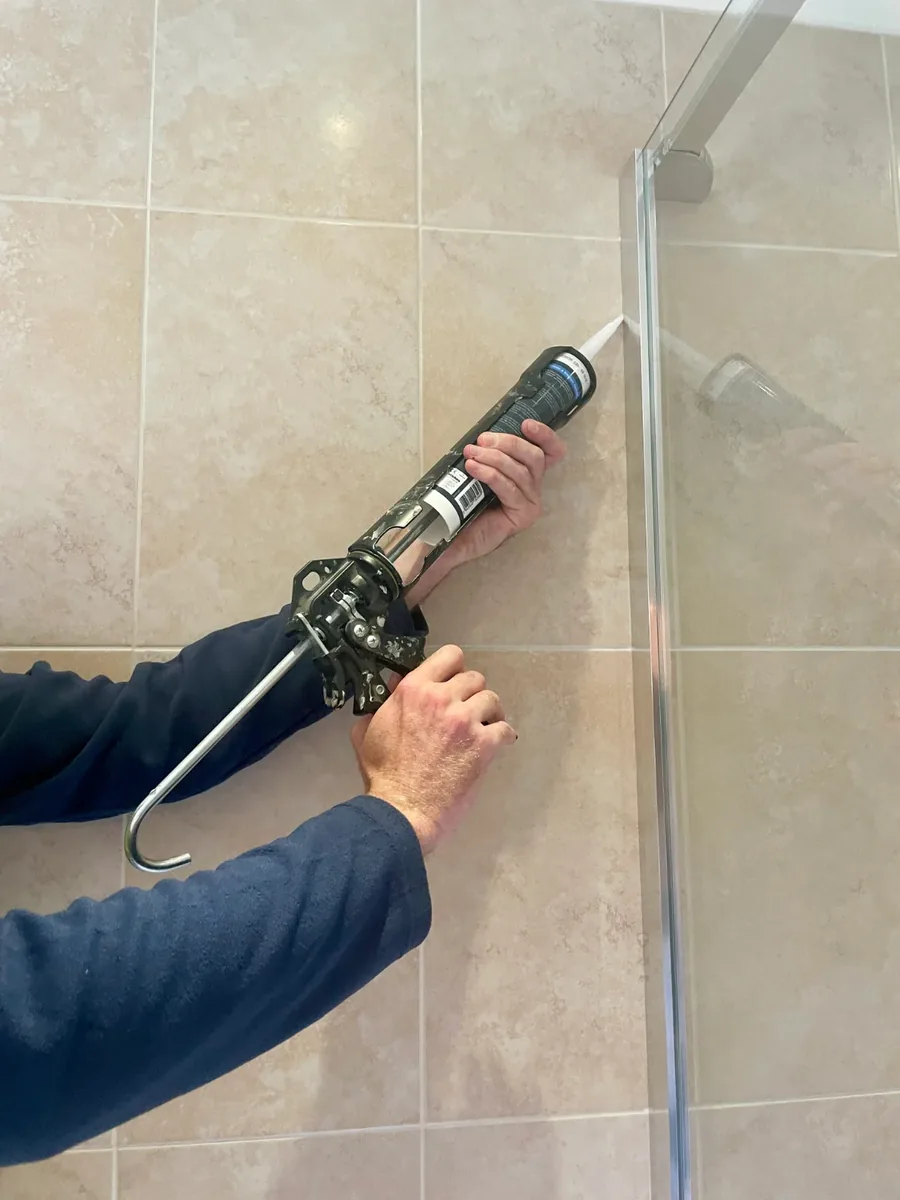
- New glazing silicone goes in and is tooled to a neat finish.
- We check the joints and, where safe, run water over them.
Getting ready for the visit
- On commercial sites, let us know about site rules
- Let us know if you’ve seen damp or leaks
- Plan for the work area to be out of bounds to pets and children
How to get a quote
For a quick quote, get us on the phone, or send an email if you’d rather. Tell us about the joints that need doing and we’ll explain what’s involved before giving you a price.
Related advice
Common questions in Thorley Street
Does the coastal weather in Thorley Street affect outside sealant?
Coastal homes put outside sealant through more weather than inland ones, so the choice of sealant and the preparation matter even more. It’s worth checking the walls that face the sea first.
Will you come out to Thorley Street?
Yes, Thorley Street is covered. We work across London and the South East, and smaller places are part of that. The journey is planned ahead, so it helps to know about access.
Is the work guaranteed?
Our 12-month guarantee applies to every job we do.
Do you work for letting agents?
Yes, regularly. Several properties can be quoted together, and between tenancies is a good time for the work.
Can tenants book the work?
Yes. Check with your landlord; we can send the quote to them too.
Is it enough to run a bead over the old sealant?
Silicone doesn’t stick to silicone and water gets between the layers. We cut out the old sealant first.
Do you do commercial work?
Yes. We’ve worked for hotels, offices and other businesses, and we are fully insured.
Should I try DIY first?
It depends on the job. High-level, external movement and fire-rated joints are professional jobs.
When something else is needed
To be straight with you, some problems need a different trade:
- Failed flashing around a conservatory
- Glass that needs replacing
- Structural problems with a conservatory roof
If you’re not sure, just phone 0345 464 0079 or email us and we will give you a straight answer.
Joints and surfaces we work on
- Glass-to-frame joints
- Glass balustrade bases
- Rooflights
- Shower screens
- Glass-to-glass joints
- Conservatory frames
DIY versus a professional finish
If you’ve already had a go yourself, that’s fine. We remove it and do the joint properly.
If you do try it yourself, take your time over the preparation: remove every trace of old sealant, clean and dry the joint, and follow the product’s cure time. If it does not work out, we can still put it right.
What glazing silicone looks like in Thorley Street
Thorley Street is within about 2 miles of the coast, where wind-driven rain is a fact of life and, nearer the shore, so is salt air. Both are hard on glazing joints and frame seals, which can dry out and crack sooner where a building faces the weather. Compared with the north and west, the South East gets less rain, though outdoor sealant still has to go onto a dry joint, so the forecast decides the day.
In the older streets around St. Swithin's Church, the windows may be timber, sash or later replacements, and each needs the right sealant against the wall. Around Thorley Street, as everywhere, glazing silicone is only as good as the preparation behind it.
Thorley Street is about 6 miles south-east of Lymington, in the Isle of Wight. Every kind of property in Thorley Street is covered for glazing silicone. The work is guaranteed for a year. Across the Isle of Wight, we cover 125 places, and Thorley Street is one of them. For nearby work, see our Southampton page, about 16 miles away.
Jobs for glazing silicone in PO41 works the same way as everywhere else we cover. Glazing silicone is available to properties on Hill Place Lane and Holmfield Avenue. Nearby, we also carry out glazing silicone in Thorley (1 mile west), Wellow (1 mile south-east), Ningwood (1 mile east), Shalcombe (2 miles south-east) and Newbridge (2 miles east). We also work in nearby towns such as Newport (7 miles east), Ryde (13 miles east), Cowes (8 miles north-east), Sandown (14 miles east), Shanklin (13 miles east) and Ventnor (13 miles south-east). For island and remote addresses, the job takes a little more planning, so mention it when you ask for a quote.
Local landmarks in Thorley Street
A little further out are Yarmouth Castle (1.7 miles north-west) and Ferguson Family Museum (2 miles west). Green spaces nearby include Lymington and Keyhaven Marshes Nature Reserve and Compton Down.
How the job changes by surface
Conservatory frames
The joints where the conservatory meets the house take a lot of movement. They’re resealed with a suitable sealant.
Glass-to-glass joints
Glass-to-glass joints depend entirely on the sealant. The bead needs to be tidy and fully bonded.