
Argyll and Bute · Scotland
Dunbeg Glazing Silicone
Professional glazing silicone in and around Dunbeg, with old sealant always removed completely and a 12-month guarantee.
- Leaking glazing joints on a rooflight
- New silicone smeared over old sealant
- Glass-to-glass joints that have split
How we handle glazing silicone in Dunbeg
Not every silicone suits glass. Our applicators use neutral-cure glazing silicone that’s suited to glass and the frame, and we tool it to a neat, even finish. We work on conservatory frames, glass-to-glass joints and glass balustrade bases, and common reasons people get in touch are conservatory leaks at frame and glazing joints and a quick top-up bead that didn’t last.
Mastic can only go onto a dry joint, so outside work in Dunbeg depends on the weather, and longer journeys are planned in advance. Tell us about access to all the windows and doors, upstairs included.
A 12-month guarantee comes as standard.
- Place
- Dunbeg (PA37)
- Region
- Argyll and Bute
- Guarantee
- A year, on every job
- Price
- Quoted before any work starts
- info@mrmastic.co.uk
- Last updated
- 26 October 2026
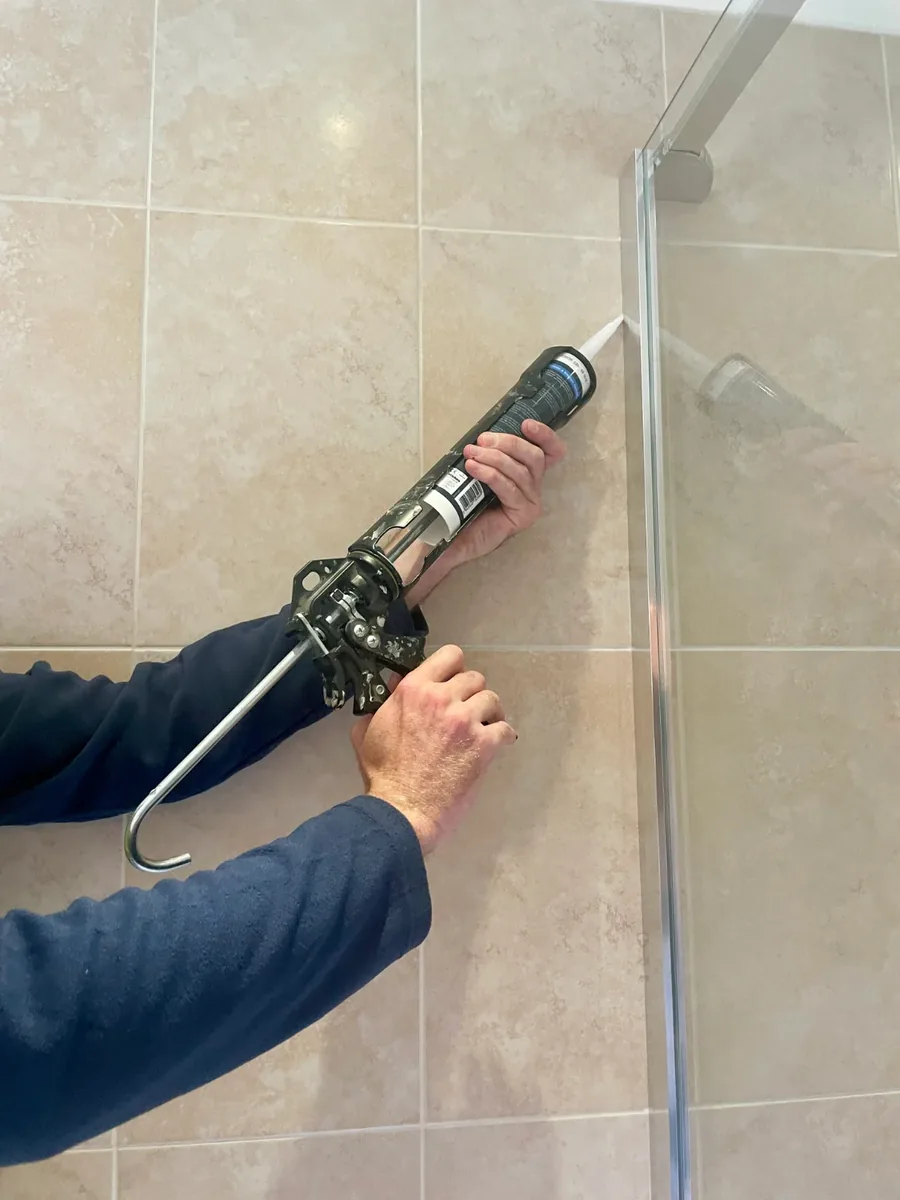
Do you need glazing silicone in Dunbeg?
On shower screens, constant water and cleaning products wear silicone. Mould gets into it and the edges begin to peel.
Any of these means the joints need attention:
- Cracked silicone between glass panels
- Water getting into a conservatory at the joints
- Water running down inside the glass
- Glazing silicone that has cracked or come away
In the older streets around Dunstaffnage Chapel, the joint between an old wall and a newer frame is normally the first place rain gets in.
What your quote should include
- Who turns up on the day
- How long the guarantee is
- How the joint is cleaned and prepared
- Are they insured?
Towns and villages near Dunbeg
Other services in Dunbeg
What the job involves on each surface
Glass balustrade bases
Glass balustrades sit in a channel that is often finished with sealant. Failed sealant there lets water collect.
Rooflights
Water around a rooflight isn’t always the sealant. We find the cause first.
What happens if it’s left?
Glazing joints need a sealant made for the job. A general-purpose tube may not bond well or may react with the frame so we choose a glazing silicone instead. Out of town in Scotland, exposed walls take a lot of weather, and once water gets behind a failed joint, damp in stone or harled walls is slow to dry out.
A failed joint rarely gets cheaper to fix by waiting. If you’re unsure, email us at info@mrmastic.co.uk and we’ll give you an honest view and a quote.
What you get with us
- Domestic, commercial and hotel work
- We are fully insured
- 20+ years of sealant experience
- A 12-month guarantee on all work
See what affects the cost or our reviews.
Glazing silicone in Dunbeg: local notes
Dunbeg is within about 1 mile of the coast, where wind-driven rain is a fact of life and, nearer the shore, so is salt air. Both are hard on glazing joints and frame seals, which can dry out and crack sooner where a building faces the weather. Sash and case windows are common in older Scottish homes, often pointed into the wall with traditional sand mastic.
Rented homes near Connel Ferry station change hands often, and leaking glazing joints, shower screens or conservatory seals are worth sorting between tenancies.
Dunbeg is in Argyll and Bute. Our applicators cover glazing silicone for homeowners, landlords and businesses in Dunbeg. 118 places in Argyll and Bute are on our list, from the larger towns to small villages. You can also see our page for Glasgow, roughly 61 miles from Dunbeg.
Our applicators cover all of PA37 for glazing silicone and the streets around it. Whether your property is on Young Crescent, Castle Road and Stewart Way or a nearby road, we can help. Close by, we work in Ganavan (1 mile south-west), North Connel (2 miles north-east), Dunollie (2 miles south-west), Connel (2 miles east) and Oban (3 miles south). Remote and island addresses need a little more planning, so please mention your location when you drop us a line at info@mrmastic.co.uk.
What’s near Dunbeg
For rail, the closest station is Connel Ferry station, about 2.5 miles east. A little further out are Oban Museum (2.2 miles south-west) and Lorn and Islands Hospital (3.4 miles south). The countryside around Dunbeg includes Lochan Dubh.
DIY sealant or a professional job?
The difference is mostly in the preparation and the product. We take joints back to clean, dry surfaces, and the sealant is matched to the joint and its conditions, then guaranteed for a year.
If you’re set on DIY, put the effort into preparation: take out all the old sealant, make sure the joint is clean and dry, and give it the full cure time. If it fails, we can still redo it.
Questions from Dunbeg
Do you cover smaller places like Dunbeg?
Yes, smaller places are covered as well as towns. We work across all of Scotland. Let us know about access, parking and anything unusual about getting there when you book.
Do you work for landlords with property near Connel Ferry station?
Yes, we work for letting agents and landlords. Just drop us a line at info@mrmastic.co.uk and tell us about the property, and we will give you a clear price.
Do the sealants smell?
Some sealants have a smell while they cure, which fades as it sets. Ventilation helps.
Can you reseal a frameless shower screen?
Yes. The old bead comes off without marking the glass before cleaning and resealing.
Are you insured?
Yes. We’re fully insured.
Is a special sealant needed for glass?
We pick a glazing silicone to suit the materials. Neutral-cure silicone is the usual choice.
Will you leave a mess?
We keep the work tidy. We protect what’s around the joints, and the area is left clean when we finish.
Can I choose the sealant colour?
In most cases you can choose. We’ll explain which colours are available.
Aftercare tips
Good habits help new joints last longer. A few tips:
- Wipe the screen down after showering
- Ventilate the conservatory to cut condensation
- Avoid strong solvents on or near the sealant
- Inspect the sealant on glazing annually
Use mild cleaners on and around the silicone. Strong solvents can soften or mark it.
Conservatory leaks rarely stay small. Water runs along frames and down walls so it’s best dealt with straight away.
The process
At the end, we look at the finished work together and tell you how long to leave it. The visit itself generally takes a few hours, depending on how many joints need doing, depending on the size of the job. Somewhere like Dunbeg may be a longer drive, and the journey is planned ahead. Mention tracks, gates, ferries or anything else about the route.
- First, we check where the water gets in.
- The failed silicone is cut out without marking the glass or frame.
- The joint is cleaned and degreased.
- We lay the new bead and tool it smooth.
- We check the finished joints and test with water where it’s safe.
Getting ready for the visit
- Mention any tricky access
- Mention any parking rules near the property
- On commercial sites, let us know about site rules
Ask for a quote
The more we know about the job, the more useful the quote. Tell us where the job is, what’s wrong and how much there is, and add pictures by email if you can.
Related advice
When it isn’t the sealant
Sealant isn’t the answer to every problem, and we’ll tell you before any work starts. It won’t solve:
- Structural problems with a conservatory roof
- Failed flashing around a conservatory
- Misting between the panes of a double-glazed unit (a failed unit for a glazier)
Not sure which it is? You can email us at info@mrmastic.co.uk and we’ll tell you honestly before you book.
Joints and surfaces we work on
- Glass-to-glass joints
- Glass balustrade bases
- Shower screens
- Glass-to-frame joints
- Rooflights
- Conservatory frames