
South Lanarkshire · Scotland
External Mastic in Strathaven
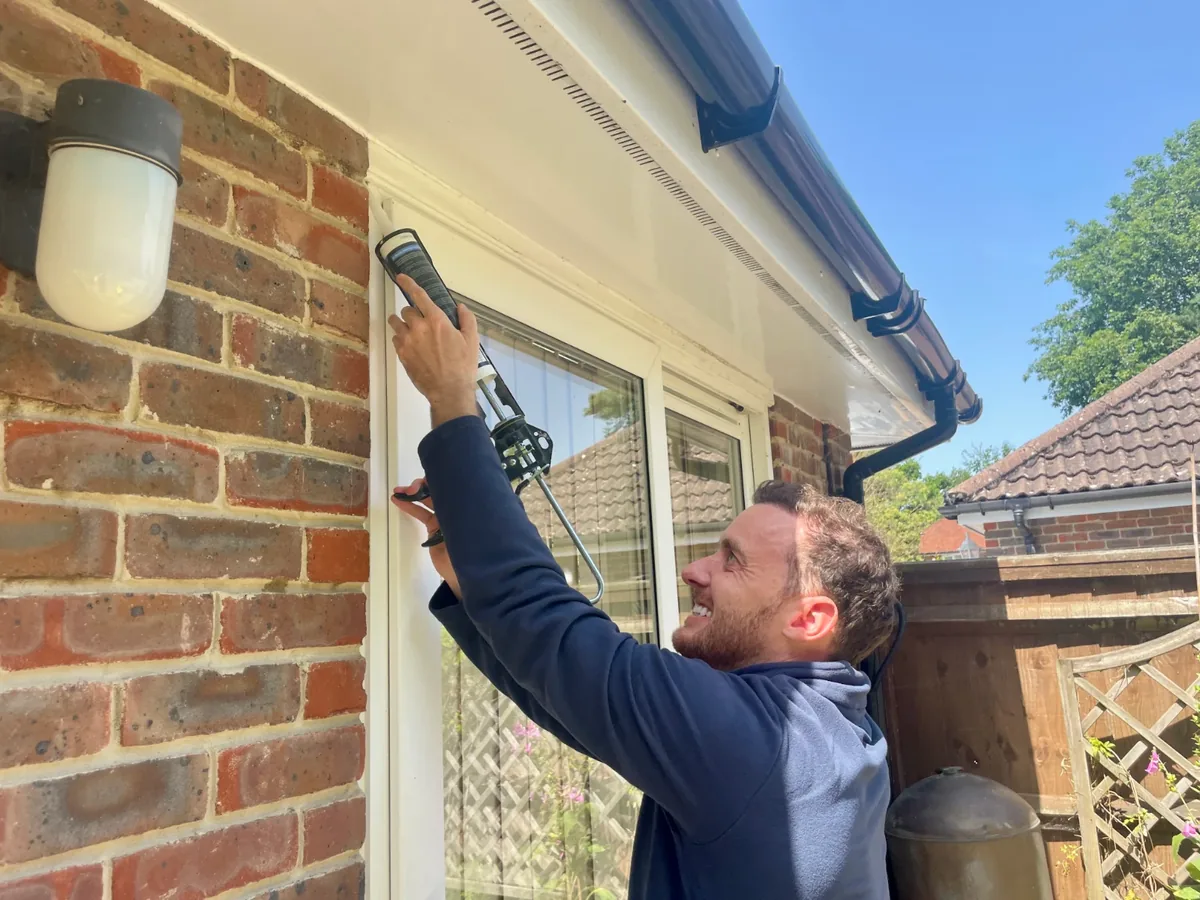
Our applicators work in Strathaven on sealing brickwork movement joints, render, cladding and façade joints. Old material cut out, joints cleaned and sealed neatly and every job guaranteed for a year.
- Weathered mastic that no longer stretches
- Panel joints letting water in
- Water getting into walls through failed joints
External mastic in Strathaven
Getting the depth right is half the job. Closed-cell backing rod sets the depth and stops the sealant sticking to the back, leaving it bonded to two faces so it can move with the wall. If you are dealing with rigid filler in a joint that should flex and failed seals between different materials, we can help.
Across smaller places in Scotland, stone and harled cottages, farm buildings and newer houses often stand exposed to wind and rain. Gutter joints and wall joints take a battering, so they need a sealant that moves with the building.
There’s a 12-month guarantee on every job.
- Location
- Strathaven (ML10)
- Wider area
- South Lanarkshire
- Cover
- 12 months on all our work
- Quote
- Quoted before any work starts
- info@mrmastic.co.uk
- Last updated
- 26 October 2026
Signs you need external mastic in Strathaven
Buildings move more than people expect. Brickwork grows a little over the years, blockwork and concrete shrink, and all of it moves with heat and moisture. The sealant in the movement joints takes that strain.
These are the problems we are asked about most:
- Gaps where render, brick and frames meet
- Rain getting behind render or cladding at a joint
- Weeds or debris growing in open joints
- Joints where the bead has come unstuck
If you look after a building such as Strathaven Academy, movement joints, cladding joints and gutters on larger buildings need the same care as a house’s.
What to look for in a quote
- Whether VAT is included
- How the surfaces are prepared before sealing
- What insurance they hold
- Which colour the sealant will be
External mastic in Strathaven: local notes
Plenty of Scottish homes have harled walls, and joints where harling meets other materials need a sealant that can grip and flex. Under the Repairing Standard, private landlords in Scotland have to keep homes wind and watertight, and sound outside sealant is part of that.
In the older streets around East Parish Church, old and new materials meet at the roofline and walls, which is where sealant earns its keep.
Strathaven is about 6 miles south of Hamilton, in South Lanarkshire. We provide external mastic to homeowners, landlords and businesses in Strathaven and the surrounding area, as part of our work across South Lanarkshire. Across South Lanarkshire, we cover 139 places, and Strathaven is one of them. We also work in Glasgow, around 15 miles away.
Postcode districts we cover here for external mastic: ML10. Streets in the area include Main Street, Station Road and Loudon Street, all of which we cover. Neighbouring places we cover for external mastic include Sandford (2 miles south-east), Glassford (2 miles north-east), Chapelton (3 miles north-west), Stonehouse (3 miles east) and Quarter (4 miles north). Within a short drive, we also cover East Kilbride (7 miles north-west), Hamilton (6 miles north), Cambuslang (10 miles north), Uddingston (10 miles north), Blantyre (8 miles north) and Larkhall (5 miles north-east). As one of the bigger places in South Lanarkshire, Strathaven has every kind of property, from flats to offices.
Near you in Strathaven
Well-known places in the area include Strathaven Castle (within half a mile south) and Stonehouse Hospital (3 miles east).
Questions from Strathaven
Can you do external mastic in Strathaven?
Yes. We work across all of Scotland, and Strathaven is part of that. You can send an email to info@mrmastic.co.uk and let us know what needs doing, and we will send you a clear quote.
Is Strathaven within the area you cover?
Yes, Strathaven is covered. Our work covers the whole of Scotland, and smaller places are part of that. Longer journeys are simply planned in advance.
What is backing rod for?
The foam is closed-cell backing rod. It stops the sealant going in too deep and bonding to three sides so it can flex with the joint.
Do you do commercial work?
Yes. We work in offices, washrooms, hotels and other commercial premises. Working times can be discussed when we quote.
What do you put in the joint?
Each joint gets the product that suits it. Movement, water and weather all affect the choice, and we will tell you what we’re using.
Is it OK to fill a movement joint with cement?
No. A mortar-filled joint can’t move, so the movement cracks the wall elsewhere. It needs a flexible sealant over backing rod.
What information do you need?
Where the job is, what the problem is and roughly how big it is. Photos by email help too.
I’m a tenant. Can you help?
Yes, though it’s best to check with your landlord first. Landlords are often happy for the work to be arranged.
Can I do it myself?
Some sealant jobs are within reach of a careful DIYer, such as a straightforward joint indoors. Where it goes wrong is sealing over the old bead, working on a wet joint or overloading the gap.
A DIY attempt doesn’t rule out a professional job. We cut it out and start again, so just mention it when you contact us.
How the job changes by surface
Concrete and blockwork
Big joints in concrete need careful depth control. Backing rod sized to the joint sets it so the sealant isn’t too deep.
Joints between dissimilar materials
Each side of the joint may need its own preparation. Both surfaces are cleaned and primed as the product requires.
Looking after it afterwards
A little care helps the new joints last. Our advice:
- Look over the joints every year, ideally after winter
- Clear growth from the base of walls and joints
- Show decorators and builders where the movement joints are
- Have failed joints looked at early
Only paint over the joint if we have confirmed the sealant can take paint. Paint can crack on a flexible joint, and paint can crack as the joint moves.
A joint that has stopped moving pushes the movement elsewhere, often as cracks near the joint. Resealing it early helps prevent that.
More services for Strathaven
The process
We bring everything the job needs with us, so you do not need to buy or prepare anything. After a quick look at the joints together, we protect the area and start. It normally takes a few hours to a few days, depending on the length of joint and the access. Around Strathaven, distance and access matter more than parking. Let us know how to find you and how to reach the joints, and the visit is planned around that.
- We look at every joint and agree a colour to suit the wall.
- Failed sealant is removed back to clean, sound faces.
- Backing rod goes in so the sealant can stretch between the two faces.
- We prime the faces where required.
- A low-modulus exterior sealant is gunned in and tooled to a neat finish.
Preparing for the visit
- Tell us if parking is tricky
- Try not to wet indoor joints just before the visit
- Clear the area around the work
How to get a quote
There’s no standard price list, because every job is different. Instead, your job gets its own clear quote. To get started, email us at info@mrmastic.co.uk.
Read more
What affects the quote in Strathaven
The quote reflects the job in front of us. We take into account:
- The old material and how stubborn it is
- Any working-time requirements on site
- Mould in or behind the old joints
- How much there is to do
A few things move the cost up or down: how much old sealant there is and how stubborn it is, any mould to treat, and whether the work is at height. Your quote takes all of that into account.
What to tell us for a quote
When you contact us, it’s useful to know:
- The rough size of the job
- A few pictures by email, if you can
- Access, such as stairs, a lift or height
- If someone has resealed it before
Call for a quick quote, or send an email if you’d rather. Describe what needs sealing and we’ll explain what’s involved.
When something else is needed
We’d rather tell you now than do work that will not last, so these are the limits:
- Structural movement, which needs a surveyor or engineer
- Cutting new joints into brickwork, which is building work rather than sealant work
- Cracked brickwork or render that needs a builder or plasterer
If you are not sure, just email us at info@mrmastic.co.uk and we’ll give you a straight answer before you book.
Joints and surfaces we work on
- Concrete & block
- Brickwork movement joints
- Joints between brick and frames
- Façade panels
- Render & cladding joints
- Copings & trims