
Greater London · England
External & façade joints in Fish Island, Greater London
Specialist external mastic for Fish Island: the right sealant, proper preparation and a neat finish. Call for a quick quote.
- Joints where the bead has come unstuck
- Rain getting behind render or cladding at a joint
- Leaking joints around cladding and façade panels
Landlords, agents and businesses in Fish Island
We also work for businesses, from offices to washrooms and kitchens. On commercial sites, working times can be discussed when we quote.
For anyone letting property in or around Fish Island, jobs at different addresses can go on one quote. Send us the addresses and the work at each.
External mastic in Fish Island
Low-level joints can normally be done from the ground. For joints higher up, give us some details of the building and we will confirm what access is needed. We work on brickwork movement joints, copings & trims and concrete & block, and the jobs we see most are cracked joints where brick meets render or frames and water getting into walls through failed joints.
In London terraces and converted houses, gutters and walls are often shared with the house next door, so one failed joint can cause damp for more than one household. In a converted house in Fish Island, it’s worth checking who is responsible for the outside before booking.
Whatever the size of the job, you get the same 12-month guarantee.
- Place
- Fish Island (E3, E9, E20)
- Region
- Greater London
- Guarantee
- 12 months on all our work
- Quote
- A clear price before work begins
- Call
- 0345 464 0079
- Updated
- 26 October 2026
Keeping the joints in good condition
After the cure time, these simple habits help:
- Keep high-pressure jets off the joints
- Keep movement joints as flexible joints, not mortar
- Act on the first splits you see
- Check the sealant is paintable before painting near it
Don’t paint over the new sealant unless we have said the product is paintable. Many exterior sealants are not designed to be painted, and paint can crack as the joint moves.
Water getting behind cladding or render can go unnoticed for a long time. By the time there’s a damp patch, the damage can be well established.
Honest limits
To be straight with you, there are a few things sealant won’t fix:
- Adding movement joints to masonry that has none
- Structural movement, which needs a surveyor or engineer
- Cracked brickwork or render that needs a builder or plasterer
If in doubt, phone 0345 464 0079 or email us and we’ll say what we think before booking.
Where we work in Fish Island
- Concrete & block
- Brickwork movement joints
- Joints between brick and frames
- Render & cladding joints
- Façade panels
- Copings & trims
The process
Good joint work is mostly preparation, so that’s where we spend the time. Joints are cleaned back and dried before anything new goes in. In total, it usually takes a few hours to a few days, depending on the length of joint and the access. Parking in much of London is by permit or pay-and-display, so it helps to know what’s near you in Fish Island. A visitor permit or a nearby bay makes the visit run more smoothly.
- Each joint is checked and the colour of the new sealant agreed.
- Failed sealant is removed back to clean, sound faces.
- Backing rod goes in so the sealant can stretch between the two faces.
- We prime the faces where required.
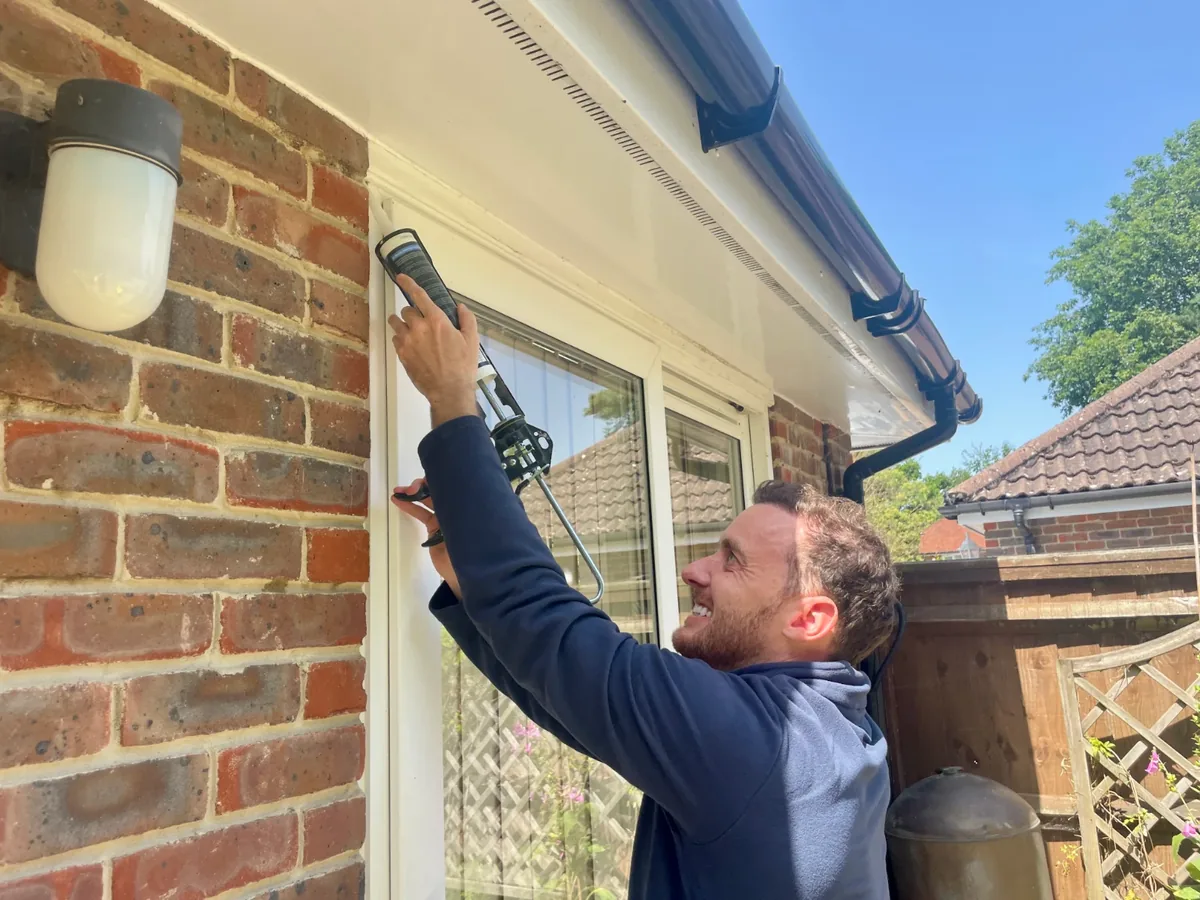
- We gun in low-modulus sealant and tool it neatly.
Getting ready for the visit
- Where the joints are inside, avoid wetting them before we arrive
- Let us know about earlier repairs to the joints
- Mention any parking rules near the property
Ask for a quote
For external mastic in Fish Island, call 0345 464 0079 or drop us an email. Tell us what the problem is and where, and we’ll agree the price before any work begins.
Advice
Your questions about external mastic in Fish Island
Is parking a problem for a job in Fish Island?
It can be, so it helps to tell us about permits, visitor bays or off-street space when you book. That way the visit can be planned around it.
Can you do external mastic in Fish Island?
Yes. We work across London and the South East, and Fish Island is part of that. Just ring 0345 464 0079 or send us an email with a few details of the job, and we’ll send you a clear quote.
Do I have to be there?
We need access to the joints, so we’ll agree that with you when we book. For inside work, that normally means someone being in.
Do you work for landlords and businesses?
Yes. We work in homes, commercial premises and hotels, and we’re fully insured.
Why do you put foam in the joint first?
Backing rod controls the sealant depth and keeps it off the back of the joint. That way it bonds to the two sides only and can stretch.
Can new sealant go over the old?
No. We remove every bit of old sealant first, so the new joint bonds to clean surfaces.
Do you do commercial work?
Yes. Larger jobs can be planned room by room or area by area.
Will the old sealant be removed?
Yes, every time. New sealant won’t bond properly to old, so the joint is cleaned back first.
DIY versus a professional finish
Some jobs are best left to a professional: work at height, external movement joints, fire-rated sealant and large areas call for the right materials, safe access and experience.
What a professional job adds is preparation and the right product. We take joints back to clean, dry surfaces, and the sealant is matched to the joint and its conditions, then guaranteed for a year.
Towns and villages near Fish Island
Also in Fish Island
When to call us in Fish Island
Joints sealed without backing rod, or far too deep, rarely last. Sealant bonded to three sides has nowhere to go and rips as the joint opens.
The problems people usually mention when they call are:
- Hard, crazed mastic that has stopped moving
- Weeds or debris growing in open joints
- Failed seals between different materials
- Movement joints with cracked, split or missing sealant
If you look after a building such as Mossbourne Riverside Academy, movement joints, cladding joints and gutters on larger buildings need the same care as a house’s.
Before you book anyone
- Is the old sealant removed completely?
- How the colour is chosen
- Whether they’re fully insured
- Is VAT in the price?
External mastic in Fish Island: local notes
In terraces and conversions, gutters and walls are often shared with the neighbours, so it’s worth agreeing who is responsible before work starts. The South East is one of the drier parts of the UK, but outside sealant still needs a dry, clean surface, so outdoor work is planned around the forecast.
If you live in an older home near St Mary of Eton, older walls, gutters and the joints where extensions meet them need a flexible sealant. Fish Island is in London, so parking needs planning: tell us about permits, visitor bays or off-street space when you book.
Fish Island is about 1 mile west of Stratford, in Greater London. Across the E3 area, we cover external mastic for homes and businesses. Fish Island is one of 764 towns and villages in Greater London we cover.
Every address in E3, E9 and E20 is covered for external mastic, from the main roads to the quietest streets. That includes homes and businesses on Wick Lane, Dace Road and Wyke Road. Other places close to Fish Island include Hackney Wick (1 mile north), Old Ford (1 mile south), Donnybrook Quarter (1 mile south-west), Bow (1 mile south) and East Village (1 mile north-east). Further out, we also cover London (4 miles south-west), City of Westminster (6 miles west), Marylebone (6 miles west), Kensington (8 miles west), St Pancras (4 miles west) and Shoreditch (3 miles west).
What’s near Fish Island
In Fish Island, that means homes and buildings near Mulberry UTC, Grove Hall Park and The Lea Tavern, among other places. Fish Island has its own railway station: Hackney Wick station. Nearby you’ll also find V&A East (within half a mile east) and Tower of London (3.1 miles south-west). Not far away are Hollow Pond and Tower Hill.
What the job involves on each surface
Brickwork movement joints
Brick walls have vertical movement joints to absorb expansion. They’re resealed over backing rod with a low-modulus sealant in a colour to suit the brick.
Cladding and façade panels
If the façade has a specified sealant, that is what we use, or one the system allows. Tell us what the building has when you get in touch.