
Essex · England
Sand mastic for sash & case windows in Creeksea, Essex
Window and door surrounds in Creeksea need attention? We cut out the old, prepare the joints and apply the right sealant.
- Gaps between timber frames and stone or brick
- Failed mastic on an exposed elevation
- Cement or filler used on old window joints that has cracked
Sand mastic in Creeksea, done properly
Sand mastic suits most period window surrounds. On modern frames we’d normally use a flexible sealant and we’ll explain which is best for yours. If you have mastic dropping out of the joint and open joints round the window box, we can help, on period & listed homes, timber door frames and sash and case windows alike.
In a village or hamlet like Creeksea, older cottages and farmhouses often have timber windows set in stone or brick. Not every older frame suits a modern silicone bead, so the sealant has to be chosen to suit the building.
A 12-month guarantee comes as standard.
- Place
- Creeksea (CM0)
- Wider area
- Essex
- Guarantee
- 12 months on all our work
- Price
- Quoted before any work starts
- Phone
- 0345 464 0079
- Last updated
- 26 October 2026
FAQs for Creeksea
Can you do sand mastic in Creeksea?
Yes, Creeksea is within the area we cover. We work across London and the South East. You can phone 0345 464 0079 or send us an email and tell us what needs doing.
Do you cover smaller places like Creeksea?
Yes, we do. Our work covers London and the South East, and smaller places are part of that. Longer journeys are simply planned in advance.
What do you put in the joint?
It depends on the joint: anti-fungal sanitary silicone in wet areas, and other sealants where joints move or face the weather. Brands we use include Arbo and Everbuild.
How long does sand mastic take?
It depends on the size of the job, but most jobs take anything from a few hours to a full day, depending on how many windows. We’ll tell you when we quote.
Can I paint the new mastic?
Sand mastic is normally left unpainted, which is what traditional guidance recommends. Ask us before decorating.
How long does sand mastic take to harden?
The surface skins quite quickly, then hardens over a longer period. The weather and joint depth both affect it.
What exactly is sand mastic?
Sand plus a binder based on linseed oil. It’s applied by hand and shaped to suit the surround.
Do you do commercial work?
Yes. We have worked for hotels, offices and other businesses, and we are fully insured.
What affects the quote in Creeksea
The price is agreed before any work begins. It’s based on:
- Mould in or behind the old joints
- Working hours on commercial sites
- The old material and how stubborn it is
- The type of sealant required
The cost depends on the amount of work, how hard the old material is to remove and access to the work. You’ll have a clear quote before any work starts, so you know where you stand.
Helping us quote
Photos help, but a description is a good start. Try to tell us:
- Whether it has been sealed before
- The address or postcode of the job
- What’s wrong with the joints now
- A few pictures by email, if you can
Every job is quoted individually, so start by telling us what you need. Simply ring 0345 464 0079 or drop us an email and describe the job and send photos if you have them.
What sealant work cannot fix
New sealant cannot fix everything, and we’ll tell you before we start. It won’t solve:
- Damaged stone surrounds
- Sashes that rattle, stick or will not open
- Decayed frames that need repair
Not sure which it is? You can phone 0345 464 0079 or email us and we’ll tell you honestly before you book.
What we seal
- Brick reveals
- Sash and case windows
- Tenement windows
- Timber door frames
- Stone surrounds
- Period & listed homes
Leave it or put it right?
A silicone bead can be quicker, but it can look wrong on a period surround. Sand mastic is the traditional material and finishes neatly against the masonry. Older cottages and farmhouses around Creeksea can have timber floors and frames, and water through a failed joint can rot timber if it’s left.
A few things move the cost up or down: how much old sealant there is and how stubborn it is, any mould to treat, and whether the work is at height. Your quote takes all of that into account.
Why Creeksea clients choose us
- Anti-fungal silicone where joints get wet
- One-year guarantee on every job
- Quality sealants from Arbo and Everbuild
- Approved under the ARBOMaster scheme
Read what affects the cost or our reviews.
Different surfaces, different methods
Brick reveals
We rake out the old mastic and pack deep voids before pointing.
Sash and case windows
Most of our sand mastic work is on sash windows. We renew the mastic round each box.
How it works
The work is kept neat and contained to the area we are working on, so you can get on with your day. The job normally takes a few hours per window, depending on the condition of the joints, and we tell you how long to leave it before we go. In a small place like Creeksea, access is normally the main thing to plan. If the job is outside, mention outbuildings, exposed walls and how to reach them.
- We start by checking each surround and agreeing the joints to renew.
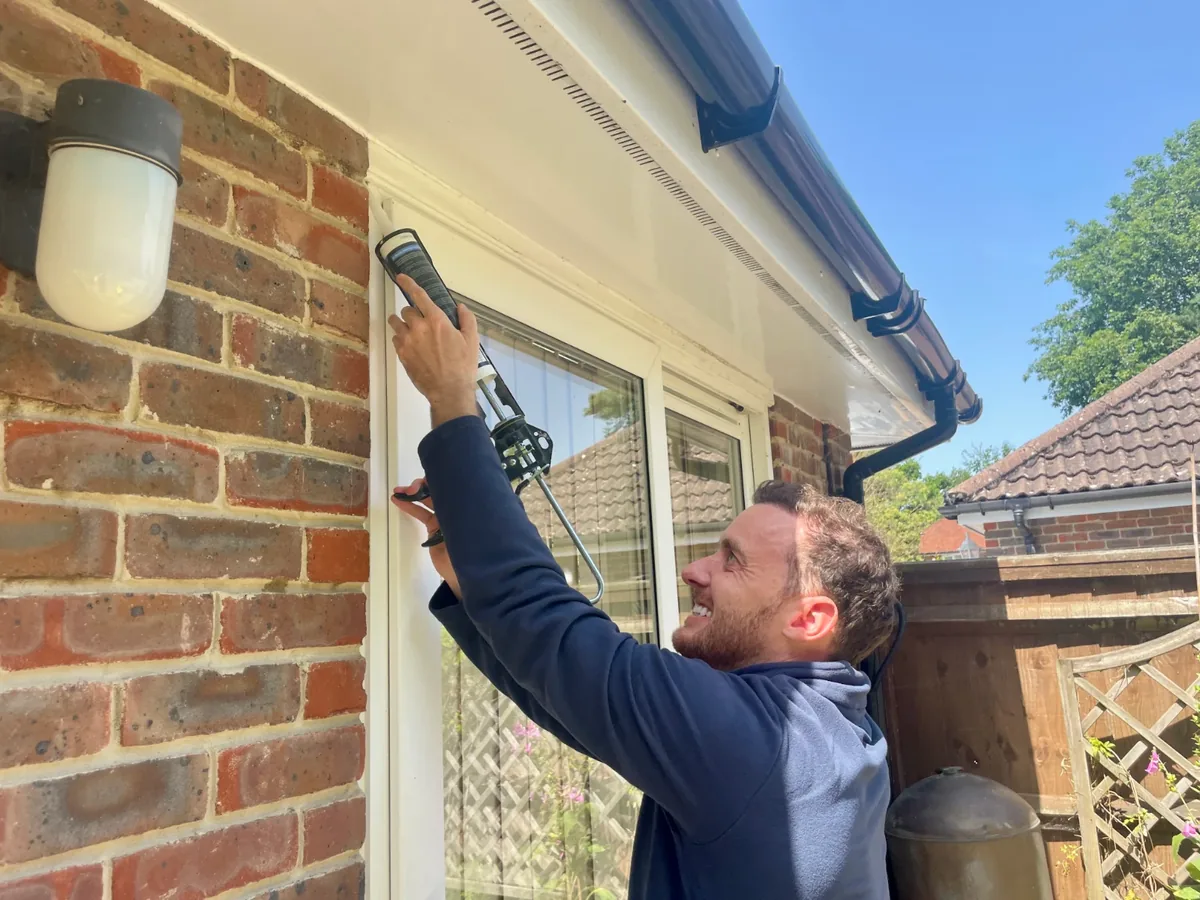
- We rake out the old mastic and clean the joint.
- Large voids are packed out first, so the mastic is not too thick.
- Sand mastic is mixed and applied by hand, then shaped to the joint.
- The mastic is finished to sit tidily against the stone or brick.
Getting ready for the visit
- Mention any parking rules near the property
- On commercial sites, let us know about site rules
- Tell us about any previous sealing or DIY attempts
How to get a quote
A good description makes for an accurate quote. Tell us where the job is, what’s wrong and how much there is, and email pictures if that is easy.
Read more
How to look after the new joints
Looking after new joints is easy:
- Take care around the mastic when scraping paint
- Ask the planning authority about consent for listed or conservation-area homes
- Keep sills and gutters clear so water drains away
- Avoid patching sand mastic with silicone
Keep paint scrapers and sanders off the mastic when redecorating. Hard scraping can loosen it.
Renewing mastic before redecorating saves doing it twice. Painting over failed mastic hides the problem for a while.
Towns and villages near Creeksea
Other services in Creeksea
What sand mastic looks like in Creeksea
Rainfall in the South East is lower than in much of the UK, yet outdoor joints still have to be sealed dry, so jobs are booked with the weather in mind.
In the older streets around Church of All Saints, frames set in older brick or stone need a sealant that suits the wall as well as the frame. Managing a site like Ormiston Rivers Academy? Then the mastic around its windows and doors needs looking after like any other building’s. If you let a flat or house near Burnham-On-Crouch station, cracked sand mastic around sash windows lets in the draughts tenants complain about.
Creeksea is about 5 miles north-east of Rochford, in Essex. We provide sand mastic to homeowners, landlords and businesses in Creeksea and nearby. Our Essex coverage runs to 644 places, Creeksea among them. There’s also a page for Chelmsford, about 15 miles away.
Every address in CM0 is within our area for sand mastic. We also cover Ostend (1 mile north), Canewdon (2 miles south-west), Althorne (2 miles north-west), Ballards Gore (3 miles south-west) and Mayland (4 miles north). Larger places within reach include Chelmsford (15 miles north-west), Basildon (15 miles west), Maldon (8 miles north-west), Canvey Island (12 miles south-west), Rayleigh (8 miles west) and Witham (13 miles north-west).
What’s near Creeksea
Typical jobs here are in homes near The Creeksea Ferry Inn and the streets around them. The closest station to Creeksea is Burnham-On-Crouch station, roughly 1 mile east of the centre. Green spaces nearby include Lion Creek and Lower Raypits.
Should I try it myself first?
The difference is mostly in the preparation and the product. Joints are cleaned back to sound surfaces and dried, and the sealant is matched to the joint and its conditions, then guaranteed for a year.
The biggest DIY mistake is sealing over old sealant. New silicone won’t bond to old, so it lifts and traps water and mould underneath. All the old material has to come out first.