
Hampshire · England
Sand Mastic in Boyatt Wood
Sand mastic in Boyatt Wood from a team with over 20 years’ experience. 180+ five-star Google reviews and a 4.9 rating.
- Open joints round the window box
- Wind and rain getting in round a sash window
- Failed mastic on an exposed elevation
What happens on the day
On the day, there’s very little for you to do. Show us the job and we’ll take it from there. The job generally takes a few hours for a single window, longer for several, including the tidy-up. For a job in Boyatt Wood, we agree the time, the access and parking before the day. If the work is outside, the weather plays a part, as sealant needs a dry surface.
- We check the window surrounds and agree which joints need renewing.
- We rake out the old mastic and clean the joint.
- We pack any deep gaps so the mastic sits at the right depth.
- Sand mastic is mixed and applied by hand, then shaped to the joint.
- The mastic is finished to sit tidily against the stone or brick.
Preparing for the visit
- Let us know if you’ve seen damp or leaks
- Let us know about earlier repairs to the joints
- Mention any tricky access
How to get a quote
Quotes start with a quick conversation. Tell us what’s wrong, where it is and how much there is. Whenever you’re ready, call 0345 464 0079 or drop us an email.
Read more
Sand mastic in Boyatt Wood, done properly
For a listed home or one in a conservation area, ask your local planning authority whether consent is needed for work to windows. Sand mastic is often favoured as a like-for-like material. Typical jobs include gaps between timber frames and stone or brick and mastic that needs renewing before redecorating, across period & listed homes, timber door frames and tenement windows.
In a smaller place like Boyatt Wood, some walls face open ground and catch the full force of the weather, so exposed windows and doors face the weather head on. The mastic around frames on those walls tends to age faster.
Each job carries a 12-month guarantee, large or small.
- Where
- Boyatt Wood (SO50, SO53)
- Region
- Hampshire
- Guarantee
- 12 months on all our work
- Quotes
- A clear price before any work starts
- Telephone
- 0345 464 0079
- Updated
- 26 October 2026
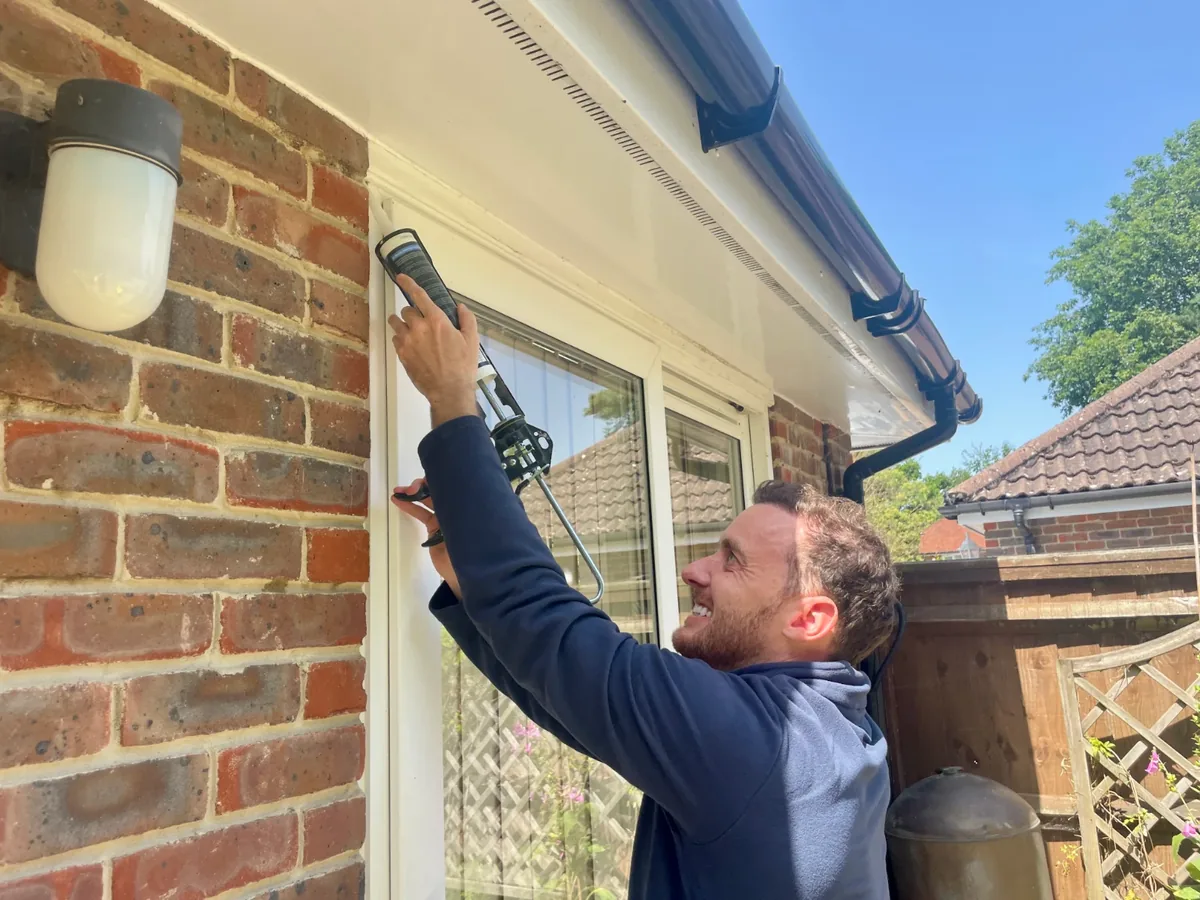
What sand mastic looks like in Boyatt Wood
London and the South East are among the drier parts of the UK, yet outdoor joints still have to be sealed dry, so jobs are booked with the weather in mind. Historic houses like South Stoneham House (about 3.1 miles south) are a reminder that the area around Boyatt Wood has older buildings as well as new. In older buildings, older timber frames in brick or stone need a different approach from a modern uPVC window.
Schools such as Crestwood Community School are buildings too, and larger buildings have plenty of frames, and the mastic around each one ages. If you let a flat or house near Eastleigh station, cracked sand mastic around sash windows lets in the draughts tenants complain about.
Boyatt Wood is about 1 mile north-west of Eastleigh, in Hampshire. Whether you’re in the middle of Boyatt Wood or further out, we cover sand mastic for every kind of property. Our Hampshire coverage runs to 683 places, Boyatt Wood among them.
Every address in SO50 and SO53 is within our area for sand mastic. Sand mastic is available to properties on Lawn Road, Arthur Road and Darwin Road and the roads around them. We also cover the places around Boyatt Wood: Allbrook (1 mile north), Eastleigh (1 mile south-east), Chandler's Ford (1 mile west), Highbridge (1 mile north-east) and Lord's Wood (1 mile east). We also work in nearby towns such as Winchester (6 miles north), Gosport (15 miles south-east), Fareham (11 miles south-east), Totton (8 miles south-west), Hedge End (5 miles south-east) and Romsey (5 miles west).
Near you in Boyatt Wood
In Boyatt Wood, that means homes and buildings near Shakespeare Junior School, Thornden School and Lakeside Country Park and the streets around them. The nearest railway station is Eastleigh station, about 0.9 miles south-east. Well-known places in the area include Eastleigh Museum (0.9 miles south) and Moorgreen Hospital (3.9 miles south-east). The countryside around Boyatt Wood includes Flexford Nature Reserve.
Boyatt Wood questions
I let a flat near Eastleigh station. Can you help?
Yes. We work for landlords and agents as well as householders, and several properties can be quoted together. Just call 0345 464 0079 or drop us an email with the address and what needs doing, and we will give you a clear price.
Can you do sand mastic in Boyatt Wood?
Yes. Our work covers London and the South East, and Boyatt Wood is part of that. You can call 0345 464 0079 or drop us an email and tell us what needs doing, and we’ll send you a clear quote.
Can I do it myself?
Some simple jobs can be done by a careful DIYer. The usual mistakes are sealing over old sealant, sealing a damp joint and using too much.
Where are you based?
Our base is in Crawley, and we work across South East England, London and Scotland.
Do you take out the old sealant first?
Yes. All of the old material is cut out and the joint cleaned before applying anything new.
Do you hold any approvals?
Yes. Mr Mastic is an ARBOMaster approved applicator and we are fully insured too.
Is the work guaranteed?
Our 12-month guarantee covers every job, sand mastic included.
Are you insured?
Yes, we’re fully insured for domestic and commercial work.
Towns and villages near Boyatt Wood
What else we do in Boyatt Wood
When to call us in Boyatt Wood
Rain on the window surround works into any crack and pushes it out. Windows facing the weather tend to go first.
Common reasons people contact us are:
- Gaps where the frame meets the masonry
- Cracked mastic round a front door frame
- Tired mastic found when preparing windows for paint
- Old cement repairs round a window that have failed
Homes close to St. Peter's Church include some older properties, and frames set in older brick or stone need a sealant that suits the wall as well as the frame.
Questions to ask before you book
- How long to leave it before use
- Whether you can choose the colour
- Who does the work, and how experienced they are
- What product goes in the joint
Work for landlords, hotels and businesses
Letting agents often deal with us directly. Send the address, what’s needed and the access arrangements and we’ll give you a quote.
Whether it’s one flat or a portfolio, you get the same standard of work: the old material taken out, careful preparation and a 12-month guarantee.
Why deal with it now?
If you’re redecorating, renew the mastic first. Paint over cracked mastic won’t stop the gaps, and the new mastic is traditionally left unpainted. In an older home around Boyatt Wood, damp from a failed joint can get into timber and plaster, which is far harder to put right than the sealant itself.
Rather than a set price list, we price the job in front of us: how many joints, what’s in them now and how we reach them. You’ll know the price before we begin.
Why Boyatt Wood customers choose us
- Rated 4.9 stars on Google
- An ARBOMaster approved applicator
- We never seal over old sealant
- Domestic, commercial and hotel work
Take a look at how sealant jobs are priced or our reviews.
What we can’t put right
Honest advice matters more to us than a booking, so here’s what sealant can’t fix:
- Decayed frames that need repair
- Sash cords, weights and draught-proofing of the sashes
- Damaged stone surrounds
If in doubt, phone 0345 464 0079 or drop us an email and we will say what we think before you book.
What we seal
- Period & listed homes
- Brick reveals
- Timber door frames
- Tenement windows
- Stone surrounds
- Sash and case windows
Surface by surface
Sash and case windows
On a sash window, the mastic joint shows on the outside, so a neat, even finish matters.
Period and listed homes
Sand mastic is the like-for-like choice for many period homes. On listed buildings, check with your planning authority first.
Should I try it myself first?
Some sealant jobs are within reach of a careful DIYer, like a short, easy-to-reach joint indoors. The common mistakes are sealing over old sealant, sealing a damp joint and using far too much.
Sealing over old silicone is the commonest DIY error. Silicone does not stick to old silicone, so it lifts and traps water and mould underneath. All the old material has to come out first.