
Essex · England
Wimbish New Build Mastic
New build mastic across Wimbish and nearby, with old sealant always removed completely and a 12-month guarantee.
- Sealant work across a run of new homes
- Frame joints opening as the plaster dries
- Cracked caulk along new skirting
New build mastic in Wimbish
Failed shower seals, gaps along the skirting and messy beads are common items on a new-home snagging list. While the builder’s snagging or warranty period runs, report it to them first and if that stalls, we can do it. If you have cracked sealant around new window and door frames and gaps opening as the house dries out and settles, we can help, whatever the surface.
Older homes in small places like Wimbish often have timber floors that move with the seasons, so skirting and threshold joints need a flexible sealant rather than a rigid filler.
Each job carries a 12-month guarantee, whatever its size.
- Place
- Wimbish (CB10)
- Region
- Essex
- Guarantee
- A year, on every job
- Price
- Quoted before any work starts
- Phone
- 0345 464 0079
- Updated
- 26 October 2026
The process
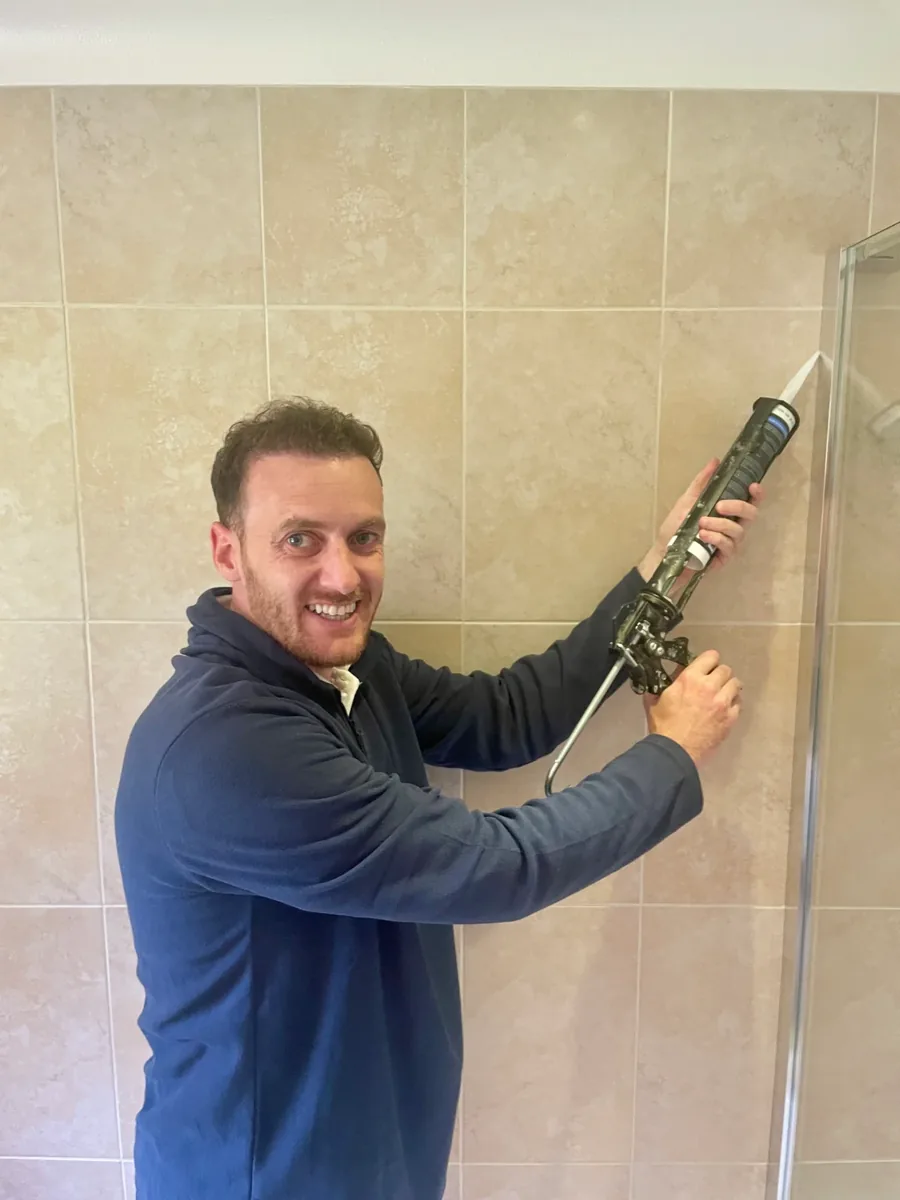
Before we leave, we go over the finished joints with you and explain the cure time. The work normally takes anything from a few hours to several days, depending on the number of plots, depending on the size of the job. For a village or hamlet like Wimbish, the journey is planned in advance: tell us about narrow lanes, gates, long drives and where we can park. We bring what the job needs, so it can be finished in one trip where possible.
- First, the list of joints is agreed from your snagging sheet or plot schedule.
- Every bit of the old builder’s sealant is cut out.
- We clean out the dust and grit left from the build.
- Primer goes on where the surface and product need it, then the new sealant.
- We tool every joint neatly and tell you when each area can be used.
How to prepare
- Mention if the joints have been sealed before
- Let us know about parking restrictions
- Try not to wet indoor joints just before the visit
Ask for a quote
For a quick quote, get us on the phone, or email us if that is easier. Tell us about the joints that need doing and we’ll explain what’s involved.
Read more
New build mastic in Wimbish: local notes
Rainfall in the South East is lower than in much of the UK, yet outdoor joints still have to be sealed dry, so jobs are booked with the weather in mind.
For new homes near Newport (Essex) station, it’s worth checking the sealant early, while snags are still fresh.
Wimbish is about 3 miles south-east of Saffron Walden, in Essex. We carry out new build mastic for householders, landlords and businesses in Wimbish. We cover 644 towns and villages across Essex, from the larger towns to small villages. Chelmsford is on our list too, about 20 miles from Wimbish.
Postcode districts we cover here for new build mastic: CB10. New build mastic is available to properties on Mill Road and Maple Lane and the roads around them. Nearby, we also carry out new build mastic in Maple End (1 mile north-east), Radwinter (1 mile north-east), The Common (2 miles north-east), Hempstead (3 miles north-east) and Church End (3 miles north). We also work in nearby towns such as Braintree (13 miles south-east), Saffron Walden (3 miles north-west), Halstead (14 miles east), Great Dunmow (9 miles south), Stansted Mountfitchet (8 miles south-west) and Great Notley (13 miles south-east).
What’s near Wimbish
In Wimbish, that means homes and buildings near White Hart Inn, among other places. Wimbish’s nearest station is Newport (Essex) station, roughly 4.5 miles west. A little further out are Saffron Walden Museum (3.6 miles north-west) and Castle Camps (4.5 miles north-east). Green spaces nearby include West Wood.
Why it’s worth doing now in Wimbish
For developers, getting the sealant right first time saves return visits. Snagging visits for failed sealant cost time on every plot and most come down to preparation. In a small place like Wimbish, homes can be exposed to wind and rain, which finds any gap, and older walls, once damp, take a long time to dry.
Leaving a failed joint normally makes the job bigger, not smaller, because water and mould keep working on it. If you’re not sure whether it needs doing, ring 0345 464 0079 or send us an email and we will give you an honest view and a quote.
Why us?
- Any old sealant cut out fully, not covered over
- Sealant colour chosen to suit
- Domestic, commercial and hotel work
- Colour agreed with you before we start
Nearby places to Wimbish
Also in Wimbish
Different surfaces, different methods
Skirting and floors
New homes often develop a gap between skirting and floor. A flexible sealant closes it without cracking like caulk.
Plot handovers
We work through plots to your schedule, sealing each room ready for handover. Joints are prepared properly before sealing to keep callbacks down.
Your questions about new build mastic in Wimbish
Do you cover smaller places like Wimbish?
Yes, Wimbish is covered. We work across London and the South East, and smaller places are part of that. The journey is planned ahead, so it helps to know about access.
Can you do new build mastic in Wimbish?
Yes. Our work covers London and the South East, and Wimbish is part of that. You can ring 0345 464 0079 or send us an email and let us know what needs doing, and we will send you a clear quote.
My new home is still under warranty. Should I contact you?
While the snagging or warranty period runs, the builder should be your first contact. If they’re slow or the fix doesn’t last, we can help.
What does new build mastic cost?
We do not publish prices, because the cost depends on the job: its size, the old material, access and the product needed. You will get a clear quote before we start.
Are you ARBOMaster approved?
Yes. Mr Mastic is an ARBOMaster approved applicator, and we’re fully insured.
How long does the job take?
As a guide, most jobs take a few hours in a single home. Bigger jobs take longer, and we’ll tell you how long to expect.
Will it make a mess?
Tidy work is part of the job. Nearby surfaces are protected.
Should I try DIY first?
Some simple jobs can be done by a careful DIYer. Most DIY failures come from sealing over old material, wet joints or too much sealant.
What we’re called out for in Wimbish
Sealant applied onto damp surfaces doesn’t bond well. Site programmes don’t always leave time for joints to dry before the sealant goes on.
If you can see any of these, it’s time to have the joints looked at:
- Gaps between new skirting and floors
- Sealant work across a run of new homes
- Smeared, uneven beads picked up at snagging
- Gaps opening as the house dries out and settles
In and around Wimbish, as anywhere, good new build mastic starts with a clean, dry, properly prepared joint.
Comparing quotes
- What guarantee comes with the work
- Which sealant they’ll use, and why
- How the joint is cleaned and prepared
- Whether they seal over old material or remove it
What sealant work can’t fix
In fairness, some problems need a different trade:
- Leaks from pipes, valves or wastes, which need a plumber
- Cracking that points to a structural problem
- Cracked trays, tiles or worktops
If you are not sure, just call 0345 464 0079 or drop us an email and we will give you a straight answer before booking.
Surfaces we seal
- Kitchens
- Bathrooms & en suites
- Windows & doors
- Plot handovers
- Show homes
- Skirting & floors
Looking after it afterwards
To keep the joints looking good and working properly:
- Avoid scourers and strong chemicals on sealant
- Keep water off fresh sealant until it has cured
- Record problems with dated pictures
- Look at the sealant regularly in the first couple of years
Photograph failed sealant before it’s redone and keep the builder’s replies. It’s useful if you need to raise other issues later.
Lifting sealant traps moisture and mould behind it. Resealing before mould gets in keeps the job straightforward.
DIY sealant or a professional job?
Not every job suits DIY: high-level joints, fire-rated gaps, external movement joints and big jobs call for the right materials, safe access and experience.
The biggest DIY mistake is sealing over old sealant. Silicone doesn’t stick to old silicone, so it peels away and traps moisture behind it. All the old material has to come out first.