
Fife · Scotland
Low Valleyfield Glazing Silicone
Problem with your glazing joints in Low Valleyfield? We remove the old material, prepare the joints and seal them properly.
- Silicone pulling away from the glass
- Water tracking down the inner face of the glass
- Leaking glazing joints on a rooflight
Your questions about glazing silicone in Low Valleyfield
Does living near the coast affect glazing silicone in Low Valleyfield?
Near the coast, wind-driven rain and, nearer the shore, salt air make outside sealant work harder. The right product, a clean joint and the right depth all help it cope.
Do you cover Low Valleyfield for glazing silicone?
Yes, Low Valleyfield is within the area we cover. We work across all of Scotland. You can send an email to info@mrmastic.co.uk and tell us what needs doing, and we’ll send you a clear quote.
Do I have to be there?
We need access to the joints, so we’ll agree that with you when we book. Indoors, that generally means someone at home.
I’m a tenant. Can you help?
We can work for tenants, landlords or agents. Just make sure your landlord agrees.
Do you replace glass?
No. A misted unit has failed inside, and a glazier needs to replace it.
Which silicone is used for glass joints?
A neutral-cure glazing silicone suited to glass and the frame. In bathrooms, we use anti-fungal silicone.
Is the work guaranteed?
Our one-year guarantee covers every job.
What do you put in the joint?
Products from Arbo and Everbuild, among others, chosen to suit the joint. We will tell you what we are using and why.
About our glazing silicone in Low Valleyfield
Across Low Valleyfield, we reseal glazing joints in homes, offices and hotels. Conservatories, rooflights, glass panels and shower screens are all part of the job, with a sealant chosen for the joint. We work on rooflights, glass balustrade bases and conservatory frames, and the jobs we see most are leaks from the base of a shower screen and black or yellowed silicone on glass joints.
Across smaller places in Scotland, homes range from stone and harled cottages to newer houses, many standing in the open. Wind-driven rain finds any gap around a frame or sill.
There’s a 12-month guarantee on every job.
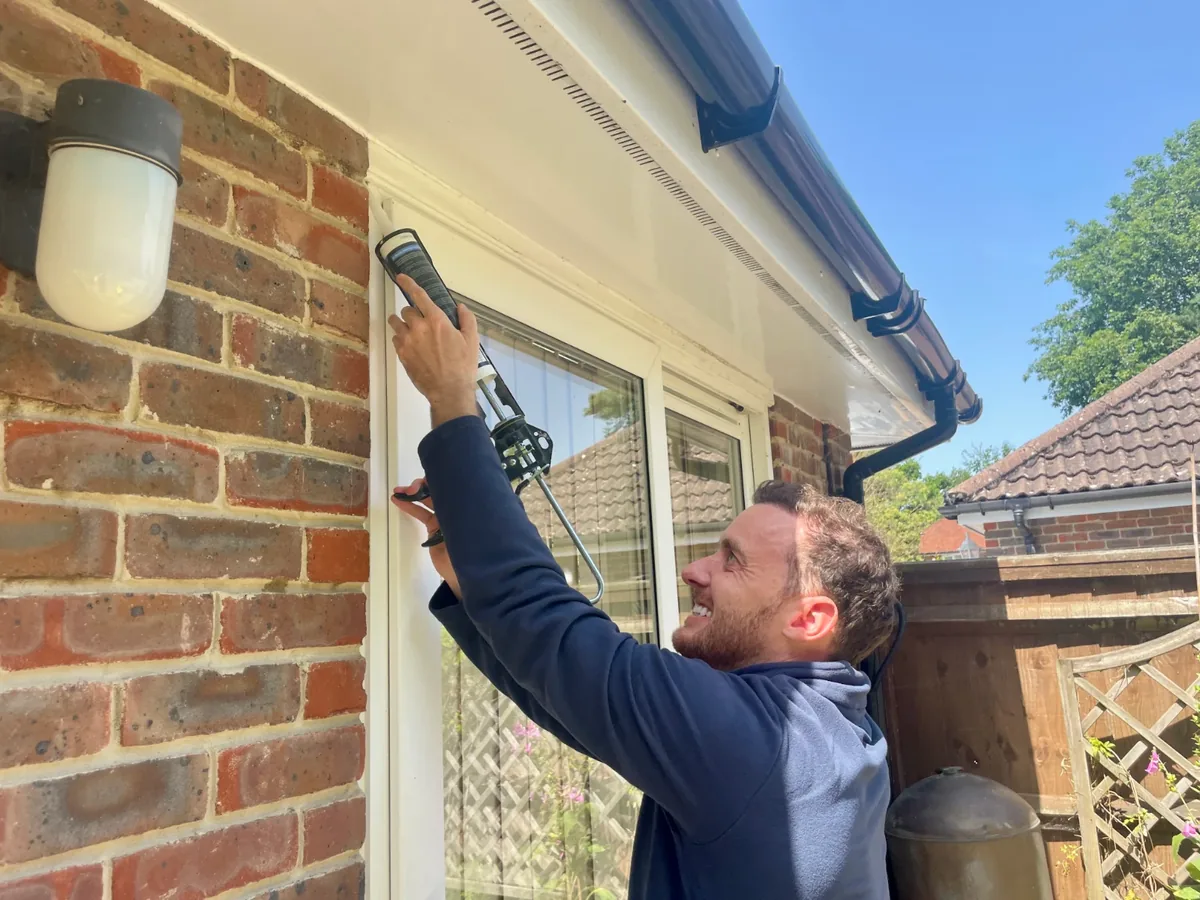
- Place
- Low Valleyfield (KY12)
- Region
- Fife
- Cover
- 12 months on all our work
- Price
- A clear quote up front
- info@mrmastic.co.uk
- Page updated
- 26 October 2026
Frames and glazing around Low Valleyfield
Low Valleyfield is within about 1 mile of the coast, and homes near the sea take more wind-driven rain, with salt in the air closer to the shore. That’s hard on glazing joints and frame seals, especially on the side facing the sea. Historic houses like Culross Palace (about 1.1 miles west) are a reminder that the area around Low Valleyfield has older buildings as well as new. Where a home is older, older timber frames in brick or stone need a different approach from a modern uPVC window.
For site and facilities teams at buildings such as Craigflower Preparatory School, the mastic around its windows and doors needs looking after like any other building’s. Historic houses such as Culross Palace, about 1.1 miles west, show how far back building around Low Valleyfield goes.
Low Valleyfield is about 3 miles north of Bo'ness, in Fife. Every kind of property in Low Valleyfield is covered for glazing silicone, old or new, large or small. Every job comes with our 12-month guarantee. Our Fife coverage runs to 133 places, Low Valleyfield among them. Edinburgh is on our list too, about 17 miles from Low Valleyfield.
Postcode districts we cover here for glazing silicone: KY12. If you need glazing silicone at a property on Main Street and Forth View Cottages or anywhere close by, we can help. Other places close to Low Valleyfield include High Valleyfield (1 mile north), Low Torry (1 mile east), Newmills (1 mile east), Culross (1 mile west) and Torryburn (1 mile east). We also work in nearby towns such as Dunfermline (7 miles east), Cowdenbeath (10 miles east), Dalgety Bay (10 miles east), Rosyth (7 miles east), Abbeyview (7 miles east) and Lochgelly (12 miles north-east).
Landmarks near Low Valleyfield
Other landmarks nearby include Dunimarle Museum (1.5 miles west) and Dunimarle Castle (1.6 miles west).
Towns and villages near Low Valleyfield
Also in Low Valleyfield
What the job involves on each surface
Glass-to-frame joints
We cut the old silicone from the glass without scratching it before new glazing silicone goes in.
Glass balustrade bases
The base joint is cut out and resealed. We do not install or replace glass.
For landlords and businesses
Failed sealant is one of the commonest items on a check-out report. Several properties can go on one quote.
We also work for businesses, from offices to washrooms and kitchens. On commercial sites, working times can be discussed when we quote.
Should I try it myself first?
Some sealant jobs are within reach of a careful DIYer, such as a straightforward joint indoors. Where it goes wrong is sealing over the old bead, working on a wet joint or overloading the gap.
Overfilling a joint is a classic DIY mistake. A thick, smeared bead looks untidy and doesn’t move well, and getting the depth right matters as much as the look.
How to look after the new joints
Good habits help new joints last longer. A few tips:
- Keep conservatory gutters clear of leaves
- Run a squeegee over the glass when you are done
- Ventilate the conservatory to cut condensation
- Clean glass with a mild cleaner and a soft cloth
Use mild cleaners on and around the silicone. Harsh solvents may damage the bead.
Act on black or lifting silicone early. Peeling silicone lets water in behind and the leak gets worse.
What sealant work can’t fix
We will always be straight with you, so here’s what new sealant won’t do:
- Water coming through the roof rather than a sealant joint
- Glass that needs replacing
- A sagging or failing conservatory roof
If you are not sure, just drop us a line at info@mrmastic.co.uk and we’ll give you a straight answer before booking.
Joints and surfaces we work on
- Conservatory frames
- Glass-to-glass joints
- Glass-to-frame joints
- Glass balustrade bases
- Rooflights
- Shower screens
What happens if it’s left?
A leaking joint won’t fix itself. Water can damage frames, walls, flooring and furniture so early action saves a bigger repair. Out of town in Scotland, exposed walls take a lot of weather, and damp in stone or harled walls takes a long time to dry once water gets behind a joint.
The cost reflects the work involved, not guesswork. That’s why we ask a few questions first and agree the price before starting.
Why Low Valleyfield clients choose us
- One-year guarantee on every job
- We agree the colour with you first
- Sanitary silicone with an anti-fungal additive in wet areas
- Fully insured
See our cost guide and customer reviews.
How the visit works
When we arrive, we look over the joints with you first, so you know exactly what we’re doing. Surfaces next to the work are protected before any work begins. The work normally takes a few hours for most jobs. In smaller Scottish places, parking is generally less of an issue than access and distance. Let us know how to find you and how to reach the joints.
- First, we trace the leak and check it’s coming through a sealant joint.
- Old silicone is cut away from the glass and frame without scratching either.
- Surfaces are cleaned with a solvent suited to glass and the frame.
- We apply a neutral-cure glazing silicone and tool it smooth.
- We look over every joint and, where we can, test it with water.
Getting ready for the visit
- Try not to wet indoor joints just before the visit
- Mention any leaks or damp you’ve noticed
- Mention any sign-in or site rules at work premises
How to get a quote
We quote each job on its own, so the first step is telling us about yours. Just drop us a line at info@mrmastic.co.uk with the details.