
Kent · England
External Mastic in Westgate-on-Sea
Specialist external mastic for Westgate-on-Sea: careful preparation, the right product and tidy work. Call for a quick quote.
- Joints pointed up with cement by mistake
- Failed sealant between panels on a façade
- Gaps where render, brick and frames meet
How we handle external mastic in Westgate-on-Sea
For buildings in Westgate-on-Sea, we reseal external joints of all kinds, from brick movement joints to cladding panels. The preparation is the same whatever the wall: clean joint faces and the right depth. We are often asked to deal with rain getting behind render or cladding at a joint and movement joints with cracked, split or missing sealant, on concrete & block, copings & trims and render & cladding joints.
In and around Westgate-on-Sea, older properties sit alongside newer ones, each with its own outside joints. Older gutters and trims need their joints resealed; newer brick and render need their movement joints kept sound.
A one-year guarantee comes with the work, just as it does everywhere we cover.
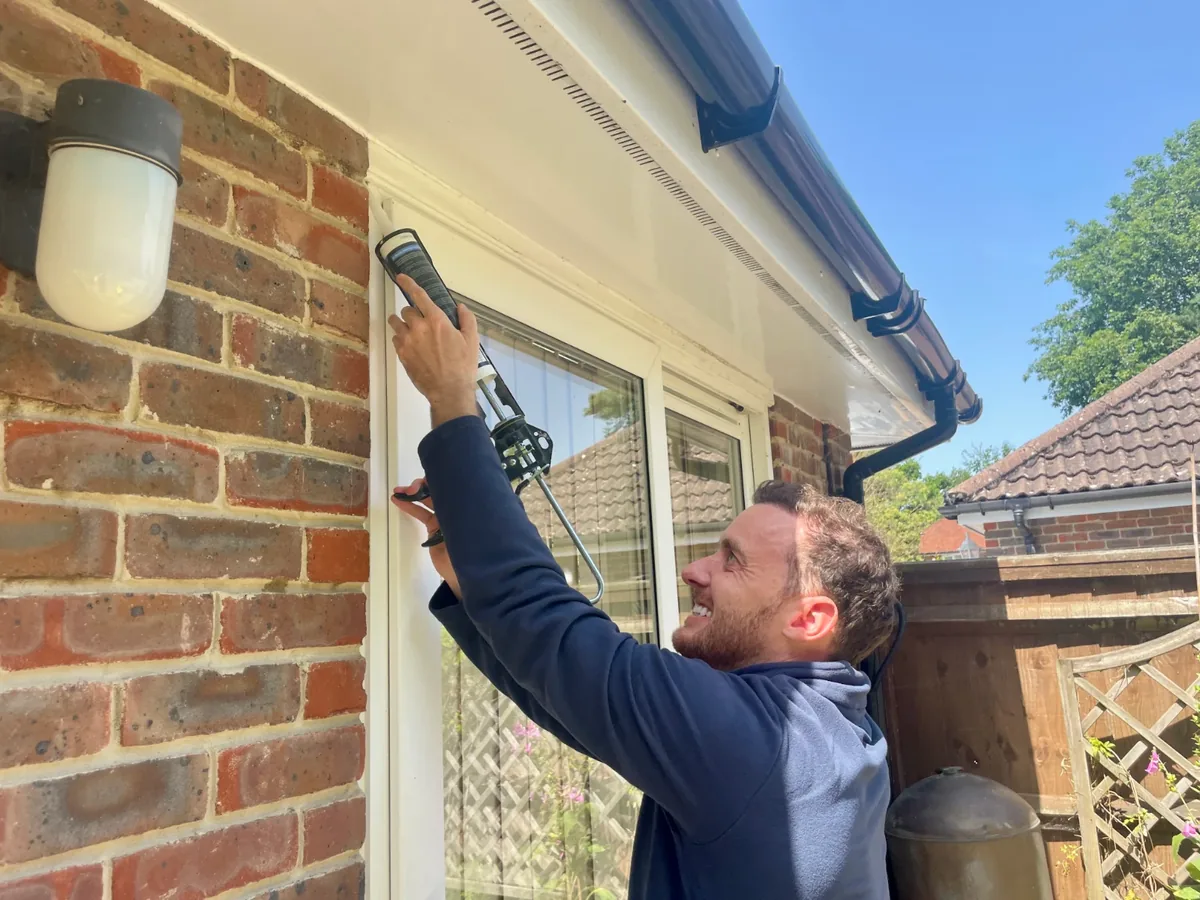
- Where
- Westgate-on-Sea (CT8, CT9, CT7)
- Region
- Kent
- Cover
- 12 months on all our work
- Quote
- Quoted before any work starts
- Phone
- 0345 464 0079
- Last updated
- 26 October 2026
Westgate-on-Sea buildings and the weather
Westgate-on-Sea is within about 1 mile of the coast, where wind-driven rain is a fact of life and, nearer the shore, so is salt air. That’s hard on movement joints and outside wall joints, especially on the side facing the sea. Historic houses like Quex Park (about 1.2 miles south-west) are a reminder that the area around Westgate-on-Sea has older buildings as well as new. Where a home is older, older walls and rooflines need a sealant that moves with them and suits the material.
For landlords with property near Westgate-On-Sea station, failed wall and movement joints let damp in, so they’re worth checking between tenancies. Homes close to Church of St Saviour include some older properties, and an extension built onto an older house moves differently, and the joint between them takes the strain.
Westgate-on-Sea is about 2 miles west of Margate, in Kent. Westgate-on-Sea gets the same service as everywhere we cover: old sealant removed completely, careful preparation and a one-year guarantee. Across Kent, we cover 922 places, and Westgate-on-Sea is one of them. For nearby work, see our Chelmsford page (44 miles or so).
Work in CT8, CT9 and CT7 works the same way as everywhere else we cover. Local streets include Sea Road, Thanet Road and Cedric Road. Being close to the A28, Westgate-on-Sea is easy for our applicators to reach for external mastic. We also cover Garlinge (1 mile east), Westbrook (1 mile east), Birchington (1 mile west), Flete (2 miles south-east) and Acol (2 miles south-west). Larger places within reach include Canterbury (13 miles south-west), Ramsgate (4 miles south-east), Broadstairs (4 miles east), Whitstable (13 miles west), Deal (12 miles south) and Herne Bay (9 miles west).
Around Westgate-on-Sea
We work in homes and buildings around Ursuline College. Westgate-on-Sea has its own railway station: Westgate-On-Sea station. Other landmarks nearby include Powell-Cotton Museum (1.4 miles south-west) and Queen Elizabeth the Queen Mother Hospital (2.3 miles east). Green spaces nearby include Sandwich and Pegwell Bay.
What the job involves on each surface
Joints between dissimilar materials
Each side of the joint may need its own preparation. Both surfaces are cleaned and primed as the product requires.
Copings and trims
Metal and stone copings both move with temperature, so the joints need a sealant that stays flexible year round.
What affects the cost of external mastic
There’s no set price list, because no two jobs are the same. The quote depends on:
- How easy the joints are to reach
- When we can work, for business premises
- How much old sealant there is and how hard it is to remove
- The number and length of the joints
Commercial jobs are quoted on the same basis as homes: the amount of work, the access and the products needed. Ask us for a quote and we’ll explain what it covers.
What we need to know
The more you tell us, the more accurate the quote. When you get in contact, it helps to mention:
- The type of property
- Roughly how big the job is
- The address or postcode of the job
- Any previous sealing or DIY work
Call for a quick quote, or send an email if you’d rather. Tell us about the joints that need doing and we’ll explain what’s involved.
DIY versus a professional finish
The difference is mostly in the preparation and the product. Joints are cleaned back to sound surfaces and dried, and the sealant is chosen for how the joint moves and where it is, and the work is guaranteed for a year.
The biggest DIY mistake is sealing over old sealant. New silicone won’t bond to old, so it lifts and traps water and mould underneath. All the old material has to come out first.
What we are called out for in Westgate-on-Sea
The wrong product in a moving joint is a classic cause. A stiff, general-purpose sealant cannot cope with a joint that moves a lot, and it tears off the sides.
Common reasons people contact us include:
- Brick movement joints where the sealant has split
- Joints pointed up with cement by mistake
- Joints where the bead has come unstuck
- Failed seals between different materials
If you look after a building such as St Saviour's Church of England Junior School, movement joints, cladding joints and gutters on larger buildings need the same care as a house’s.
What to look for in a quote
- What guarantee comes with the work
- Whether all the old sealant comes out first
- Is VAT in the price?
- What product goes in the joint
Your questions about external mastic in Westgate-on-Sea
Is external mastic in a coastal place like Westgate-on-Sea any different?
Near the sea, outside joints face more wind, rain and salt than they would inland, so the choice of sealant and the preparation matter even more. Walls facing the sea are usually the first to need attention.
Do you cover smaller places like Westgate-on-Sea?
Yes, Westgate-on-Sea is covered. Our work covers London and the South East, from towns to the smallest places. The journey is planned ahead, so it helps to know about access.
Can tenants book the work?
Of course. Ask your landlord first, and we can send them the quote if that helps.
How do you reach high-level joints?
It depends on the height and the site. Low-level joints are straightforward; for higher ones, send details and we’ll confirm the access.
Why do you put foam in the joint first?
The foam is closed-cell backing rod. It stops the sealant going in too deep and bonding to three sides so it can flex with the joint.
Are you insured?
Yes. We are fully insured.
Which products do you use?
Each joint gets the product that suits it. Movement, water and weather all affect the choice, and we’ll tell you what we’re using.
Will it make a mess?
We keep the work tidy. We protect what’s around the joints.
Landlord and commercial work in Westgate-on-Sea
Water getting past a failed joint can damage the building, which matters even more when someone else lives there. Keeping joints in good order is simple maintenance.
Whether it’s one flat or a portfolio, the work is the same standard: the old material taken out, careful preparation and a 12-month guarantee.
What happens if it’s left?
A low-modulus sealant is chosen because it moves without pulling hard at the edges. That matters on brick, render and concrete, which can be weaker at the face. A stiffer product can damage the joint edge as it fails. In a smaller place like Westgate-on-Sea, wherever a wall is exposed, a failed outside joint is a real source of damp. Indoors, a failed seal lets water into floors and panels as it would anywhere.
Rather than a set price list, we look at what your job involves: the amount of work, the old material and the access. You’ll know the price before we begin.
Why us?
- We never seal over old sealant
- 180+ five-star Google reviews
- You choose the colour before work begins
- Every job guaranteed for a year
Take a look at how sealant jobs are priced and our reviews.
How it works
All our tools and materials come with us in the van, so there’s nothing for you to buy. Once we’ve agreed what’s being done, we protect the area and start. Most jobs take anything from a few hours to several days, depending on the building. Parking around Westgate-on-Sea is usually easier than in a town centre, but mention any lanes, gates or long drives. For outside work, side access and the height of the joints help us plan.
- First we look over the joints with you, agree which to renew and talk through access.
- Old sealant and any debris are cut and raked out.
- We clean both faces of the joint and prime them where the product calls for it.
- We push in closed-cell backing rod so the sealant is the right depth and bonds to the sides only.
- The new sealant, chosen to suit the brick or render, is applied and tooled to a neat finish.
How to prepare
- Let us know about earlier repairs to the joints
- Mention any leaks or damp you’ve noticed
- Clear the area around the work
Get a quote
A good description makes for an accurate quote. Tell us where the job is, what’s wrong and how much there is, and add photos by email if you can.