
Hampshire · England
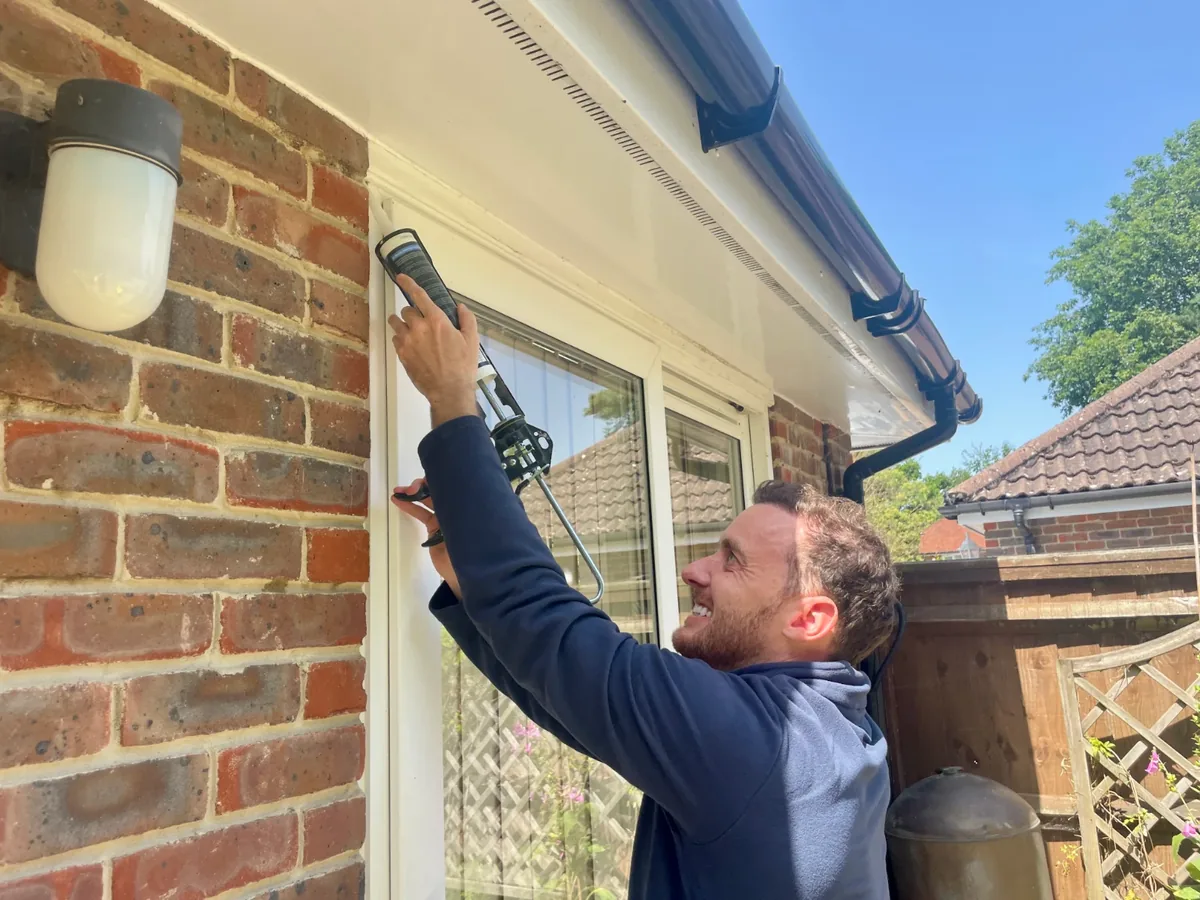
External Mastic in Waltham Chase
Specialist external mastic for Waltham Chase: the right sealant, proper preparation and a neat finish. Ask us for a quick quote.
- Weeds or debris growing in open joints
- Weathered mastic that no longer stretches
- Sealant that has lost its bond to the brick or render
External mastic in Waltham Chase, done properly
Low-level joints can normally be done from the ground. For joints higher up, give us some details of the building and we’ll confirm what access is needed. If you have cracked joints where brick meets render or frames and moss and dirt in joints with no sealant left, we can help.
Around Waltham Chase, older buildings can be stone, brick or timber-framed, many with extensions added later. The joints where those materials meet are the weak points, and they need the right sealant at the right depth.
The work is guaranteed for twelve months. If there’s a problem with our work within the year, let us know and we will sort it.
- Where
- Waltham Chase (SO32)
- Wider area
- Hampshire
- Guarantee
- One year on every job
- Price
- A clear quote up front
- Phone
- 0345 464 0079
- Last updated
- 26 October 2026
Signs you need external mastic in Waltham Chase
The wrong product in a moving joint is a classic cause. A high-modulus or general-purpose sealant can be too rigid for a busy joint, so it pulls away from the edges.
If you can see any of these, it’s time to have the joints looked at:
- Weeds or debris growing in open joints
- Weathered mastic that no longer stretches
- Panel joints letting water in
- Joints pointed up with cement by mistake
If you live in an older home near Waltham Chase Methodist Church, old and new materials meet at the roofline and walls, which is where sealant earns its keep.
Before you book anyone
- How much experience the applicator has
- How hidden problems are handled
- Whether all the old sealant comes out first
- When the joint can take water or movement
Also near Waltham Chase
What else we do in Waltham Chase
External mastic in Waltham Chase: local notes
London and the South East are among the drier parts of the UK, yet outdoor joints still have to be sealed dry, so jobs are booked with the weather in mind.
Rented homes near Botley station change hands often, and failed wall and movement joints let damp in, so they’re worth checking between tenancies. For site and facilities teams at buildings such as St John the Baptist Church of England Primary School, its movement joints, gutters and trims need looking after like any other building’s.
Waltham Chase is about 5 miles east of Hedge End, in Hampshire. Whether you’re in the middle of Waltham Chase or further out, external mastic is available for homes and businesses alike. Waltham Chase is one of 683 towns and villages in Hampshire where we work. There’s also a page for Southampton, roughly 8 miles from Waltham Chase.
Postcode districts we cover here for external mastic: SO32. If you need external mastic at a property on Chase Grove, Club House Lane and Sandy Hill Close or a nearby road, we can help. Neighbouring places we cover for external mastic include Bishop's Waltham (2 miles north), Curdridge (2 miles south-west), Ashton (3 miles north), Durley Street (3 miles north-west) and Durley (3 miles west). Larger places within reach include Winchester (10 miles north-west), Gosport (9 miles south), Havant (11 miles south-east), Eastleigh (7 miles west), Fareham (6 miles south) and Horndean (9 miles east).
Landmarks near Waltham Chase
Locally, jobs take us to homes and businesses close to The Black Dog pub and Swanmore College of Technology and the streets around them. The closest station to Waltham Chase is Botley station, about 2.7 miles south-west. A little further out are Bishop's Waltham Museum (1.4 miles north-west) and Knowle Hospital (3.7 miles south). The countryside around Waltham Chase includes Bishops Waltham Branch LNR.
Work for landlords, hotels and businesses
A neglected joint can let water reach the structure, which matters even more when someone else lives there. Keeping joints in good order is simple maintenance.
Hotels need rooms back in use, so we plan the work room by room. Hotel work is part of what we do, alongside homes and businesses.
What we do, step by step
At the end, we look at the finished work together and tell you how long to leave it. The visit itself generally takes a few hours for a handful of joints, longer for a whole elevation, depending on the size of the job. Somewhere like Waltham Chase needs a little journey planning: tell us about narrow lanes, gates, long drives and where we can park. Everything for the job comes with us, so a second trip is avoided where possible.
- First, the joints are inspected and the access agreed.
- Every bit of old sealant and any mortar or debris is cut out.
- Joint faces are cleaned back and primed if the sealant needs it.
- Backing rod sized to the joint goes in to set the depth.
- We apply the sealant, tool it and check the whole run.
How to prepare
- For business premises, tell us about site rules or sign-in
- Let us know about earlier repairs to the joints
- Mention any tricky access
Getting a quote
A good description makes for an accurate quote. Let us know the location, the problem and roughly how many joints, and add photos by email if you can.
Read more
How to look after the new joints
To keep the joints looking good and working properly:
- Look over the joints every year, ideally after winter
- Keep high-pressure jets off the joints
- Act on the first splits you see
- Show decorators and builders where the movement joints are
Keep pressure washers away from the sealant. A strong jet can damage the edges of the bead over time.
Leaks behind façade panels and render often go unseen. When it finally shows inside, the joint may have been open for years, so it’s worth resealing at the first signs.
Can I do it myself?
If you are set on DIY, put the effort into preparation: remove every trace of old sealant, clean and dry the joint, and follow the product’s cure time. If it fails, we can still redo it.
A careful DIYer can reseal a simple joint, such as a straightforward joint indoors. Where it goes wrong is sealing over the old bead, working on a wet joint or overloading the gap.
What happens if it’s left?
Done well, a resealed joint is a neat, straight line that suits the wall. A hurried job with smeared edges and no backing looks worse and fails sooner, so it pays to do it properly once. In a small place like Waltham Chase, homes can be exposed to wind and rain, which finds any gap, and older walls, once damp, take a long time to dry.
Doing several joints on one visit is generally more efficient than separate visits, so it’s worth mentioning everything you’d like done. We will give you a clear quote for the lot.
Why choose Mr Mastic in Waltham Chase
- Approved under the ARBOMaster scheme
- Over 20 years’ experience
- We agree the colour with you first
- 180+ five-star Google reviews
Take a look at our cost guide or customer reviews.
How the job changes by surface
Copings and trims
Coping joints that leak let water straight down into the wall. Resealing them is a small job that protects a lot.
Concrete and blockwork
Big joints in concrete need careful depth control. We size the backing rod to the gap.
Waltham Chase questions
Do you work for landlords with property near Botley station?
Yes. We work for letting agents and landlords as well as householders. Just call 0345 464 0079 or send us an email with the address and what needs doing, and we’ll give you a clear price.
Will you come out to Waltham Chase?
Yes, smaller places are covered as well as towns. Our work covers London and the South East. Let us know about access, parking and anything unusual about getting there when you book.
Should I try DIY first?
That depends on the joint. Work at height, movement joints, fire-rated gaps and large areas are best left to a professional.
Will there be a smell?
That depends on the sealant. Some smell for a while, some hardly at all.
How long before the joint can be used?
That depends on the sealant used, so follow the cure time we give you when we finish.
What information do you need?
The location, the problem and the rough size of the job. Photos by email help too.
How long does the job take?
A typical job takes a few hours for a handful of joints, longer for a whole elevation, including preparation and clearing up. Your quote will say how long we expect yours to take.
Do you guarantee your work?
Yes: twelve months. If anything isn’t right with the work within the year, let us know and we will sort it.