
Kent · England
External & façade joints in Swalecliffe, Kent
Movement joints in Swalecliffe need attention? We cut out the old, prepare the joints and apply the right sealant.
- Sealant pulling away from one side of the joint
- Failed sealant between panels on a façade
- Brick movement joints where the sealant has split
When it is not the sealant
We’ll always be straight with you, so here’s what new sealant won’t do:
- Damp that is not coming from the joint
- Subsidence or other structural problems
- Adding movement joints to masonry that has none
If in doubt, phone 0345 464 0079 or send us an email and we’ll say what we think.
What we seal
- Copings & trims
- Joints between brick and frames
- Brickwork movement joints
- Façade panels
- Concrete & block
- Render & cladding joints
About our external mastic in Swalecliffe
A movement joint is a deliberate break that lets a wall expand and contract. The sealant in it has to stretch and squeeze for years, and when it fails, the wall takes the strain and water finds a way in. Common call-outs are for leaking joints around cladding and façade panels and gaps where render, brick and frames meet, on façade panels, render & cladding joints and concrete & block.
In a smaller place like Swalecliffe, some homes face open ground, and walls and rooflines facing the weather take the worst of it. Joints on those sides are normally the first to go.
Every job is covered by our one-year guarantee.
- Where
- Swalecliffe (CT5)
- Wider area
- Kent
- Guarantee
- 12 months on all our work
- Quotes
- Quoted before any work starts
- Telephone
- 0345 464 0079
- Last updated
- 26 October 2026
Towns and villages near Swalecliffe
Other services in Swalecliffe
Swalecliffe: your questions answered
Is Swalecliffe within the area you cover?
Yes, we do. Our work covers London and the South East, and smaller places are part of that. The journey is planned ahead, so it helps to know about access.
I let a flat near Chestfield & Swalecliffe station. Can you help?
Yes. We work for landlords and letting agents as well as householders. Just phone 0345 464 0079 or drop us an email with the address and what needs doing, and we will give you a clear price.
Do you seal joints where cladding meets other materials?
Yes. Where different materials meet is one of the most common joints we seal. The sealant is chosen to bond to both sides with primer where required.
Will the old sealant be removed?
Always. Sealing over old sealant is the main reason resealing fails early, and it’s something we never do.
Can you do several jobs on one visit?
Yes. Just list everything you need and you’ll get one quote.
How long should I leave it?
Many sealants skin over quickly but take longer to cure fully. We will tell you how long to leave the joint before we leave.
What colours does the sealant come in?
We choose a sealant colour to suit the brick, stone or render so the joint blends in. Exterior sealants come in a good range of colours.
Do you guarantee your work?
Yes, always. There’s a 12-month guarantee on every job, large or small.
Different surfaces, different methods
Brickwork movement joints
Brick moves with heat and moisture, and grows a little over time. The movement joint takes that up, so the sealant in it must stay soft and stretchy.
Render joints
Render is weaker at the surface than brick, so a sealant that stretches easily protects the edges. Priming is done where the sealant calls for it.
What external mastic looks like in Swalecliffe
Swalecliffe is close to the coast, and homes near the sea take more wind-driven rain, with salt in the air closer to the shore. Both are hard on movement joints and outside wall joints, which can dry out and crack sooner where a building faces the weather. The South East is one of the drier parts of the UK, but outside sealant still needs a dry, clean surface, so outdoor work is planned around the forecast.
For an older house near a landmark such as Church of St John the Baptist, older walls, gutters and the joints where extensions meet them need a flexible sealant. Schools such as Swalecliffe Community Primary School are buildings too, and larger buildings have long runs of movement joint that eventually need resealing.
Swalecliffe is about 2 miles east of Whitstable, in Kent. We carry out external mastic for householders, landlords and businesses in Swalecliffe and nearby, as part of our work across Kent. Swalecliffe is one of 922 places in Kent we cover for external mastic. Chelmsford is on our list too, about 36 miles from Swalecliffe.
Every address in CT5 is covered for external mastic. If you need external mastic at a property on Kemp Road, Brook Road and Burnan Road or a nearby road, we can help. Swalecliffe is on the A2990, so it’s easy for us to get to. Nearby, we also carry out external mastic in Chestfield (1 mile south), Tankerton (1 mile west), West End (1 mile south-east), Hampton (2 miles north-east) and Whitstable (2 miles west). Larger places within reach include Canterbury (6 miles south), Margate (14 miles east), Sittingbourne (14 miles west), Ramsgate (15 miles east), Faversham (8 miles west) and Herne Bay (3 miles east).
Local landmarks in Swalecliffe
We work in homes and buildings around The Whitstable School and The Plough pub and the streets around them. Swalecliffe has its own railway station: Chestfield & Swalecliffe station. Other landmarks nearby include Whitstable and Tankerton Hospital (0.7 miles west) and Tankerton Castle (1.3 miles west). Green spaces nearby include West Blean and Thornden Woods.
Signs you need external mastic in Swalecliffe
Sunlight, wet weather and frost wear exterior sealant down. In time it goes hard, crazes on the surface and stops stretching, so the next time the wall moves, it splits or pulls away.
The problems people generally mention when they call are:
- Rain getting behind render or cladding at a joint
- Sealant pulling away from one side of the joint
- Rigid filler in a joint that should flex
- Failed sealant between panels on a façade
Rented homes near Chestfield & Swalecliffe station change hands often, and failed wall and movement joints let damp in, so they’re worth checking between tenancies.
Comparing quotes
- When the joint can take water or movement
- What preparation is included
- Which sealant they’ll use, and why
- How long the guarantee is
Looking after it afterwards
Once the sealant has cured, a few habits help it last:
- Keep movement joints as flexible joints, not mortar
- Check external joints each spring
- Fix overflowing gutters above sealed joints
- Keep soil, plants and ivy away from the joints
Avoid pressure-washing straight into the joints. High-pressure water can lift the edges.
Act while the splits are small. Then it’s a straightforward cut-out and reseal.
Landlords, agents and businesses in Swalecliffe
Businesses can book us for washrooms, kitchens, offices and more. For commercial premises, we can talk through working times when we quote.
For anyone letting property in or around Swalecliffe, jobs at different addresses can go on one quote. Just tell us the addresses and what each one needs, and photos by email help.
What we do, step by step
At the end, we look at the finished work together and tell you how long to leave it. The visit itself usually takes anything from a few hours to several days, depending on the building, depending on the amount of work. A visit to Swalecliffe is planned like any other: the time, the access and where to park are agreed in advance. If the work is outside, the weather plays a part, as sealant needs a dry surface.
- We start by checking each joint, agreeing the ones to redo and how we will reach them.
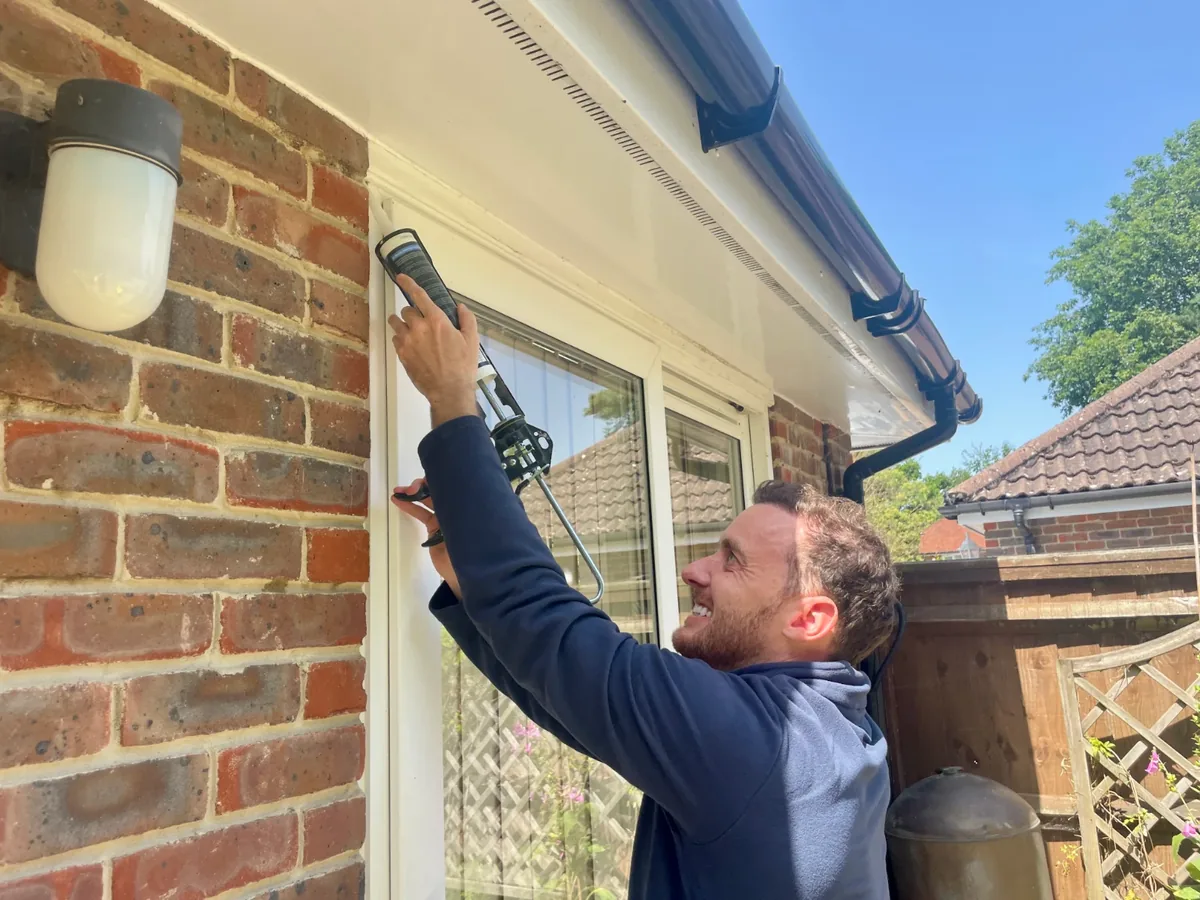
- We cut out the failed sealant and rake out any dirt or growth.
- Both sides are cleaned back to sound material and primed if needed.
- Backing rod goes in next, setting the depth and keeping the sealant off the back of the joint.
- We gun in a flexible exterior sealant in a colour that suits the wall and tool it neatly.
Before we arrive
- Tell us about any previous sealing or DIY attempts
- Where the joints are inside, avoid wetting them before we arrive
- Mention any parking rules near the property
Getting a quote
For a quick quote, get us on the phone, or email us if that’s easier. Describe what needs sealing and we will explain what’s involved.
Read more
DIY versus a professional finish
Sealing over old silicone is the commonest DIY error. Silicone does not stick to old silicone, so it peels away and traps moisture behind it. Everything old must be removed first.
What a professional job adds is preparation and the right product. We take joints back to clean, dry surfaces, and the sealant is chosen for how the joint moves and where it is, and the work is guaranteed for a year.