
Essex · England
Stanford Rivers External Mastic
Problem with your movement joints in Stanford Rivers? We remove the old material, prepare the joints and seal them properly.
- Plants rooting in failed movement joints
- Water getting into walls through failed joints
- Sealant that has lost its bond to the brick or render
How we quote for external mastic
The quote reflects the job in front of us. We look at:
- The number and length of the joints
- The old material and how stubborn it is
- Mould in or behind the old joints
- The type of sealant required
Combining jobs into one visit is usually more efficient than separate visits, so tell us about everything that needs sealing. You’ll get one clear quote for the whole job.
Helping us quote
When you contact us, these details help:
- Access, such as stairs, a lift or height
- How many joints, rooms or windows are involved
- The address or postcode of the job
- Photos by email, if that’s easy
Every job is quoted individually, so the first step is telling us about yours. Simply phone 0345 464 0079 or send us an email and describe the job, and pictures are welcome.
External mastic in Stanford Rivers, done properly
Movement joints let brickwork, render and cladding expand and shrink without cracking. The sealant in it has to stretch and squeeze for years, and when it fails, the wall takes the strain and water finds a way in. We work on render & cladding joints, concrete & block and façade panels, and the jobs we see most are weathered mastic that no longer stretches and movement joints with cracked, split or missing sealant.
Older homes in small places like Stanford Rivers may be stone, brick or timber-framed, often with later extensions. The joints where those materials meet are the weak points.
A 12-month guarantee comes as standard.
- Place
- Stanford Rivers (CM5)
- Wider area
- Essex
- Cover
- A year, on every job
- Quote
- A clear quote up front
- Phone
- 0345 464 0079
- Updated
- 26 October 2026
Places near Stanford Rivers
More services for Stanford Rivers
What we do, step by step
On the day, there’s very little for you to do. Point us to the joints and we will get on with it. The job generally takes a few hours for a handful of joints, longer for a whole elevation from start to finish. Somewhere like Stanford Rivers needs a little journey planning: tell us about narrow lanes, gates, long drives and where we can park. Everything for the job comes with us, so a second trip is avoided where possible.
- First, the joints are inspected and the access agreed.
- Every bit of old sealant and any mortar or debris is cut out.
- Joint faces are cleaned back and primed if the sealant needs it.
- We fit closed-cell backing rod to control the depth.
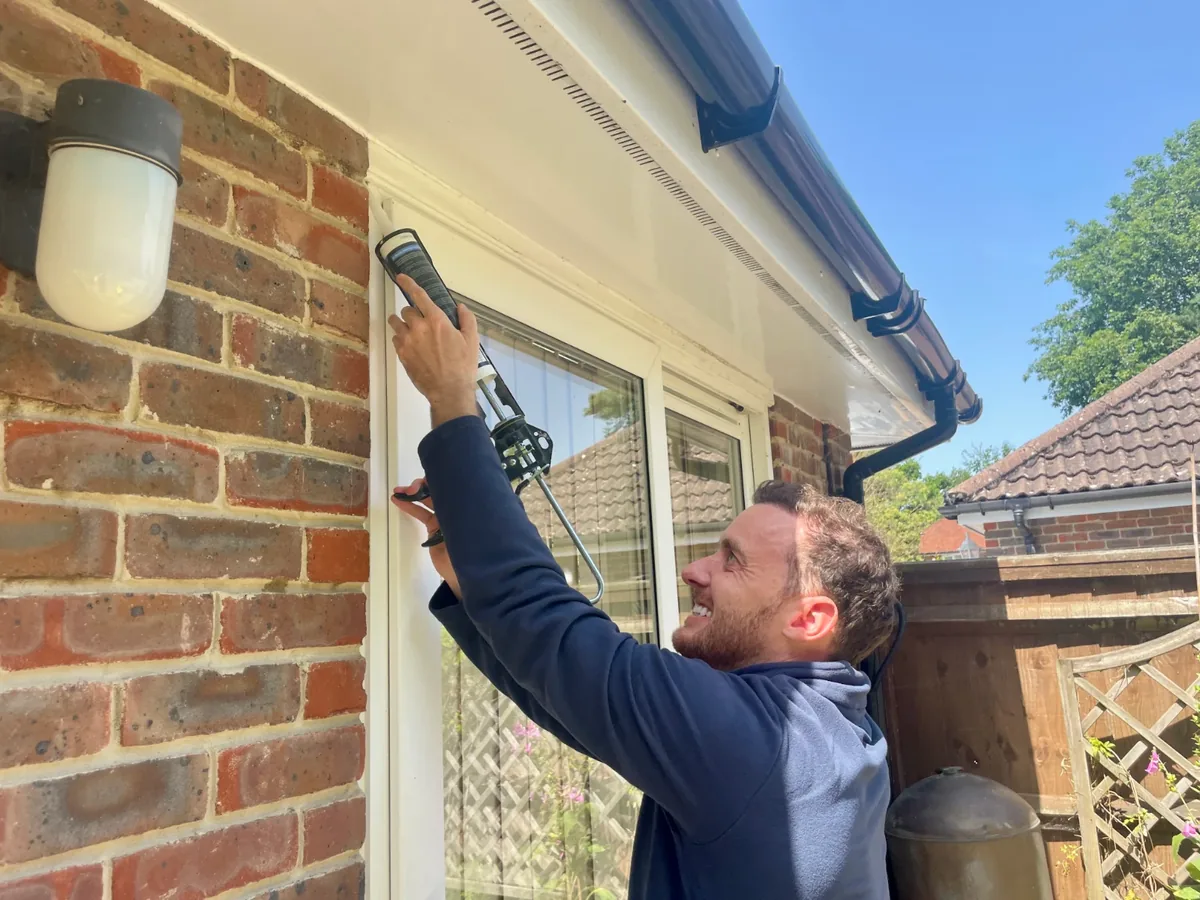
- We apply the sealant, tool it and check the whole run.
Before we arrive
- Mention any tricky access
- Let us know about parking restrictions
- Try not to wet indoor joints just before the visit
Getting a quote
Asking for a quote is easy: tell us what needs doing and where and its rough size. Photos by email help us understand the job.
Advice
FAQs for Stanford Rivers
Is Stanford Rivers in your area for external mastic?
Yes. Our work covers London and the South East, and Stanford Rivers is part of that. You can phone 0345 464 0079 or drop us an email and let us know what needs doing.
Is there a guarantee on external mastic in Stanford Rivers?
All our work, in Stanford Rivers and everywhere else, comes with a 12-month guarantee. We’re fully insured, and an ARBOMaster approved applicator.
What does external mastic cost?
The cost depends on the size of the job, access and how much old sealant has to come out. Call for a quick quote.
Do you work at height?
It depends on the building. Tell us the height, the number of joints and what’s below them and we’ll confirm how they can be reached safely.
How long will you be here?
A typical job takes a few hours for a handful of joints, longer for a whole elevation. Your quote will say how long we expect yours to take.
Do you take out the old sealant first?
Always. Sealing over old sealant is the main reason resealing fails early, so we never do it.
Does someone need to be in?
We need access to the joints, so we’ll agree that with you when we book. Indoors, that normally means someone at home.
Is it OK to fill a movement joint with cement?
No. Rigid materials cannot move with the wall and the joint fails. If it has already been filled, we can usually cut it out and reseal it.
Keeping the joints in good condition
Looking after new joints is easy:
- Fix overflowing gutters above sealed joints
- Never let anyone fill a movement joint with mortar
- Check external joints each spring
- Wash walls gently around the sealant
Do not paint over the new sealant unless we’ve said the product is paintable. Many exterior sealants are not designed to be painted, and paint can crack as the joint moves.
Leaks behind façade panels and render often go unseen. By the time there’s a damp patch, the damage can be well established.
Walls and rooflines in Stanford Rivers
Historic houses like Hill Hall (about 3 miles west) are a reminder that the area around Stanford Rivers has older buildings as well as new. Where a home is older, older walls and rooflines need a sealant that moves with them and suits the material. London and the South East are among the drier parts of the UK, yet outdoor joints still have to be sealed dry, so jobs are booked with the weather in mind.
For an older house near a landmark such as Church of St Margaret of Antioch, old and new materials meet at the roofline and walls, which is where sealant earns its keep. If you look after a building such as Chipping Ongar Primary School, its movement joints, gutters and trims need looking after like any other building’s.
Stanford Rivers is about 6 miles north-west of Brentwood, in Essex. From the centre of Stanford Rivers to the outskirts, we cover external mastic for every kind of property, from flats and houses to offices and hotels. Stanford Rivers is one of 644 places in Essex where we work for external mastic. We also work in Chelmsford, about 12 miles from Stanford Rivers.
Here we cover the CM5 postcode area for external mastic. External mastic is available to properties on Mutton Row and School Road. We also cover Little End (1 mile south-east), Hare Street (1 mile south), Clatterford End (1 mile north-west), Marden Ash (1 mile north-east) and Navestock Heath (2 miles south). Further out, we also cover Chelmsford (12 miles east), Basildon (13 miles south-east), Harlow (7 miles north-west), Brentwood (6 miles south-east), Billericay (10 miles south-east) and Loughton (7 miles south-west).
Near you in Stanford Rivers
We work in homes and buildings around The Woodman Public House and The Ongar Academy. Well-known places in the area include St. Margaret's Hospital (4.2 miles west). Not far away are Gernon Bushes.
What we cannot put right
We’d rather tell you now than do work that will not last, so these are the limits:
- Failed render or damaged cladding panels
- Subsidence or other structural problems
- Damp that isn’t coming from the joint
Not sure which it is? You can ring 0345 464 0079 or email us and we’ll tell you honestly before you book.
Where we work in Stanford Rivers
- Brickwork movement joints
- Copings & trims
- Render & cladding joints
- Joints between brick and frames
- Façade panels
- Concrete & block
Landlords, agents and businesses in Stanford Rivers
Housing providers, facilities teams and property managers book us too. We can quote a run of properties together, and we’re fully insured.
We also work for businesses, from offices to washrooms and kitchens. On commercial sites, working times can be discussed when we quote.
DIY versus a professional finish
Too much sealant is as bad as too little. A thick, smeared bead looks untidy and doesn’t move well, and the joint depth matters as much as the finish.
A DIY attempt doesn’t rule out a professional job. We remove it and do the joint properly, so just mention it when you contact us.
Different surfaces, different methods
Joints between dissimilar materials
Where a frame or panel meets masonry, water often finds a way in. The old joint is removed and a sealant that bonds to both sides goes in.
Render joints
Water behind render can lead to blown patches. A sound joint keeps the render dry behind.