
Edinburgh · Scotland
External & façade joints in Dumbiedykes, Edinburgh
Specialist external mastic for Dumbiedykes: the right sealant, proper preparation and a neat finish. Ask us for a quick quote.
- Moss and dirt in joints with no sealant left
- Cracked joints where brick meets render or frames
- Failed sealant between panels on a façade
External mastic in Dumbiedykes, done properly
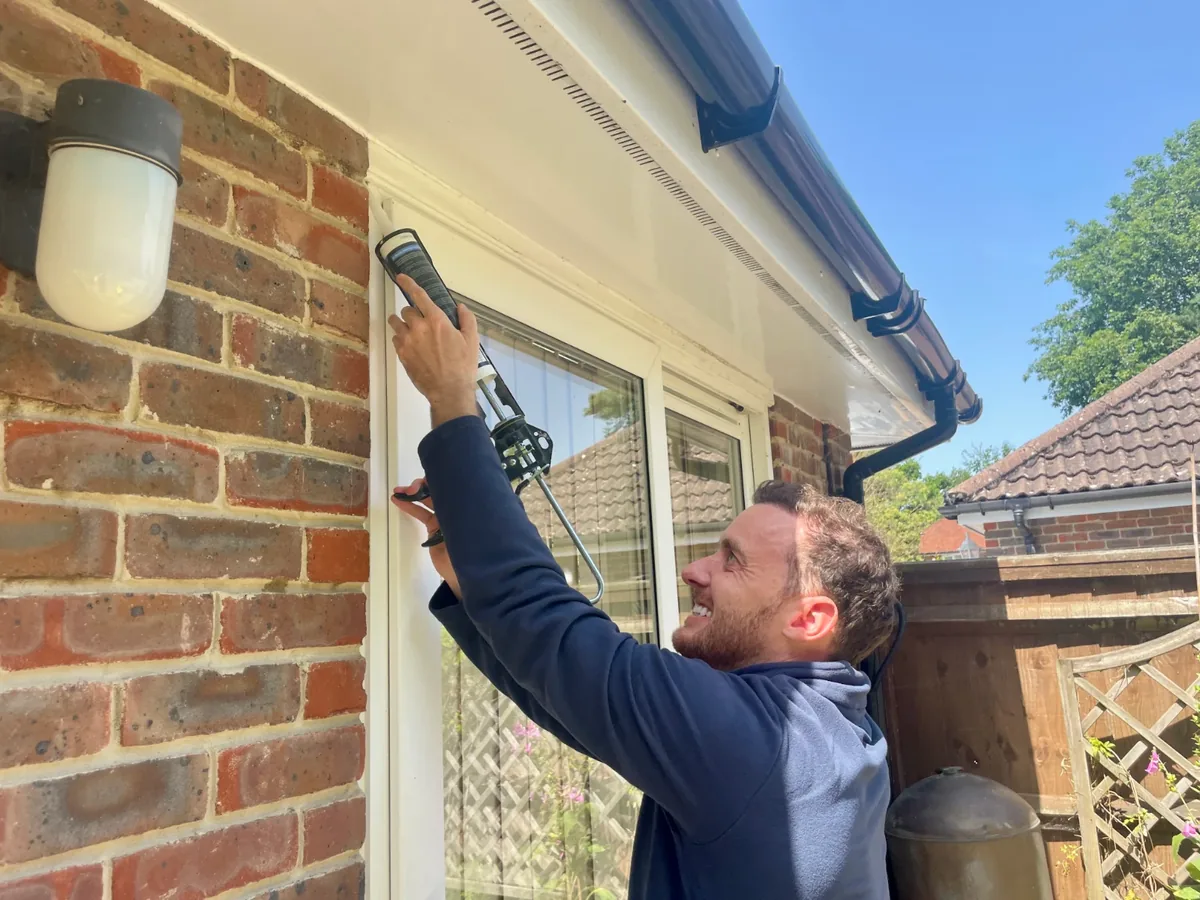
We cut out failed sealant, set the joint depth with closed-cell backing rod and reseal with a low-modulus exterior sealant. The colour is chosen to suit the brick or render so the line blends in. If you are dealing with hard, crazed mastic that has stopped moving and brick movement joints where the sealant has split, we can help, on concrete & block, joints between brick and frames and brickwork movement joints alike.
Alongside their tenements, Scotland’s cities have modern blocks with render, cladding and movement joints. Around Dumbiedykes, as anywhere, those joints dry out and crack over time, letting water behind the face of the building.
Whatever the size of the job, it’s backed by our one-year guarantee.
- Where
- Dumbiedykes (EH8, EH1, EH7)
- Wider area
- Edinburgh
- Cover
- A year, on every job
- Quote
- A clear quote up front
- info@mrmastic.co.uk
- Page updated
- 26 October 2026
Common questions in Dumbiedykes
Who arranges sealant work on the shared parts of a tenement in Dumbiedykes?
The owners of the flats normally agree repairs to shared parts like the roof and outside walls, and many buildings have a factor to arrange it. Where the title deeds are silent, the Tenements (Scotland) Act 2004 fills the gaps. Windows often belong to the individual flat, but it’s worth checking your deeds.
Does living near the coast affect external mastic in Dumbiedykes?
Coastal weather is harder on outside sealant: there’s more wind-driven rain and, closer to the shore, salt in the air. The right product, a clean joint and the right depth all help it cope.
How long does external mastic take?
It depends on the size of the job, but most jobs take anything from a few hours to several days, depending on the building. We’ll give you a better idea when we quote.
Can tenants book the work?
Yes, though it’s best to check with your landlord first. Landlords are often happy for the work to be arranged.
Are you insured?
Yes. We’re fully insured.
How often do external joints need resealing?
It depends on the exposure, the movement and the product. Sealant is a maintenance item, so check the joints once a year and renew it when it starts to fail.
Do you work for hotels and businesses?
Yes. We work in offices, washrooms, hotels and other commercial premises, as well as homes. Working times can be discussed when we quote.
Do you remove the old sealant?
Always. Sealing over old sealant is the main reason resealing fails early, and it’s something we never do.
Also in Dumbiedykes
Landlords, agents and businesses in Dumbiedykes
We also work for businesses, from offices to washrooms and kitchens. For commercial premises, we can talk through working times when we quote.
Mouldy or split sealant often shows up at the end of a tenancy, and it’s easy to sort out between tenants. Several properties can be quoted together.
Why deal with it now?
The longer a joint stays open, the more water the wall takes in. In cold weather, frost can damage wet brick and render, so the damage spreads beyond the joint. Private landlords in Dumbiedykes must meet the Repairing Standard, and damp or leaks can fall short of it, so failed sealant is best replaced before it becomes a complaint.
Rather than a set price list, we price the job in front of us: how many joints, what’s in them now and how we reach them. You’ll know the price before we begin.
What you get with us
- Sanitary silicone with an anti-fungal additive in wet areas
- One-year guarantee on every job
- Fully insured
- Domestic, commercial and hotel work
Take a look at our cost guide and our reviews.
Different surfaces, different methods
Copings and trims
Copings expand and contract through the day, so a flexible sealant suits them best.
Render joints
Render has movement joints and stop beads that need sealing. They’re resealed in a sealant that suits the render.
DIY sealant or a professional job?
If you’ve already had a go yourself, that is fine. We remove it and do the joint properly, so just mention it when you contact us.
Sealing over old silicone is the commonest DIY error. Silicone doesn’t stick to old silicone, so it peels away and traps moisture behind it. Everything old must be removed first.
What affects the quote in Dumbiedykes
Every job gets its own quote. This is what makes a difference:
- How easy the joints are to reach
- Whether there’s mould to deal with
- How many areas need sealing
- Whether old sealant or filler has to be cut out
What it costs depends on the size of the job, how much old material has to come out and how easy the joints are to reach. We give a clear quote before work begins.
What we need to know
Photos by email are helpful but not essential. Try to tell us:
- The rough size of the job
- What’s wrong with the joints now
- If it’s domestic, commercial or a hotel
- Access, such as stairs, a lift or height
Every job is quoted individually. Simply drop us a line at info@mrmastic.co.uk and describe the job and send pictures if you have them.
What external mastic looks like in Dumbiedykes
Dumbiedykes is within about 2 miles of the coast, where wind-driven rain is a fact of life and, nearer the shore, so is salt air. Both are hard on movement joints and outside wall joints, which can dry out and crack sooner where a building faces the weather. Under the Tenements (Scotland) Act 2004, shared parts of a tenement, such as the roof and outside walls, are looked after by the owners together, often through a property factor. The title deeds set out which parts are common.
Whitefoord House, about 0.2 miles north, is one of the historic houses in the wider area around Dumbiedykes. If you let a flat or house near Edinburgh Waverley station, split movement joints are easy to miss on a rental until damp shows inside. For site and facilities teams at buildings such as Old Royal High School, larger buildings have long runs of movement joint that eventually need resealing.
Dumbiedykes is about 1 mile east of Edinburgh, in Edinburgh. If you need external mastic in Dumbiedykes, please email us at info@mrmastic.co.uk for a quick quote. We’re based in Crawley and cover Edinburgh. Across Edinburgh, we cover 175 places, and Dumbiedykes is one of them.
We cover every part of the EH8, EH1 and EH7 postcode area for external mastic and the streets around it. Whether your property is on High Street, Calton Road and Hutton Road or a nearby road, we can help. Close by, we work in Holyrood (1 mile north-west), Canongate (1 mile north), Buccleuch (1 mile south-west), Old Town (1 mile west) and Greenside (1 mile north-west). Within a short drive, we also cover Queensferry (9 miles west), Southhouse (3 miles south), Gilmerton (4 miles south-east), Muirhouse (3 miles north-west), Slateford (3 miles south-west) and Gracemount (3 miles south).
What’s near Dumbiedykes
In Dumbiedykes, that means homes and buildings near St Cuthbert's Church, The World's End pub and Holyrood Park, among other places. Also close by are Scottish Poetry Library (less than half a mile north), London Street Primary School (0.8 miles north-west) and St Trinnean's School (0.7 miles south-east). Dumbiedykes’s nearest station is Edinburgh Waverley station, roughly 0.5 miles west of the centre. Other landmarks nearby include Deaconess Hospital (within half a mile south-west) and Edinburgh Castle (0.9 miles west). Not far away are Dunsapie Loch and Salisbury Crags.
The process
Our applicators work methodically: protection first, then preparation, sealing and a tidy-up. For most jobs that takes anything from a few hours to several days, depending on the building. In a Scottish city, a lot of jobs are in tenement flats, up a common stair from a shared close. For a job in Dumbiedykes, tell us the floor, how the door entry system works and where we can park nearby.
- Each joint is checked and the colour of the new sealant agreed.
- We take out the old sealant until the faces are sound.
- Closed-cell backing rod is pushed in so the sealant bonds to two sides only.
- Primer is applied wherever the sealant needs it.
- We gun in low-modulus sealant and tool it neatly.
Getting ready for the visit
- Keep children and pets away from the work area
- Tell us about any water getting in
- Move anything stored near the joints
Get a quote
Need a quote? Please email us at info@mrmastic.co.uk and tell us about the job. We will explain what we’d do and give you a clear price before work begins.
Related advice
Looking after it afterwards
No joint lasts for ever, but care makes a real difference. Our tips:
- Check the sealant is paintable before painting near it
- Keep high-pressure jets off the joints
- Fix overflowing gutters above sealed joints
- Keep soil, plants and ivy away from the joints
Do not let soil, plants or ivy build up against the new joints. Damp material against the sealant shortens its life.
An open movement joint lets rain into the wall every time it pours. Over time it can mean damp inside, stained render or frost-damaged brick.