
Kent · England
External & façade joints in Cheriton, Kent
Movement joints in Cheriton need attention? We remove the old material, prepare the joints and seal them properly, and the work is guaranteed for a year.
- Failed seals between different materials
- Sealant pulling away from one side of the joint
- Water getting into walls through failed joints
Landlords, agents and businesses in Cheriton
Letting agents often deal with us directly. Tell us the address, the job and how access works.
Failed sealant is one of the commonest items on a check-out report, and it’s quick to put right between tenancies. We can quote for more than one property at once.
About our external mastic in Cheriton
A movement joint is a deliberate break that lets a wall expand and contract. The sealant in it has to stretch and squeeze for years, and when it fails, the wall takes the strain and water finds a way in. We work on brickwork movement joints, copings & trims and façade panels, and people most often call us about panel joints letting water in and water getting into walls through failed joints.
Houses in smaller places like Cheriton can stand more in the open than those in a built-up town, so exposed walls and rooflines take more wind-driven rain. That is where gutter joints and wall joints tend to fail first.
Each job carries a 12-month guarantee.
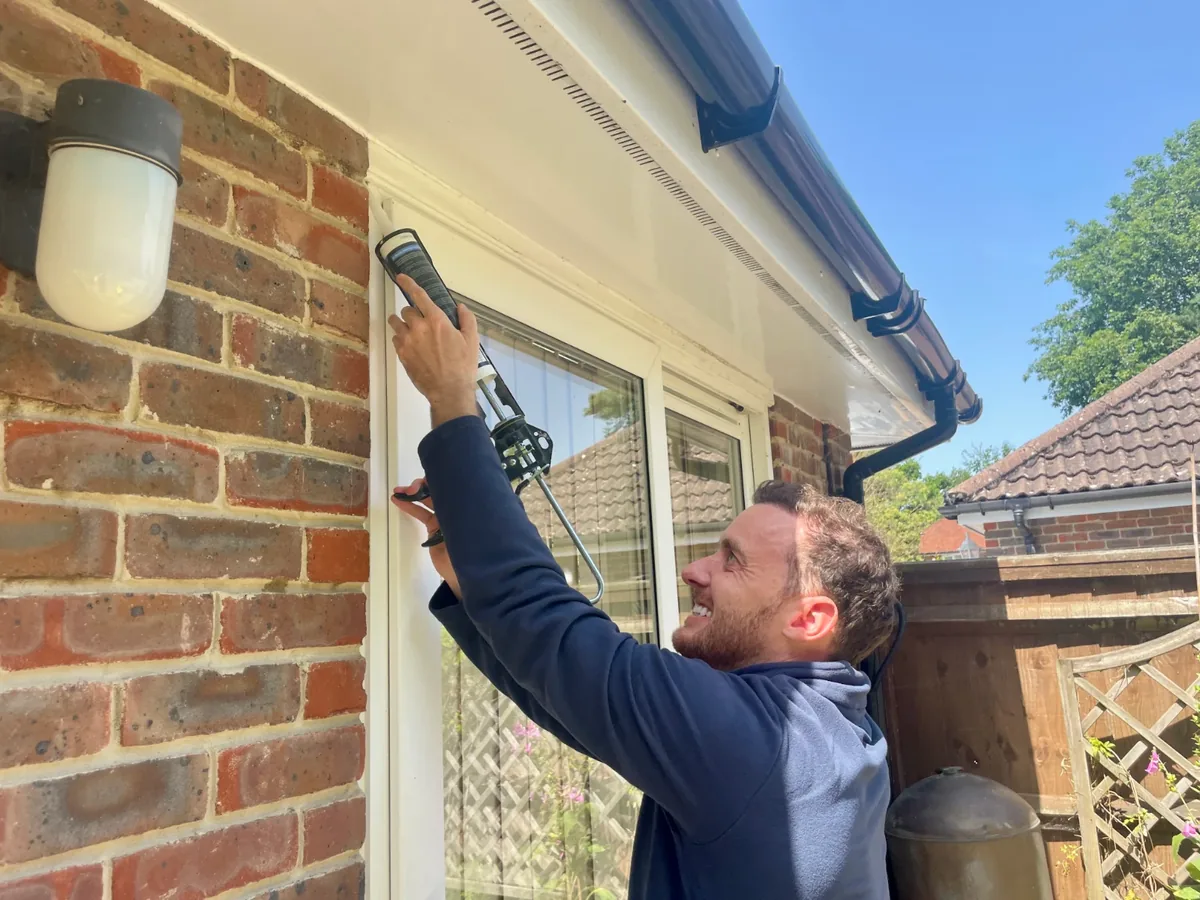
- Where
- Cheriton (CT19, CT20, CT50)
- Wider area
- Kent
- Guarantee
- 12 months on all our work
- Price
- A clear price before we start
- Phone
- 0345 464 0079
- Last updated
- 26 October 2026
How the job changes by surface
Concrete and blockwork
Concrete faces can be dusty and porous, so preparation is key. A primer goes on where the product requires one.
Joints between dissimilar materials
Where a frame or panel meets masonry, water often finds a way in. We cut out the old sealant and reseal with a product suited to both surfaces.
More services for Cheriton
What we’re called out for in Cheriton
Weeds, moss and debris in a joint are a sign the sealant has gone. Dirt and roots then trap moisture in the joint and make things worse.
Keep an eye out for these signs:
- Panel joints letting water in
- Rigid filler in a joint that should flex
- Sealant that has lost its bond to the brick or render
- Cracked joints where brick meets render or frames
If you let a flat or house near Folkestone West station, split movement joints are easy to miss on a rental until damp shows inside.
Questions to ask before booking
- How the joint is cleaned and prepared
- Who turns up on the day
- Whether they’re fully insured
- How long the guarantee is
What affects the cost of external mastic
There’s no set price list, because jobs vary so much. What we look at:
- Access and height
- How many areas need sealing
- The number and length of the joints
- The type of sealant required
Commercial jobs are quoted on the same basis as homes: the amount of work, how we reach it and what it needs, plus any working-time requirements on site. Ask us for a quote and we will go through it with you.
Asking for a quote
To help us quote quickly, let us know:
- Roughly how big the job is
- How we’d reach the joints
- Any previous sealing or DIY work
- The address or postcode of the job
It all starts with a short chat. Tell us what’s wrong, where it is and how much there is. Whenever you’re ready, ring 0345 464 0079 or send us an email.
Honest limits
To be straight with you, there are a few things sealant won’t fix:
- Damp that is not coming from the joint
- Cracked brickwork or render that needs a builder or plasterer
- Structural movement, which needs a surveyor or engineer
If in doubt, ring 0345 464 0079 or email us and we will say what we think.
Where we work in Cheriton
- Render & cladding joints
- Brickwork movement joints
- Concrete & block
- Copings & trims
- Joints between brick and frames
- Façade panels
Walls and rooflines in Cheriton
Cheriton is within about 1 mile of the coast, and homes near the sea take more wind-driven rain, with salt in the air closer to the shore. Both are hard on movement joints and outside wall joints, which can dry out and crack sooner where a building faces the weather. With historic houses such as Acrise Place (about 3.4 miles north) nearby, there’s older building stock in the area around Cheriton as well as newer homes. In older buildings, older brick and stone need a sealant that suits them, at the right joint depth.
For site and facilities teams at buildings such as All Soul's Church of England Primary School, its movement joints, gutters and trims need looking after like any other building’s. If you live in an older home near Church of All Souls, old and new materials meet at the roofline and walls, which is where sealant earns its keep.
Cheriton is about 1 mile west of Folkestone, in Kent. Homes, rented property, offices and hotels in Cheriton is covered for external mastic. The work is guaranteed for a year. Cheriton is one of 922 towns and villages in Kent we cover for external mastic. For nearby work, see our Chelmsford page, about 53 miles away.
Postcode districts we cover here for external mastic: CT19, CT20 and CT50. External mastic is available to properties on Oaks Road, Firs Lane and Star Lane and the roads around them. Cheriton sits on or near the M20. We also cover Sandgate (1 mile south), Folkestone (1 mile east), Peene (1 mile north-west), Newington (1 mile west) and Arpinge (1 mile north). Larger places within reach include Ashford (12 miles west), Canterbury (13 miles north), Dover (8 miles north-east), Deal (14 miles north-east), Hythe (3 miles south-west) and Tower Hamlets (7 miles east).
Near you in Cheriton
Around Cheriton, our work takes us to homes and buildings near The Folkestone Academy, Lower Leas Coastal Park and White Lion pub, among other places. Cheriton’s nearest station is Folkestone West station, roughly 0.6 miles south-east. Well-known places in the area include Sandgate Castle (1 mile south) and Elham Valley Countryside Centre And Railway Museum (1.3 miles north-west). Not far away are Sugar Loaf Hill.
What we do, step by step
All our tools and materials come with us in the van, so there’s nothing for you to buy. Once we’ve agreed what’s being done, the area is protected and the work begins. Most jobs take anything from a few hours to several days, depending on the building. In a smaller place like Cheriton, parking is seldom the issue; lanes, gates and long drives are worth mentioning. For outside work, side access and the height of the joints help us plan.
- We inspect the joints and agree which need resealing and how they’ll be reached.
- Old sealant and any debris are cut and raked out.
- We clean both faces of the joint and prime them where the product calls for it.
- Backing rod goes in next, setting the depth and keeping the sealant off the back of the joint.
- A flexible exterior sealant is applied and tooled in a colour to suit the wall.
How to prepare
- For indoor joints, keep the area dry beforehand if you can
- Keep children and pets away from the work area
- Tell us about any previous sealing or DIY attempts
Get a quote
We quote each job on its own. Simply phone 0345 464 0079 or email us and describe the job.
Related advice
FAQs for Cheriton
Do you cover smaller places like Cheriton?
Yes, smaller places are covered as well as towns. We work across London and the South East. Just mention lanes, gates or anything else about the route when you book.
Does living near the coast affect external mastic in Cheriton?
Near the sea, outside joints face more wind, rain and salt than they would inland, so the choice of sealant and the preparation matter even more. It’s worth checking the walls that face the sea first.
Do the sealants smell?
There can be a smell while the sealant cures, which fades as it sets. Opening a window helps.
How do you reach high-level joints?
Each building is different. Send us photos and a rough idea of the height, and we’ll confirm what access is needed.
When will the joints need doing again?
It varies with how exposed the wall is and how much the joint moves. Look for splits, hardening or edges coming away.
Can you do several jobs on one visit?
Yes. Tell us about everything you’d like done.
Why do you put foam in the joint first?
Closed-cell backing rod sets the depth of the sealant and stops it sticking to the back of the joint. That way it bonds to the two sides only and can stretch.
Is it worth trying it myself?
You can, for simple jobs. The key is preparation: remove all the old material and work on a clean, dry joint. If it doesn’t work out, we can redo it.
DIY versus a professional finish
Some sealant jobs are within reach of a careful DIYer, such as a straightforward joint indoors. Where it goes wrong is sealing over the old bead, working on a wet joint or overloading the gap.
Not every job suits DIY: work at height, external movement joints, fire-rated sealant and large areas need the right product, the right access and the right method.