
Kent · England
External Mastic in Chartway Street
Sealing brickwork movement joints, render, cladding and façade joints for homes and businesses in Chartway Street and across Kent. Fully insured, ARBOMaster approved and guaranteed for a year.
- Moss and dirt in joints with no sealant left
- Gaps where render, brick and frames meet
- Brick movement joints where the sealant has split
Walls and rooflines in Chartway Street
Historic houses like Leeds Castle (about 2 miles north) are a reminder that the area around Chartway Street has older buildings as well as new. In older buildings, older walls and rooflines need a sealant that moves with them and suits the material. Rainfall in the South East is lower than in much of the UK, but outside sealant still needs a dry, clean surface, so outdoor work is planned around the forecast.
For site and facilities teams at buildings such as Kingswood Primary School, its movement joints, gutters and trims need looking after like any other building’s. Homes close to St Peter's and St Paul's Church include some older properties, and older walls, gutters and the joints where extensions meet them need a flexible sealant.
Chartway Street is about 5 miles south-east of Maidstone, in Kent. For external mastic in and around Chartway Street, it’s easy to get a quote: please call 0345 464 0079 or drop us an email. We cover Kent from our Crawley base. Our Kent coverage runs to 922 places, and Chartway Street is one of them. Our London page covers work nearby.
Postcode districts we cover here for external mastic: ME17. If you need external mastic at a property on Chartway Street and Workhouse Lane or a nearby road, our applicators can take on the job. Close by, we work in Kingswood (1 mile north-east), Ulcombe (1 mile south-east), Broomfield (2 miles north-east), Leeds (2 miles north) and Ashbank (2 miles north). Further out, we also cover Maidstone (5 miles north-west), Ashford (12 miles south-east), Sittingbourne (10 miles north-east), Tonbridge (15 miles west), Faversham (13 miles north-east) and Kings Hill (10 miles west).
What’s near Chartway Street
The closest station to Chartway Street is Harrietsham station, about 3 miles north-east of the centre. Well-known places in the area include Sutton Valence Castle (1 mile south-west) and KIMS hospital (5.1 miles north-west).
External mastic in Chartway Street, done properly
A movement joint is a deliberate break that lets a wall expand and contract. The sealant in it has to stretch and squeeze for years, so once it splits or hardens, the joint stops working and water gets in. We work on façade panels, copings & trims and render & cladding joints, and common reasons people get in touch are brick movement joints where the sealant has split and plants rooting in failed movement joints.
Somewhere as small as Chartway Street, homes and farm buildings often face open ground, so walls and rooflines take the full force of wind and rain. Gutter joints and wall joints there need a sealant that can flex and stay put.
You are covered for a year from the day we finish. If there’s a problem with it, please phone 0345 464 0079 or drop us an email.
- Place
- Chartway Street (ME17)
- Region
- Kent
- Guarantee
- A year, on every job
- Price
- A clear quote up front
- Telephone
- 0345 464 0079
- Updated
- 26 October 2026
Also near Chartway Street
More services for Chartway Street
Questions from Chartway Street
Is Chartway Street in your area for external mastic?
Yes. Our work covers London and the South East, and Chartway Street is part of that. You can phone 0345 464 0079 or drop us an email and tell us what needs doing, and we’ll give you a clear quote.
I let a flat near Harrietsham station. Can you help?
Yes. We work for landlords and letting agents as well as householders. You can ring 0345 464 0079 or email us with the details for a clear quote.
Will the new joint stand out?
The aim is a neat, even joint in a colour that suits the wall. We’ll talk through colour options before work begins.
Do you work at height?
It depends on the building. Send us photos and a rough idea of the height.
Is it worth trying it myself?
Some simple jobs can be done by a careful DIYer. The usual mistakes are sealing over old sealant, sealing a damp joint and using too much.
How often do external joints need resealing?
It varies with how exposed the wall is and how much the joint moves. Look for splits, hardening or edges coming away and have them redone then.
What information do you need?
Let us know what needs doing and where, with photos by email if possible. If we need more, we’ll ask.
How long before the joint can be used?
Different products cure at different speeds, so follow the cure time we give you.
Surface by surface
Concrete and blockwork
Blockwork and concrete shrink over time and move with the seasons. Their movement joints are sealed over backing rod with a flexible sealant.
Joints between dissimilar materials
Where a frame or panel meets masonry, water often finds a way in. The old joint is removed and a sealant that bonds to both sides goes in.
How to look after the new joints
So the new joints stay in good condition:
- Check external joints each spring
- Ask before painting over external sealant
- Show decorators and builders where the movement joints are
- Act on the first splits you see
Give the sealant the cure time we tell you before anything rubs against it. Most exterior sealants skin fast but take longer to cure right through.
Gaps, plants or missing sealant in a joint are worth getting looked at. Earlier resealing means a smaller job and a better result.
What we cannot put right
Honest advice matters more to us than a booking, so here’s what sealant can’t fix:
- Cracks in the bricks or render themselves, away from the joints
- Structural movement, which needs a surveyor or engineer
- Cutting new joints into brickwork, which is building work rather than sealant work
If in doubt, ring 0345 464 0079 or send us an email and we will say what we think before you book.
Surfaces we seal
- Façade panels
- Copings & trims
- Render & cladding joints
- Concrete & block
- Brickwork movement joints
- Joints between brick and frames
How the visit works
All our tools and materials come with us in the van, so you don’t need to buy or prepare anything. Once we’ve agreed what’s being done, we protect the area and start. It normally takes a few hours to a few days, depending on the length of joint and the access. Somewhere as small as Chartway Street, access is often the only tricky part. If the job is outside, mention outbuildings, exposed walls and how to reach them.
- Each joint is checked and the colour of the new sealant agreed.
- We take out the old sealant until the faces are sound.
- Closed-cell backing rod is pushed in so the sealant bonds to two sides only.
- We prime the faces where required.
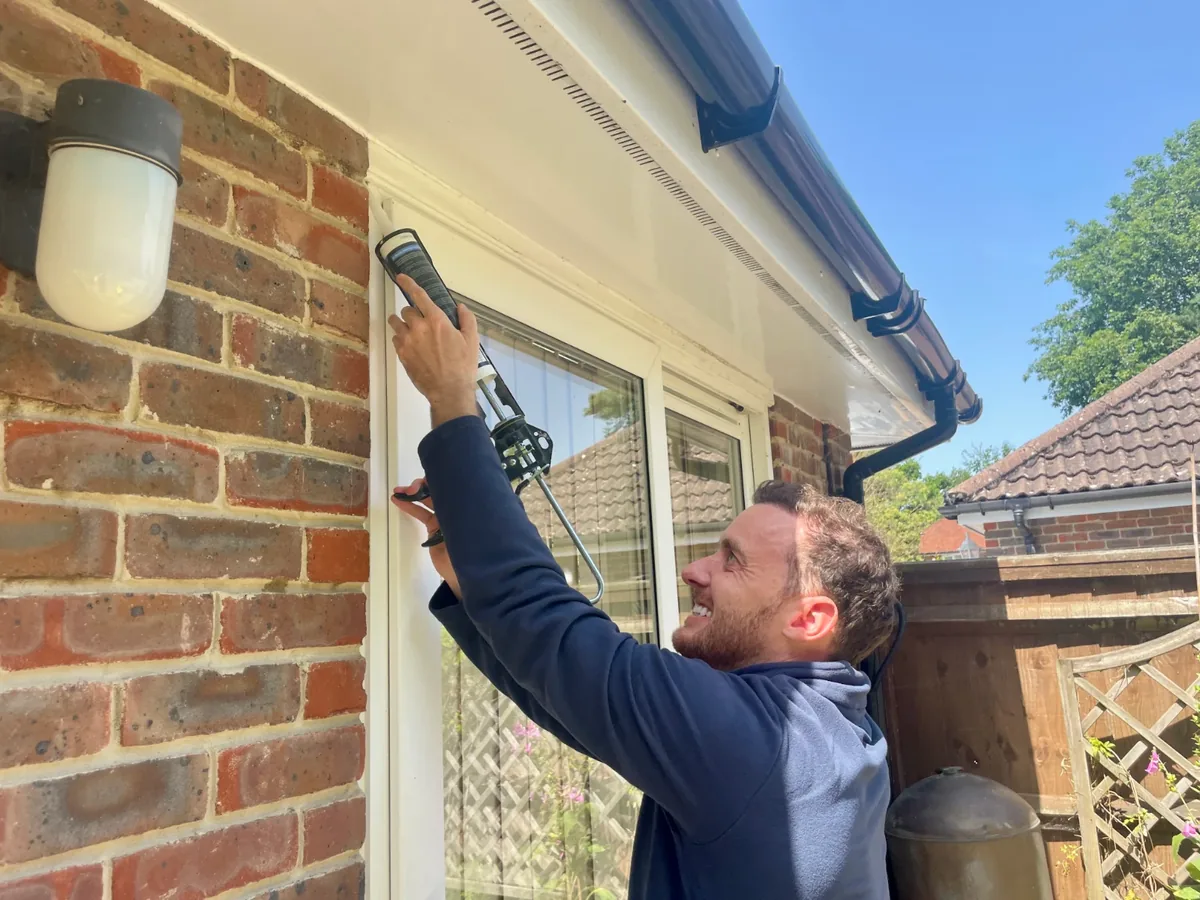
- We gun in low-modulus sealant and tool it neatly.
How to prepare
- Mention if the joints have been sealed before
- Mention any leaks or damp you’ve noticed
- Plan for the work area to be out of bounds to pets and children
Ask for a quote
We quote each job on its own. Simply ring 0345 464 0079 or email us and describe the job, and pictures are welcome.
Advice
Why deal with it now?
Done well, a resealed joint is a neat, straight line that suits the wall. A hurried job with smeared edges and no backing looks worse and fails sooner so it’s worth doing right. Around Chartway Street, older homes often have timber in their floors and frames, and water through a failed joint can rot timber if it’s left.
Some things make a job bigger or smaller: the old material and how easily it comes out, whether mould needs treating, and whether the work is at height. We take all of that into account in your quote.
Why choose Mr Mastic in Chartway Street
- An ARBOMaster approved applicator
- Every job guaranteed for a year
- A choice of colours where the product allows
- Quality sealants from Arbo and Everbuild
See what affects the cost or our reviews.
Common problems we fix in Chartway Street
Every building moves. Clay bricks expand slightly over their life, concrete and block shrink, and everything moves with temperature and wet. All of that ends up in the joint sealant.
The problems people normally mention when they call are:
- Old sealant gone brittle and cracked
- Movement joints with cracked, split or missing sealant
- Joints pointed up with cement by mistake
- Moss and dirt in joints with no sealant left
Rented homes near Harrietsham station change hands often, and failed wall and movement joints let damp in, so they’re worth checking between tenancies.
What your quote should include
- How long the guarantee is
- How the surfaces are prepared before sealing
- When the joint can take water or movement
- Which colour the sealant will be
Should I try it myself first?
If you are set on DIY, put the effort into preparation: take out all the old sealant, make sure the joint is clean and dry, and give it the full cure time. If it doesn’t work out, we can still put it right.
Sealing over old silicone is the commonest DIY error. Silicone doesn’t stick to old silicone, so it lifts and traps water and mould underneath. Everything old must be removed first.