
West Sussex · England
Bathroom & kitchen resealing in Wick, West Sussex
Baths, showers and worktops in Wick need attention? We cut out the old, prepare the joints and apply the right sealant.
- Cracked, shrunken or lifting silicone
- Damp behind the bath or under the tray
- A joint torn by a bath that flexes
How the job changes by surface
Shower trays & enclosures
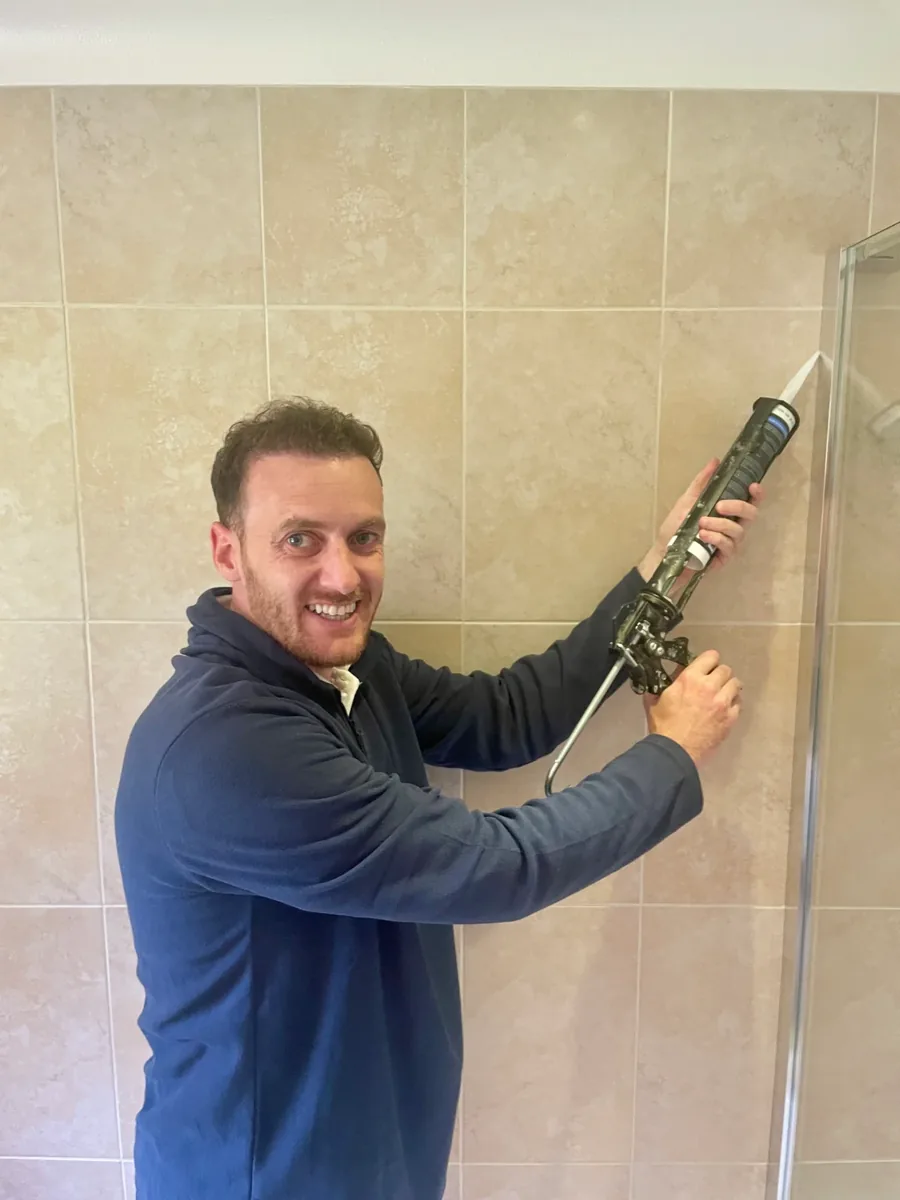
The vertical joint where a screen profile meets the wall is a common leak point. It’s resealed along with the tray joints, sealing the side the enclosure’s instructions call for.
Sinks & splashbacks
Splashbacks in glass, tile or acrylic meet the worktop in a long joint. It’s resealed in white, clear or a colour to suit.
Bathroom resealing in Wick, done properly
Kitchens need the same care as bathrooms. The joint between worktop and wall, the edge of the sink and the bottom of the splashback all take splashes every day, and water behind a laminate worktop can make it swell. We reseal them with a kitchen-suitable silicone, matched to the worktop where it’s on show. Common call-outs are for splits where the tray meets the wall and two layers of silicone, both failing, across kitchen worktops & upstands, sinks & splashbacks and wet rooms.
Homes around Wick range from older cottages to more recent houses. In older homes, walls and floors can move a little more, so the right flexible sealant matters.
Whatever the size of the job, it’s backed by our one-year guarantee.
- Location
- Wick (BN17)
- Region
- West Sussex
- Guarantee
- A year, on every job
- Quotes
- A clear quote up front
- Telephone
- 0345 464 0079
- Page updated
- 26 October 2026
Wick homes and their sealant
Wick is close to the coast. Coastal homes, holiday lets and guest houses can see heavy bathroom use in busy months, and sealant and grout that work that hard wear out sooner. Hard water is the norm across most of the South East, so limescale builds up on sealant, grout and fittings, and it has to be cleaned off before new sealant goes in.
For landlords with property near Littlehampton station, mouldy sealant is one of the first things a new tenant notices, so it’s worth renewing between lets. Managing a site like Lyminster Primary School? Then washroom and kitchen sealant there needs the same care as at home, and schools and businesses are part of our work as well as homes.
Wick is about 1 mile north-west of Littlehampton, in West Sussex. Wherever you are in the BN17 postcode area, our applicators can take on bathroom resealing. Wick is one of 371 towns and villages in West Sussex we cover for bathroom resealing. Brighton is on our list too, around 18 miles away.
Jobs for bathroom resealing in BN17 works the same way as everywhere else we cover. We cover properties on Joyce Close, Willow Brook and Wheatcroft and the roads around them. Main roads around Wick include the B2284. Other places close to Wick include Lyminster (1 mile north), Toddington (1 mile east), Littlehampton (1 mile south-east), Climping (1 mile south-west) and Ford (1 mile west). Further out, we also cover Worthing (7 miles east), Bognor Regis (6 miles west), Chichester (10 miles west), Selsey (12 miles south-west), Shoreham-by-Sea (12 miles east) and Lancing (10 miles east).
What’s near Wick
In Wick, that means homes and buildings near Littlehampton College, Locomotive Public House and The Littlehampton Academy and the streets around them. For rail, the closest station is Littlehampton station, about 0.8 miles south. Other landmarks nearby include Zachary Merton Hospital (2.3 miles south-east) and Rustington Museum (2.1 miles south-east). For a walk, there’s Highdown Hill and WWT Arundel.
Honest limits
Sealant isn’t the answer to every problem, and we will tell you before any work starts. It will not solve:
- Water coming from the plumbing rather than the joint
- Tiles that have come away from the wall
- Cracks in the tray itself rather than the joint
If in doubt, call 0345 464 0079 or email us and we will say what we think before you book.
Surfaces we seal
- Basins & vanity units
- Baths
- Shower trays & enclosures
- Wet rooms
- Sinks & splashbacks
- Kitchen worktops & upstands
Nearby places to Wick
Other services in Wick
Keeping the joints in good condition
Once the sealant has cured, a few habits help it last:
- Dry the bead with a towel now and then
- Open a window or run the fan so the room dries
- Give the silicone its full cure time
- Keep an eye on the corners, where splits start
Give the silicone time to cure before it gets wet, which is usually around 24 hours. After that, a quick wipe after showering helps keep it clean.
There’s no need to wait for a full refurbishment. Sealant is a maintenance item, like the paint on a window frame, and renewing it as soon as it fails protects everything around it.
DIY sealant or a professional job?
The biggest DIY mistake is sealing over old sealant. Silicone doesn’t stick to old silicone, so it lifts and traps water and mould underneath. All the old material has to come out first.
The difference is mostly in the preparation and the product. We take joints back to clean, dry surfaces, and the sealant is chosen for how the joint moves and where it is, and the work is guaranteed for a year.
Wick questions
Can you help a landlord with a rental near Littlehampton station?
Yes, we work for letting agents and landlords. You can call 0345 464 0079 or drop us an email with the address and a few details, and we will give you a fixed price before we start.
Is Wick within the area you cover?
Yes, smaller places are covered as well as towns. Our work covers London and the South East. Let us know about access, parking and anything unusual about getting there when you book.
Is it messy?
Very little: the area around the joints is protected first, and we clear up the old sealant and our materials before we leave.
Can I do it myself?
Sometimes. Preparation is everything: all the old sealant out, and a clean, dry joint. We can always put it right if it fails.
Will there be a smell?
Possibly a little. Any smell clears as the sealant cures, and ventilation helps.
What do you need from me for a quote?
The location, the problem and the rough size of the job. If you can, email a few photos.
Do I have to be there?
If the work is inside, we need someone to let us in. Once we have agreed the job, you do not need to watch us work.
Is it OK to put new sealant on top of the old bead?
No, never. Sealing over the top looks fine for a few weeks, then lifts, because silicone doesn’t bond to silicone. We remove the old bead completely before resealing.
Work for landlords, hotels and businesses
We work for landlords and letting agents as well as homeowners. Sealant work between tenants keeps a property looking cared for before the next move-in.
Water getting past a failed joint can damage the building, which matters even more when someone else lives there. Keeping joints in good order is simple maintenance.
How it works
Most of a good job is in the preparation, and we do not rush it. Joints are cleaned back and dried before anything new goes in. All told, the work takes a couple of hours for a single bath or shower. In a smaller place like Wick, parking is seldom the issue; lanes, gates and long drives are worth mentioning. For outside work, side access and the height of the joints help us plan.
- First the area is protected and every bit of old sealant removed, including the film left on the tiles.
- Next, the joint is cleaned and any mould is treated.
- We let it dry fully and fill the bath with water before sealing.
- New anti-fungal silicone goes on in a colour to suit and is tooled to a clean finish.
- We tidy up and give you the cure time, generally around 24 hours.
Preparing for the visit
- Where the joints are inside, avoid wetting them before we arrive
- Plan for the work area to be out of bounds to pets and children
- Clear the area around the work
Get a quote
It all starts with a short chat. Describe the problem, the location and the size of the job, and we’ll talk you through what we’d do. Whenever you’re ready, call 0345 464 0079 or drop us an email.
Read more
When to call us in Wick
Sealing over old silicone is one of the commonest mistakes we find. New silicone won’t bond to old silicone, so it peels, leaks and hides mould behind it.
The most common problems we see are:
- A bead that has pulled away from the tiles
- A joint torn by a bath that flexes
- Mouldy sealant that has gone black
- A reseal done over the top of the old bead
If you live in an older home near All Saints, timber floors under older bathrooms flex, so joints need a sealant that moves with them.
Before booking anyone
- Whether they seal over old material or remove it
- Whether you can choose the colour
- What insurance they hold
- Whether the sealant suits the joint