
Kent · England
Sand mastic for sash & case windows in East End, Kent
We cover East End for traditional burnt sand mastic around sash and case windows and doors in stone and brick. Old sealant removed completely, joints prepared properly.
- Patchy fillers round a sash window
- Modern sealant on a period surround
- Wind and rain getting in round a sash window
Signs you need sand mastic in East End
Timber frames move with the seasons. That movement opens up the mastic joint over time.
The most common problems we see are:
- Tired mastic found when preparing windows for paint
- Old sand mastic that has cracked, crumbled or fallen out
- Modern sealant on a period surround
- Gaps between timber frames and stone or brick
For an older house near a landmark such as St Margaret's Church, frames set in older brick or stone need a sealant that suits the wall as well as the frame.
What your quote should include
- When the joint can take water or movement
- Whether VAT is included
- Are they insured?
- How the joint is cleaned and prepared
About our sand mastic in East End
Sand mastic is the traditional way to point the gap between a timber window frame and the stone or brick around it. It’s made from sand and a linseed-oil-based binder, applied by hand. On period homes, it looks right where silicone wouldn’t. If you’re dealing with failed mastic on an exposed elevation and patchy fillers round a sash window, we can put it right.
Homes in small places like East End often stand in the open, with little to shelter their windows from wind and rain. Exposed frames and sills lose their mastic sooner than sheltered ones.
All of our work is guaranteed for twelve months, and the guarantee is the same wherever you are.
- Place
- East End (TN17)
- Wider area
- Kent
- Guarantee
- One year on every job
- Quotes
- A clear price before any work starts
- Call
- 0345 464 0079
- Updated
- 26 October 2026
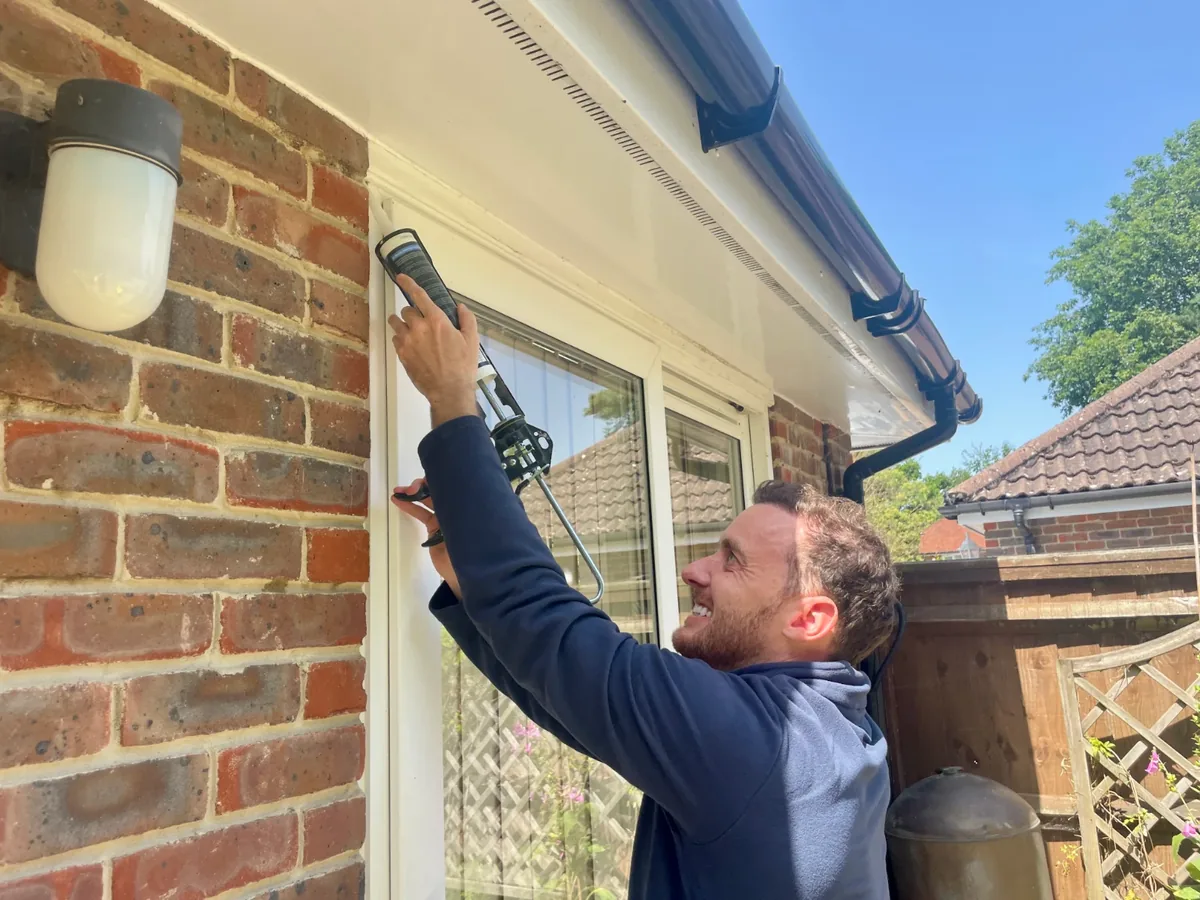
Landlord and commercial work in East End
For anyone letting property in or around East End, several properties can be quoted together. Send us the addresses and the work at each, and pictures by email help.
Whether it’s one flat or a portfolio, the work is the same standard: the old material taken out, careful preparation and a 12-month guarantee.
DIY versus a professional finish
A careful DIYer can reseal a simple joint, like a short, easy-to-reach joint indoors. Where it goes wrong is sealing over the old bead, working on a wet joint or overloading the gap.
Overfilling a joint is a classic DIY mistake. A thick, smeared bead looks untidy and doesn’t move well, and getting the depth right matters as much as the look.
How it works
There is not much for you to do on the day. Point us to the joints and we will get on with it. The work itself takes a few hours for a single window, longer for several. Somewhere as small as East End, access is often the only tricky part. If the job is outside, mention outbuildings, exposed walls and how to reach them.
- We check each window surround and the condition of the joint.
- The joint is raked out and cleaned.
- We fill deep gaps so the new mastic isn’t too thick.
- New sand mastic is applied and shaped by hand.
- The finish is dressed neatly.
Before we arrive
- For business premises, tell us about site rules or sign-in
- Try not to wet indoor joints just before the visit
- Tell us about any water getting in
Getting a quote
To get a quote, phone 0345 464 0079 or drop us an email with the location and a short description of the problem. You will have a clear quote before we start.
Read more
East End homes and the weather
Historic houses like Smallhythe Place (about 5 miles south-east) are a reminder that the area around East End has older buildings as well as new. Where a home is older, older timber frames in brick or stone need a different approach from a modern uPVC window. London and the South East are among the drier parts of the UK, but outside sealant still needs a dry, clean surface, so outdoor work is planned around the forecast.
Around East End, as everywhere, sand mastic is only as good as the preparation behind it.
East End is about 11 miles west of Ashford, in Kent. Jobs in East End get the same care as everywhere else we work: the old material taken out, joints prepared properly and a 12-month guarantee. East End is one of 922 places in Kent we cover. Our Crawley page covers work nearby (35 miles or so).
Postcode districts we cover here for sand mastic: TN17. Local streets include Wood Lane, Mockbeggar Lane and Jackson Way, and we cover them all. If you’re just outside East End, we cover Fosten Green (1 mile north), Clapper Hill (1 mile north-east), Parkgate (1 mile east), West Cross (2 miles south) and Strood (2 miles south-east). We also work in nearby towns such as Maidstone (13 miles north), Ashford (11 miles east), Foley Park (14 miles north), Paddock Wood (12 miles north-west), Tenterden (3 miles east) and Bearsted (13 miles north).
What’s near East End
Well-known places in the area include Sissinghurst Castle (2.5 miles north-west) and Benenden Hospital (within half a mile south).
What happens if it’s left?
Replacing sash windows is a big decision for a period home, and in listed buildings it may need consent. If the frames are sound, renewing the mastic deals with gaps and draughts at the surround. Where a wall is exposed, as many are in small places like East End, wind-driven rain gets into any failed joint, and damp in older walls is slow to dry out.
Commercial jobs are quoted on the same basis as homes: the amount of work, the access and the products needed, along with when we can work on site. Ask us for a quote and we will explain what it covers.
Why East End customers choose us
- 180+ five-star Google reviews
- A 12-month guarantee on all work
- Old sealant always removed completely
- Approved under the ARBOMaster scheme
Read how sealant jobs are priced and customer reviews.
How the job changes by surface
Period and listed homes
Period homes look their best with traditional materials.
Stone surrounds
Old stone surrounds are often uneven, so the joint varies in width. We shape it by hand to follow the stone.
Keeping the joints in good condition
To keep the joints looking good and working properly:
- Ask a joiner to look at soft timber first
- Avoid heavy scraping on the mastic joint
- Renew mastic before redecorating the windows
- Look over the window mastic once a year
Check the mastic when you check the paintwork. Small cracks are easier to deal with early.
Gaps round a sash box let in draughts and rain. Left, the gap tends to get bigger as more mastic falls out.
Questions from East End
Do you cover East End for sand mastic?
Yes. We work across London and the South East, and East End is part of that. You can phone 0345 464 0079 or send us an email and tell us what needs doing, and we’ll give you a clear price.
Will you come out to East End?
Yes. East End is within the area we cover, which takes in towns, villages and rural addresses. Our work covers London and the South East. Let us know about access, parking and anything unusual about getting there when you book.
Should I try DIY first?
You can, for simple jobs. Preparation is everything: all the old sealant out, and a clean, dry joint. We can always put it right if it fails.
What information do you need?
Just the basics: where it is, what you’ve noticed and how we reach it. After that, simply phone 0345 464 0079 or send us an email.
Can new sealant go over the old?
No, and we never do. It can look neat for a few weeks, but the new bead soon lifts. Removing the old sealant completely is the only lasting way.
Do you remove the old sealant?
Always. Sealing over old sealant is the main reason resealing fails early, and it’s something we never do.
Is sand mastic better than silicone for my windows?
That depends on your windows. On many period windows, sand mastic looks right and suits the building, while modern frames normally get a flexible sealant.
Does someone need to be in?
It depends on the job. For work indoors, someone needs to let us in, and for outside work we’ll agree access with you when we book.