
West Sussex · England
Sand Mastic in Chelwood Common
Sand mastic for Chelwood Common and the surrounding area: the right sealant, proper preparation and a neat finish. Call for a quick quote.
- Mastic that needs renewing before redecorating
- Mastic round period door frames that has failed
- Gaps between timber frames and stone or brick
About our sand mastic in Chelwood Common
Sand mastic is the traditional way to point the gap between a timber window frame and the stone or brick around it. It’s made from sand and a linseed-oil-based binder and built up by hand. On older homes, it suits the building far better than silicone. We’re often asked to deal with window mastic to renew ahead of painting and patchy fillers round a sash window, on period & listed homes, timber door frames and stone surrounds.
Outdoor sealant needs dry, clean surfaces, so work on frames around Chelwood Common is planned for dry weather. Tell us about access to every side of the house, including upper-floor windows.
You get a 12-month guarantee, the same in Chelwood Common as everywhere else we work.
- Where
- Chelwood Common (RH17)
- Region
- West Sussex
- Cover
- A year, on every job
- Price
- A clear quote up front
- Phone
- 0345 464 0079
- Last updated
- 26 October 2026
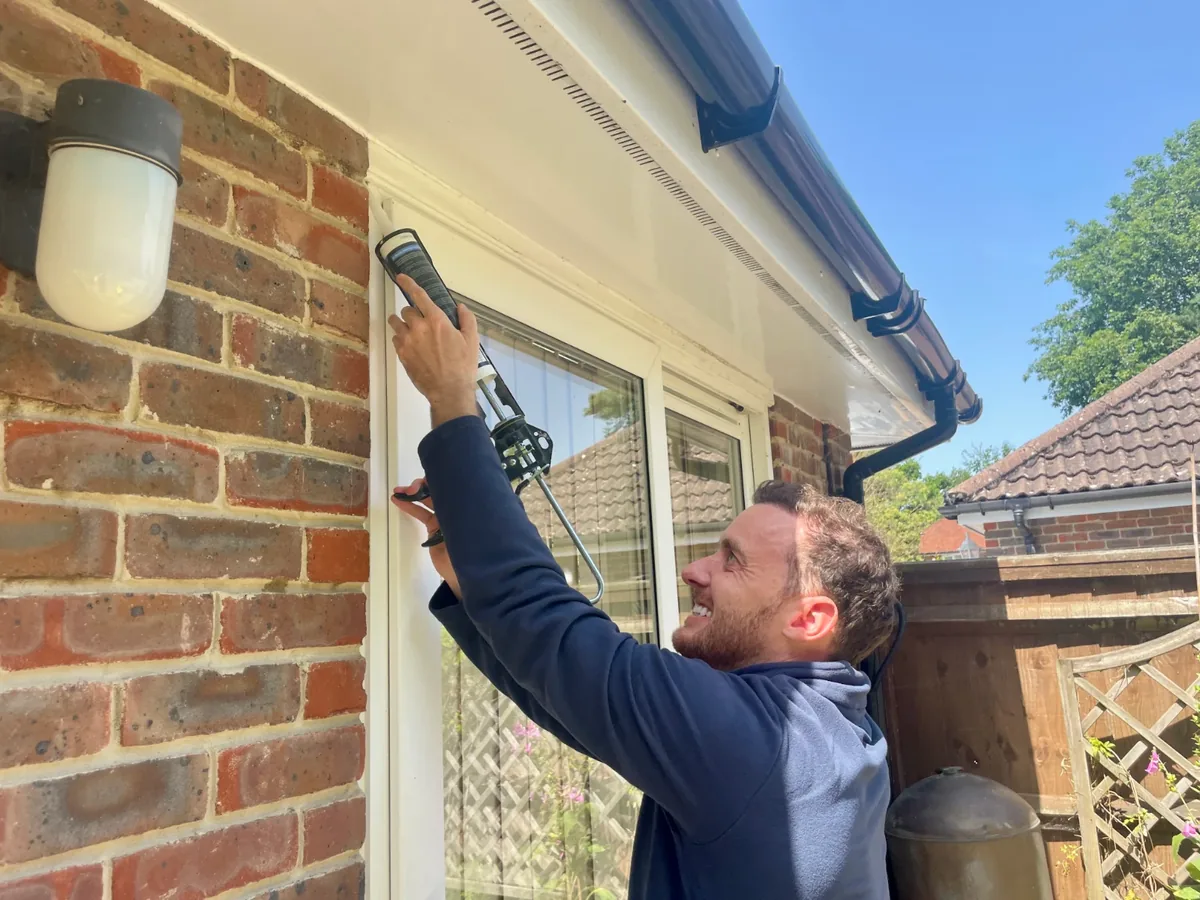
What the job involves on each surface
Tenement and terrace windows
Where a building is shared, window work may involve neighbours, so check who is responsible first.
Brick reveals
We rake out the old mastic and pack deep voids before the new mastic goes in.
Towns and villages near Chelwood Common
More services for Chelwood Common
Aftercare tips
How long the joints last depends on use and care. Here’s what we suggest:
- Avoid heavy scraping on the mastic joint
- Don’t paint over the new mastic
- Don’t run silicone over sand mastic
- Ask a joiner to look at soft timber first
Don’t touch or press the mastic while it hardens. It forms a skin fairly soon but needs longer to fully harden.
Renewing mastic before redecorating saves doing it twice. Paint over cracked mastic only covers it up.
Chelwood Common homes and the weather
Compared with the north and west, the South East gets less rain, yet outdoor joints still have to be sealed dry, so jobs are booked with the weather in mind. With historic houses such as Priest House (about 3.9 miles north-west) nearby, there’s older building stock in the area around Chelwood Common as well as newer homes. In older buildings, older frames set in brick or stone need a sealant that suits them, and sometimes that is traditional sand mastic.
In the older streets around Chelwood Gate Church, the windows may be timber, sash or later replacements, and each needs the right sealant against the wall.
Chelwood Common is about 6 miles north-east of Haywards Heath, in West Sussex. Jobs in Chelwood Common get the same care as everywhere else we work: old sealant removed completely, careful preparation and a 12-month guarantee. Across West Sussex, we cover 371 places, Chelwood Common among them. Our Crawley page covers work nearby, about 10 miles away.
Work in RH17 works the same way as everywhere else we cover. Sand mastic is available to properties on Baxters Lane, Tanyard Lane and Box's Lane and the roads around them. Neighbouring places we cover for sand mastic include Chelwood Gate (1 mile north), Danehill (1 mile south-west), Birchgrove (1 mile north-west), Furner's Green (2 miles south) and Nutley (2 miles east). Larger places within reach include Crawley (10 miles north-west), Horsham (15 miles west), Haywards Heath (6 miles south-west), Burgess Hill (9 miles south-west), East Grinstead (6 miles north) and Broadfield (10 miles west).
Landmarks near Chelwood Common
Nearby you will also find Waterbury Castle (2.3 miles west) and Heaven Farm Museum (1.6 miles south). Green spaces nearby include Brickfield Meadow.
Common questions in Chelwood Common
Do you cover Chelwood Common for sand mastic?
Yes. Our work covers London and the South East, and Chelwood Common is part of that. You can ring 0345 464 0079 or send us an email and tell us what needs doing.
Is Chelwood Common within the area you cover?
Yes, Chelwood Common is covered. Our work covers London and the South East, from towns to the smallest places. Longer journeys are simply planned in advance.
Should I check with the council before work on a listed or conservation-area home?
Checking first is sensible. Ask your local planning authority whether consent is needed for listed or conservation-area properties.
Is sand mastic better than silicone for my windows?
It depends on the window. Period windows in stone or brick normally suit sand mastic and newer frames normally get a flexible sealant.
Is the work guaranteed?
Our 12-month guarantee applies on every job.
Can you seal over the old sealant?
No, it won’t last. It can look neat for a few weeks, but the new layer lifts away from the old one. The old sealant has to come out completely.
Do I have to be there?
It depends on the job. For work indoors, someone needs to let us in, while outside work can sometimes be arranged differently.
Will there be a smell?
There can be a smell while the sealant cures, but it fades. Opening a window helps.
When it isn’t the sealant
Honest advice matters more to us than a booking, so here’s what sealant can’t fix:
- Sashes that need overhauling
- Rotten sashes, sills or window boxes (a joiner’s job)
- Planning or listed building consent (your local planning authority decides)
Not sure which it is? You can ring 0345 464 0079 or send us an email and we will tell you honestly.
Joints and surfaces we work on
- Tenement windows
- Timber door frames
- Sash and case windows
- Period & listed homes
- Brick reveals
- Stone surrounds
Why act early in Chelwood Common
If you’re redecorating, renew the mastic first. Paint over cracked mastic won’t stop the gaps and traditional guidance is to leave the new mastic unpainted. Around Chelwood Common, older homes often have timber in their floors and frames, where water from a failed joint can cause rot if it’s left.
What you pay reflects the work, not a rough estimate. That is why we ask about the job first.
Why choose Mr Mastic in Chelwood Common
- 12-month guarantee on every job
- Neat joints and a tidy finish
- 180+ five-star Google reviews
- 20+ years of sealant experience
Take a look at our cost guide or our reviews.
Common problems we fix in Chelwood Common
Timber swells and shrinks with the weather. That movement opens up the mastic joint little by little.
The most common problems we see are:
- Open joints round the window box
- Modern sealant on a period surround
- Draughty sash windows at the surround
- Cement or filler used on old window joints that has cracked
Managing a site like Danehill Church of England Primary School? Then larger buildings have plenty of frames, and the mastic around each one ages.
Comparing quotes
- Whether you can choose the colour
- What product goes in the joint
- Whether they seal over old material or remove it
- What the cure time is
How it works
Once we’re on site, we check the joints match what you told us. If anything is different, we explain it before carrying on. After that, the work takes a few hours for a single window, longer for several. In a small place like Chelwood Common, access is generally the main thing to plan. If the job is outside, mention outbuildings, exposed walls and how to reach them.
- First, we look at the surrounds with you and agree what needs doing.
- Old, loose mastic is raked out and the joint cleaned.
- Deep voids are packed so the mastic is the right thickness.
- Sand mastic is mixed and applied by hand, then shaped to the joint.
- The mastic is finished to sit tidily against the stone or brick.
Getting ready for the visit
- Clear the area around the work
- Let us know about earlier repairs to the joints
- Mention any leaks or damp you’ve noticed
How to get a quote
Asking for a quote is easy: let us know what needs doing and where, and roughly how big it is. Photos by email help us understand the job.
Related advice
DIY sealant or a professional job?
Some jobs are best left to a professional: high-level joints, fire-rated gaps, external movement joints and big jobs call for the right materials, safe access and experience.
If you are set on DIY, put the effort into preparation: take out all the old sealant, make sure the joint is clean and dry, and give it the full cure time. If it does not work out, we can still put it right.