
Renfrewshire · Scotland
Glazing & conservatory sealant in Charleston, Renfrewshire
Specialist glazing silicone for Charleston: careful preparation, the right product and tidy work. Ask us for a quick quote.
- Split or lifting silicone on glass
- Water getting into a conservatory at the joints
- New silicone smeared over old sealant
Common questions in Charleston
Will you come out to Charleston?
Yes. Charleston is within the area we cover, which takes in towns, villages and rural addresses. We work across all of Scotland. Just mention lanes, gates or anything else about the route when you book.
Can you help a landlord with a rental near Paisley Canal station?
Yes, we work for landlords and letting agents. Just drop us a line at info@mrmastic.co.uk and tell us about the property, and we will give you a clear quote.
Do I need to be at home?
That depends on where the joints are. Inside work needs someone to give us access, and for outside work we will agree access with you when we book.
Do you offer different sealant colours?
We’ll suggest a colour to suit the surroundings, from white and clear to greys and other shades. The choice depends on the product the joint needs.
What do you put in the joint?
The product depends on the job: sanitary silicone where it gets wet, and sealants suited to movement or weather elsewhere. We use products from Arbo and Everbuild.
How long does the job take?
That depends on the amount of work, but most jobs take a few hours, depending on how many joints need doing. We’ll give you a better idea when we quote.
Is it messy?
We keep the work tidy. We protect what’s around the joints.
What information do you need?
A short description and the location, plus photos if you have them. If we need more, we will ask.
Glazing silicone in Charleston, done properly
Glazing silicone is a maintenance item. Sun, rain and movement wear it down and cracked joints let water in. Renewing it keeps glazing joints doing their job. Typical jobs include rooflight joints letting water in and leaks where conservatory glass meets the frame, on shower screens, glass-to-frame joints and rooflights.
Mastic can only go onto a dry joint, so outside work in Charleston depends on the weather, and longer journeys are planned in advance. Tell us about access to all the windows and doors, upstairs included.
Big or small, it’s backed by our 12-month guarantee in Charleston and across Renfrewshire.
- Location
- Charleston (PA2, PA1)
- Wider area
- Renfrewshire
- Guarantee
- 12 months on all our work
- Quotes
- A clear quote up front
- info@mrmastic.co.uk
- Updated
- 26 October 2026
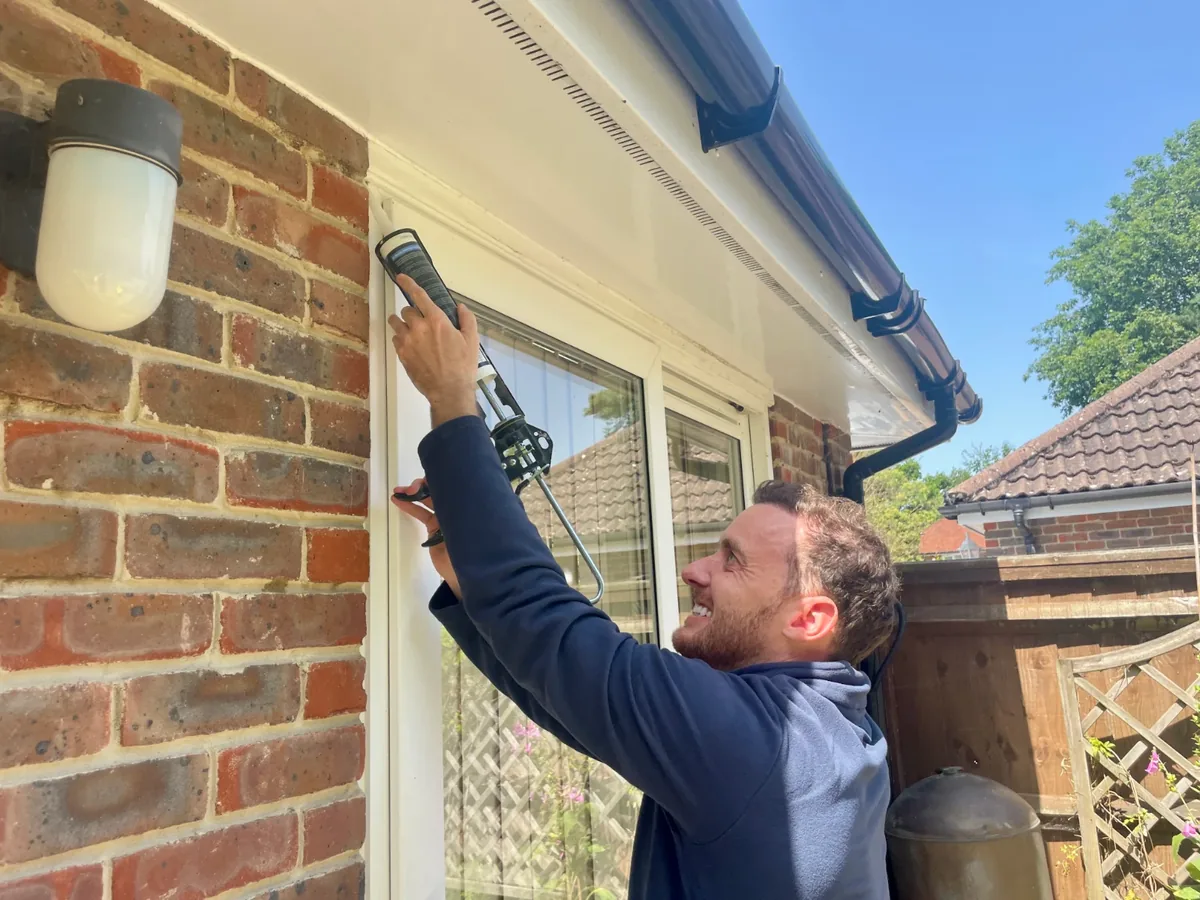
What we do, step by step
We keep the work tidy and contained to the joints we’re treating, so you can carry on as normal. The job usually takes a few hours for most jobs. Outside jobs in Charleston need a dry day, because sealant will not bond to a wet joint, so external jobs may need to move if the day turns wet. Indoor work goes ahead whatever the weather.
- We look at the glazing and agree which joints need resealing.
- Old sealant is removed from the glass and frame.
- The surfaces are cleaned with a suitable solvent.
- New glazing silicone goes in and is finished neatly.
- The joints are checked before we leave.
How to prepare
- Mention any tricky access
- Let us know about earlier repairs to the joints
- Tell us if parking is tricky
Ask for a quote
For a quick quote, get us on the phone, or email us if that’s easier. Tell us about the joints that need doing and we’ll talk you through the work.
Advice
Looking after it afterwards
After the cure time, these simple habits help:
- Keep scrapers and blades away from the silicone
- Run a squeegee over the glass when you’re done
- Keep harsh solvents off the silicone
- Keep conservatory gutters clear of leaves
Follow the cure time we give you before the joints get wet. After that, clean glass with a mild cleaner.
A leaking shower screen may not show at first. Water can soak into the floor or reach the room below before you spot it.
How the job changes by surface
Glass balustrade bases
The base joint is cut out and resealed. Glass fitting is a separate trade.
Conservatory frames
Frame-to-wall joints on a conservatory move with the weather. We reseal them with a sealant suited to the frame.
What we cannot put right
Sealant isn’t the answer to every problem, and we’d rather say so up front. Sealant won’t put right:
- Rotten or badly damaged frames
- A roof that has moved or dropped
- Cracked or broken glass
If you are not sure, just drop us a line at info@mrmastic.co.uk and we’ll give you a straight answer.
Where we work in Charleston
- Glass balustrade bases
- Conservatory frames
- Shower screens
- Glass-to-glass joints
- Rooflights
- Glass-to-frame joints
Other services in Charleston
For landlords and businesses
If you manage several properties in or around Charleston, several properties can go on one quote. Just tell us the addresses and what each one needs, and pictures by email help.
Hotels need rooms back in use, so we plan the work room by room around your bookings where we can. We’ve worked in hotels as well as homes and businesses.
Why act early in Charleston
If the problem is a misted unit or a broken panel, sealant won’t help. We say so plainly, so you can call the right trade. Exposed walls in smaller Scottish places take a lot of wind and rain, and once water gets behind a failed joint, damp in stone or harled walls is slow to dry out.
There are no prices on our website, because each job is priced on what it involves. For a quick quote, please send an email to info@mrmastic.co.uk.
Why book with us
- You choose the colour before work begins
- Any old sealant cut out fully, not covered over
- We’re fully insured
- A choice of colours where the product allows
Take a look at what affects the cost and our reviews.
Glazing silicone in Charleston: local notes
Many older homes in Scotland have sash and case windows, and the joint between the box frame and the stone or render is traditionally pointed with sand mastic. The west of Scotland is wetter than the east, which means glazing joints and frame seals has to cope with a lot of rain.
If you let a flat or house near Paisley Canal station, leaking glazing joints, shower screens or conservatory seals are worth sorting between tenancies. Pollok House, about 3.8 miles east, is one of the historic houses in the wider area around Charleston, and older homes nearby need a sealant that suits their walls. For site and facilities teams at buildings such as Castlehead High School, the mastic around its windows and doors needs looking after like any other building’s.
Charleston is about 1 mile south-east of Paisley, in Renfrewshire. Whether you are in the middle of Charleston or further out, we cover glazing silicone for every kind of property. Our Renfrewshire coverage runs to 21 places, Charleston among them. You can also see our page for Glasgow, about 6 miles away.
All of PA2 and PA1 is within our area for glazing silicone, from the main roads to the quietest streets. Whether your property is on Elm Road, Oak Road and Crags Road or a nearby road, our applicators can take on the job. Close by, we work in Paisley (1 mile north-west), Glenburn (1 mile south-west), Ferguslie Park (2 miles north-west), Inkerman (2 miles north-west) and Elderslie (3 miles west). Within a short drive, we also cover Renfrew (3 miles north-east), Johnstone (4 miles west), Bishopton (6 miles north-west), Linwood (3 miles west), Bridge of Weir (6 miles west) and Craigends (5 miles north-west).
Landmarks near Charleston
Locally, jobs take us to homes and businesses close to Gallows Green and Fiesta Lounge pub, among other places. The nearest railway station is Paisley Canal station, about 0.6 miles north-west. A little further out are Blackhall Manor (within half a mile north-east) and Paisley Thread Mill Museum (0.7 miles north). Not far away are Neilston Pad.
Can I do it myself?
Sealing over old silicone is the commonest DIY error. Silicone doesn’t stick to old silicone, so it lifts and traps water and mould underneath. Everything old must be removed first.
Too much sealant is as bad as too little. A heavy bead looks messy and copes badly with movement, and getting the depth right matters as much as the look.