
Essex · England
External & façade joints in St Lawrence Bay, Essex
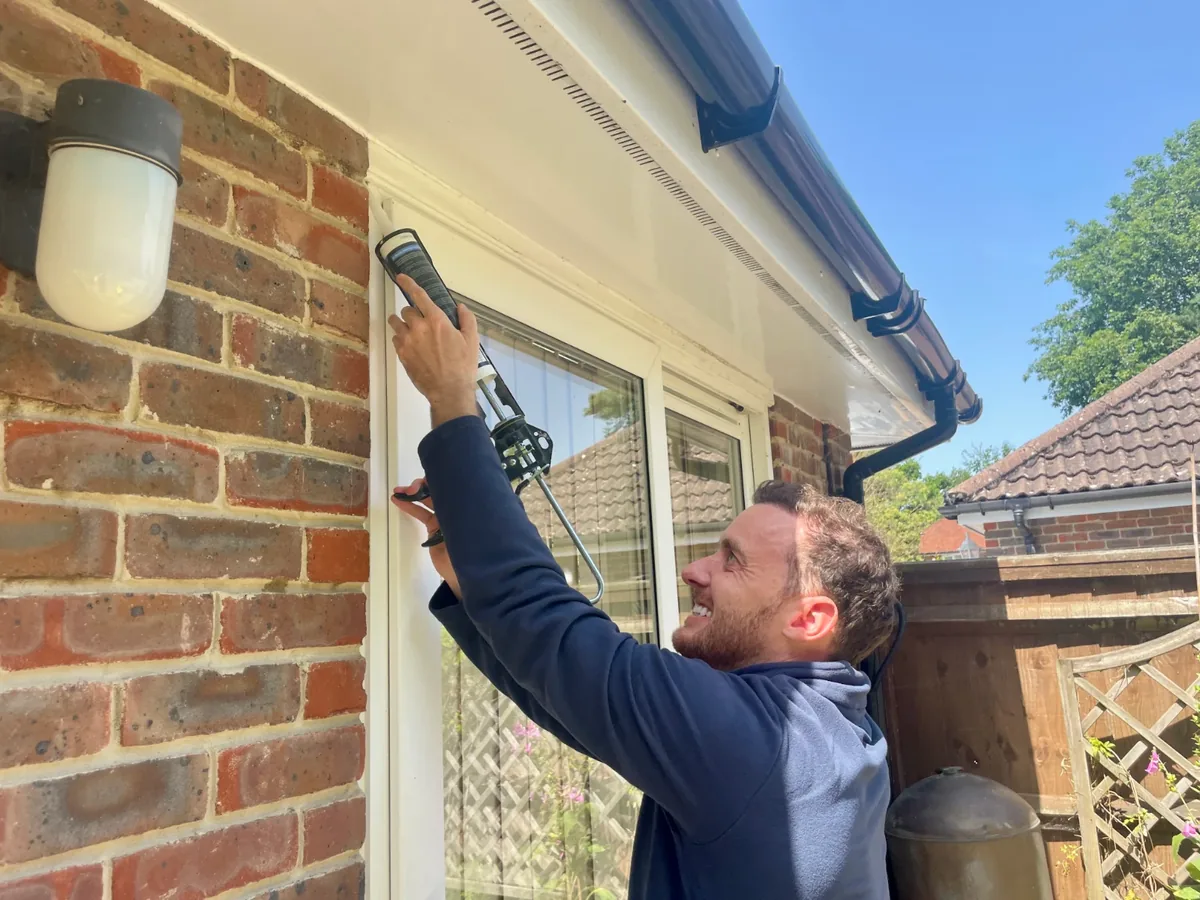
Our applicators work in St Lawrence Bay on sealing brickwork movement joints, render, cladding and façade joints. Old sealant removed completely, joints prepared properly.
- Movement joints with cracked, split or missing sealant
- Gaps where render, brick and frames meet
- Joints where the bead has come unstuck
Should I try it myself first?
Overfilling a joint is a classic DIY mistake. A heavy bead looks messy and copes badly with movement, and getting the depth right matters as much as the look.
If you are set on DIY, put the effort into preparation: remove every trace of old sealant, clean and dry the joint, and follow the product’s cure time. If it doesn’t work out, we can still put it right.
How we handle external mastic in St Lawrence Bay
Where two different materials meet, such as brick and render or blockwork and metal, they move at different rates. A flexible sealant bridges the two where a rigid filler would soon crack. We work on brickwork movement joints, render & cladding joints and copings & trims, and common reasons people get in touch are joints where the bead has come unstuck and damp patches traced to an open external joint.
Older homes in small places like St Lawrence Bay may be stone, brick or timber-framed, often with later extensions. The joints where those materials meet are the weak points.
All of our work is guaranteed for twelve months, in St Lawrence Bay and everywhere else we cover.
- Where
- St Lawrence Bay (CM0)
- Region
- Essex
- Guarantee
- A year, on every job
- Price
- A clear price before any work starts
- Call
- 0345 464 0079
- Page updated
- 26 October 2026
How the job changes by surface
Render joints
The face of render can be soft, so a low-modulus sealant is kinder to the joint edges. Priming is done where the sealant calls for it.
Cladding and façade panels
Metal and composite panels move a lot with temperature, so the joint sealant has to cope with frequent movement. The sealant is chosen with that in mind.
What external mastic looks like in St Lawrence Bay
St Lawrence Bay is close to the coast, where wind-driven rain is a fact of life and, nearer the shore, so is salt air. That’s hard on movement joints and outside wall joints, especially on the side facing the sea. London and the South East are among the drier parts of the UK, but outside sealant still needs a dry, clean surface, so outdoor work is planned around the forecast.
Letting a property close to Southminster station? Then outside joints that have cracked can let damp into a rental, so check them between lets.
St Lawrence Bay is about 6 miles east of Heybridge, in Essex. Whether you’re in the middle of St Lawrence Bay or further out, external mastic is available for homes and businesses alike, from flats and houses to offices and hotels. St Lawrence Bay is one of 644 towns and villages in Essex we cover. We also work in Chelmsford, about 14 miles from St Lawrence Bay.
Here we cover the CM0 postcode area for external mastic. Local streets include Main Road, Tinnocks Lane and Moorhen Avenue, all of which we cover. If you are just outside St Lawrence Bay, we cover Ramsey Island (1 mile south-east), Bradwell Wick (2 miles east), Mill End (3 miles east), Tollesbury (3 miles north) and Bradwell Waterside (3 miles east). Larger places within reach include Colchester (12 miles north), Chelmsford (14 miles west), Clacton-on-Sea (15 miles east), Maldon (6 miles west), Rayleigh (13 miles south-west) and Witham (10 miles north-west).
Near you in St Lawrence Bay
The nearest railway station is Southminster station, about 4.1 miles south of the centre. Nearby you will also find Maldon & District Agricultural & Domestic Museum (3.4 miles north-west). For a walk, there’s Tollesbury Wick.
Leave it or put it right?
The longer a joint stays open, the more water the wall takes in. In cold weather, frost can damage wet brick and render, so the problem grows beyond the joint itself. Where a wall is exposed, as many are in small places like St Lawrence Bay, wind-driven rain gets into any failed joint, and older walls, once damp, take a long time to dry.
A failed joint rarely gets cheaper to fix by waiting. If you’re unsure, phone 0345 464 0079 or send us an email and we will give you an honest view and a quote.
What you get with us
- Sanitary silicone with an anti-fungal additive in wet areas
- Old sealant always removed completely
- 12-month guarantee on every job
- We agree the colour with you first
Take a look at our cost guide and our reviews.
FAQs for St Lawrence Bay
Does living near the coast affect external mastic in St Lawrence Bay?
Coastal weather is harder on outside sealant: there’s more wind-driven rain and, closer to the shore, salt in the air. Choosing the right sealant for the frame and wall, laid at the right depth, helps it last.
Is St Lawrence Bay within the area you cover?
Yes, we do. Our work covers London and the South East, from towns to the smallest places. Longer journeys are simply planned in advance.
What sealant do you use?
Quality sealants from brands including Arbo and Everbuild, chosen to suit the joint. We will tell you what we are using and why.
Do I have to be there?
Access is agreed with you when the job is booked. For inside work, that normally means someone being in.
Is it OK to fill a movement joint with cement?
No. A mortar-filled joint cannot move, so the wall cracks somewhere else instead. Use a flexible sealant with backing rod.
I rent my home. Can I book you?
We are happy to deal with the tenant, landlord or agent. Just make sure your landlord agrees.
Do you work at height?
It depends on the building. Send us pictures and a rough idea of the height and we will confirm how they can be reached safely.
Do the sealants smell?
Sometimes, a little. Any smell clears as the sealant cures.
When to call us in St Lawrence Bay
Using the wrong sealant is another common reason. A stiff, general-purpose sealant can’t cope with a joint that moves a lot, and it tears off the sides.
These are the problems we’re asked about most:
- Leaking joints around cladding and façade panels
- Plants rooting in failed movement joints
- Rain getting behind render or cladding at a joint
- Gaps where render, brick and frames meet
In the older streets around St Lawrence Church Centre, older walls, gutters and the joints where extensions meet them need a flexible sealant.
Before you book anyone
- What the cure time is
- What preparation is included
- What happens if they find a problem under the old sealant
- What insurance they hold
What affects the quote in St Lawrence Bay
The quote reflects the job in front of us. We look at:
- Which sealant suits the joint
- Any working-time requirements on site
- Whether there’s mould to deal with
- How much old sealant there is and how hard it is to remove
The cost reflects the work involved, not a rough estimate. That’s why we ask about the job first.
Asking for a quote
When you contact us, these details help:
- Whether it’s a home or a business
- The problem you’ve noticed
- Roughly how big the job is
- How we’d reach the joints
It all starts with a short chat. Describe the problem, the location and the size of the job. When it suits you, call 0345 464 0079 or drop us an email.
How it works
All our tools and materials come with us in the van, so you don’t need to buy or prepare anything. After a quick look at the joints together, the area is protected and the work begins. Most jobs take anything from a few hours to several days, depending on the building. Somewhere as small as St Lawrence Bay, access is often the only tricky part. For outside work, also let us know about exposed walls and any outbuildings involved.
- Each joint is checked and the colour of the new sealant agreed.
- We take out the old sealant until the faces are sound.
- Closed-cell backing rod is pushed in so the sealant bonds to two sides only.
- Primer is applied wherever the sealant needs it.
- A low-modulus exterior sealant is gunned in and tooled to a neat finish.
How to prepare
- Mention any tricky access
- Clear items away from the joints we’re working on
- Where the joints are inside, avoid wetting them before we arrive
Ask for a quote
Need a quote? Please ring 0345 464 0079 or send us an email and tell us about the job. You will know what we plan to do, and what it will cost, before any work begins.
Advice
Keeping the joints in good condition
Aftercare is simple:
- Keep high-pressure jets off the joints
- Ask before painting over external sealant
- Keep movement joints as flexible joints, not mortar
- Show decorators and builders where the movement joints are
Give the sealant the cure time we tell you before anything rubs against it. Most exterior sealants skin fast but take longer to cure right through.
Once a joint cannot move, the wall finds another way, generally as cracking in the brickwork or render nearby. Resealing it early helps prevent that.