
Essex · England
External & façade joints in South Weald, Essex
External mastic for South Weald and the surrounding area: careful preparation, the right product and tidy work. Call for a quick quote.
- Sealant that has lost its bond to the brick or render
- Old sealant gone brittle and cracked
- Gaps where render, brick and frames meet
South Weald buildings and the weather
The South East is one of the drier parts of the UK, though outdoor sealant still has to go onto a dry joint, so the forecast decides the day. Historic houses like Hare Hall (about 3.6 miles south-west) are a reminder that the area around South Weald has older buildings as well as new. Where a home is older, older brick and stone need a sealant that suits them, at the right joint depth.
For site and facilities teams at buildings such as Holly Trees Primary School, movement joints, cladding joints and gutters on larger buildings need the same care as a house’s. Letting a property close to Brentwood station? Then split movement joints are easy to miss on a rental until damp shows inside.
South Weald is about 2 miles west of Brentwood, in Essex. Anywhere in CM14, we cover external mastic for homes and businesses. Our Essex coverage runs to 644 places, South Weald among them. There’s also a page for Chelmsford, about 12 miles away.
Our applicators cover all of CM14 for external mastic. If you need external mastic at a property on Weald Road and Wigley Bush Lane or anywhere close by, our applicators can take on the job. If you’re just outside South Weald, we cover Brook Street (1 mile south), Coxtie Green (1 mile north), Pilgrims Hatch (1 mile north-east), St Vincent's Hamlet (1 mile west) and Noak Hill (2 miles west). Further out, we also cover Chelmsford (12 miles north-east), Basildon (9 miles south-east), Harlow (12 miles north-west), Canvey Island (15 miles south-east), Billericay (7 miles east) and Rayleigh (15 miles east).
Landmarks near South Weald
In South Weald, that means homes and buildings near Weald Country Park, Sawyers Hall College and Becket Keys Church of England School and the streets around them. South Weald’s nearest station is Brentwood station, roughly 1.5 miles south-east of the centre. Well-known places in the area include Spire Hartswood Hospital (1.8 miles south-east) and Upminster Tithe Barn Museum of Nostalgia (3.8 miles south). The countryside around South Weald includes Warley Place.
External mastic in South Weald, done properly
Many failed façade joints only get noticed once there’s a stain or a damp patch inside. We inspect them, agree which need doing and reseal with a weatherproof, flexible sealant in a colour to suit. We work on brickwork movement joints, render & cladding joints and copings & trims, and people most often call us about joints pointed up with cement by mistake and panel joints letting water in.
Older homes in small places like South Weald may be stone, brick or timber-framed, often with later extensions. Where one material meets another is where water generally gets in, and they need the right sealant at the right depth.
Big or small, you get the same one-year guarantee.
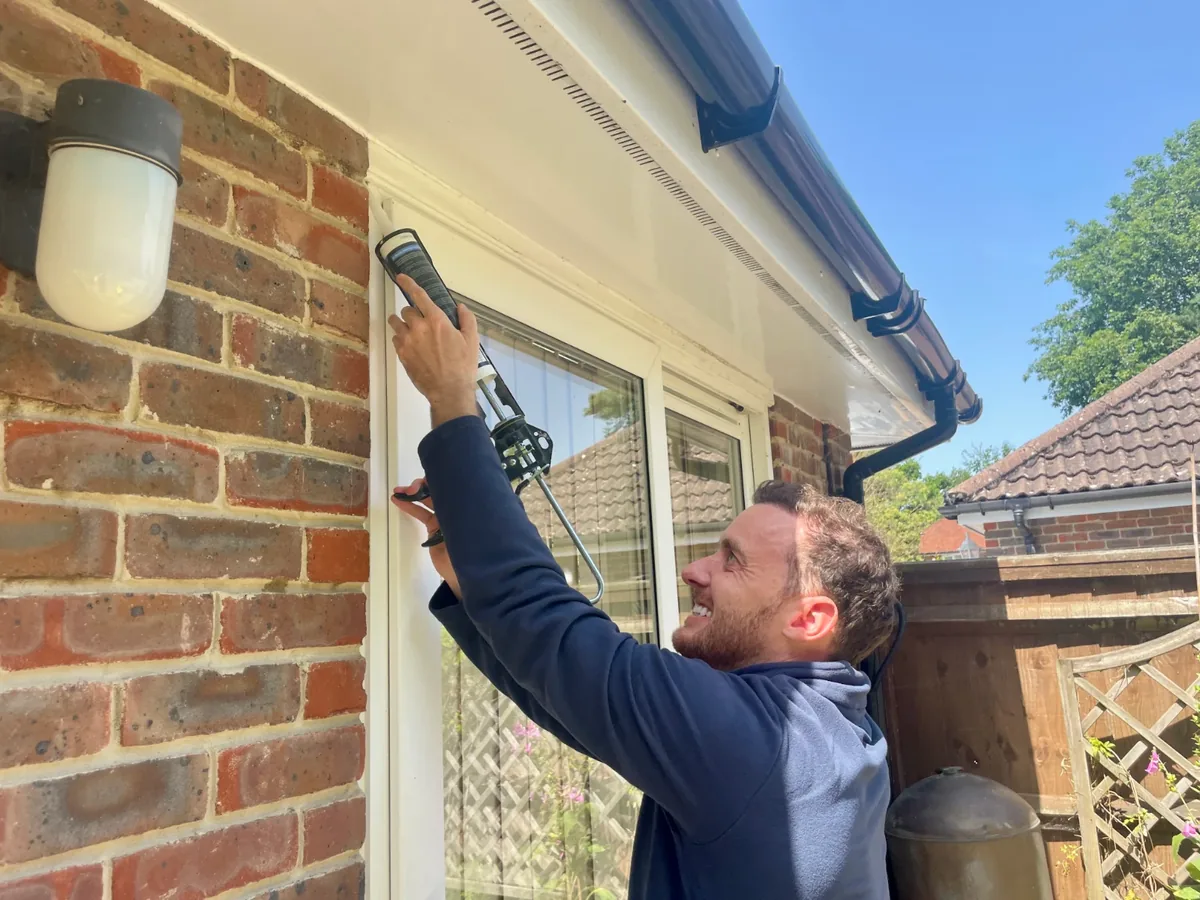
- Location
- South Weald (CM14)
- Region
- Essex
- Cover
- 12 months on all our work
- Quotes
- A clear price before work begins
- Call
- 0345 464 0079
- Updated
- 26 October 2026
Your questions about external mastic in South Weald
Do you cover South Weald for external mastic?
Yes. Our work covers London and the South East, and South Weald is part of that. You can phone 0345 464 0079 or email us and let us know what needs doing.
Do you cover smaller places like South Weald?
Yes. South Weald is within the area we cover, which takes in towns, villages and rural addresses. Our work covers London and the South East. Let us know about access, parking and anything unusual about getting there when you book.
Can landlords and businesses book you?
Yes. We work for homeowners, landlords, letting agents, businesses and hotels in South Weald.
Should I try DIY first?
Sometimes. The key is preparation: remove all the old material and work on a clean, dry joint. If it does not work out, we can redo it.
How long does the job take?
It depends on the size of the job, but as a guide it takes a few hours to a few days, depending on the length of joint and the access. We’ll tell you when we quote.
Will you leave a mess?
Very little: the area around the joints is protected first, and we clear up the old sealant and our materials before we leave.
Will the new joint stand out?
Exterior sealants are made in a range of colours, from greys and browns to whites and stone shades. We choose the closest to your brick or render so the joint doesn’t draw the eye.
Why do you put foam in the joint first?
That is backing rod, a closed-cell foam. It stops the sealant going in too deep and bonding to three sides, which would stop it stretching.
Aftercare tips
After the cure time, these simple habits help:
- Tell anyone working on the walls about the movement joints
- Avoid pressure-washing directly into sealant joints
- Do not let climbing plants root in the sealant
- Make sure movement joints aren’t pointed over
Keep pressure washers away from the sealant. A strong jet can damage the edges of the bead.
If you can see gaps, plants or bare sections in a joint, have it checked. Early work is quicker and leaves a better finish.
Honest limits
Some problems need a builder, plumber or other trade rather than us:
- Cracking across the wall rather than at a joint
- Render that’s blown, hollow or coming away
- Movement that is more than a sealant joint can take
Not sure which it is? You can ring 0345 464 0079 or email us and we will tell you honestly before you book.
Where we work in South Weald
- Brickwork movement joints
- Concrete & block
- Copings & trims
- Render & cladding joints
- Façade panels
- Joints between brick and frames
How we quote for external mastic
The price is agreed before any work begins. It’s based on:
- How much old sealant there is and how hard it is to remove
- The number of rooms or windows
- The number and length of the joints
- Any working-time requirements on site
Rather than a set price list, we look at what your job involves: how many joints, what’s in them now and how we reach them. The price is agreed before we begin.
Asking for a quote
To make quoting easier, let us know:
- The rough size of the job
- Whether it’s a home or a business
- Access, such as stairs, a lift or height
- Where the property is
For a quick quote, get us on the phone, or send an email if you’d rather. Tell us about the joints that need doing and we will explain what’s involved and give you a clear quote.
Do you need external mastic in South Weald?
A lot of failed joints come down to preparation: dusty or wet faces, no primer where one was needed, or old sealant left in. The sealant never bonds properly.
The most common problems we see are:
- Damp patches traced to an open external joint
- Leaking joints around cladding and façade panels
- Joints with sealant missing in places
- Rigid filler in a joint that should flex
For an older house near a landmark such as Church of St Peter, the joints between older walls, newer extensions and the roofline need a sealant that can move.
What your quote should include
- Whether all the old sealant comes out first
- Which sealant they’ll use, and why
- What the quote includes, VAT included or not
- Are they insured?
How the visit works
Good joint work is mostly preparation, so that is where we spend the time. Every joint is cleaned and dried before new material goes in. In total, it usually takes anything from a few hours to several days, depending on the building. For a village or hamlet like South Weald, the journey is planned in advance: tell us about narrow lanes, gates, long drives and where we can park. We bring what the job needs, so it can be finished in one trip where possible.
- We start by checking each joint, agreeing the ones to redo and how we will reach them.
- We cut out the failed sealant and rake out any dirt or growth.
- We clean both faces of the joint and prime them where the product calls for it.
- We push in closed-cell backing rod so the sealant is the right depth and bonds to the sides only.
- A flexible exterior sealant is applied and tooled in a colour to suit the wall.
How to prepare
- Tell us about any previous sealing or DIY attempts
- On commercial sites, let us know about site rules
- Mention any leaks or damp you’ve noticed
Getting a quote
For a quote, phone 0345 464 0079 or drop us an email with the location and a short description of the problem. You will have a clear quote before any work starts.
Read more
DIY sealant or a professional job?
Some sealant jobs are within reach of a careful DIYer, such as a straightforward joint indoors. The common mistakes are sealing over old sealant, sealing a damp joint and using far too much.
Sealing over old silicone is the commonest DIY error. New silicone won’t bond to old, so it lifts and traps water and mould underneath. All the old material has to come out first.
Surface by surface
Render joints
The face of render can be soft, so a low-modulus sealant is kinder to the joint edges. Priming is done where the sealant calls for it.
Copings and trims
Copings expand and contract through the day, so a flexible sealant suits them best year round.