
Kent · England
Glazing & conservatory sealant in New Hythe, Kent
Glazing silicone for conservatories, rooflights, glass panels and shower screens in New Hythe, with a one-year guarantee on every job. Ask us for a quote.
- New silicone smeared over old sealant
- Water escaping where a screen meets the wall
- Water running down inside the glass
How we handle glazing silicone in New Hythe
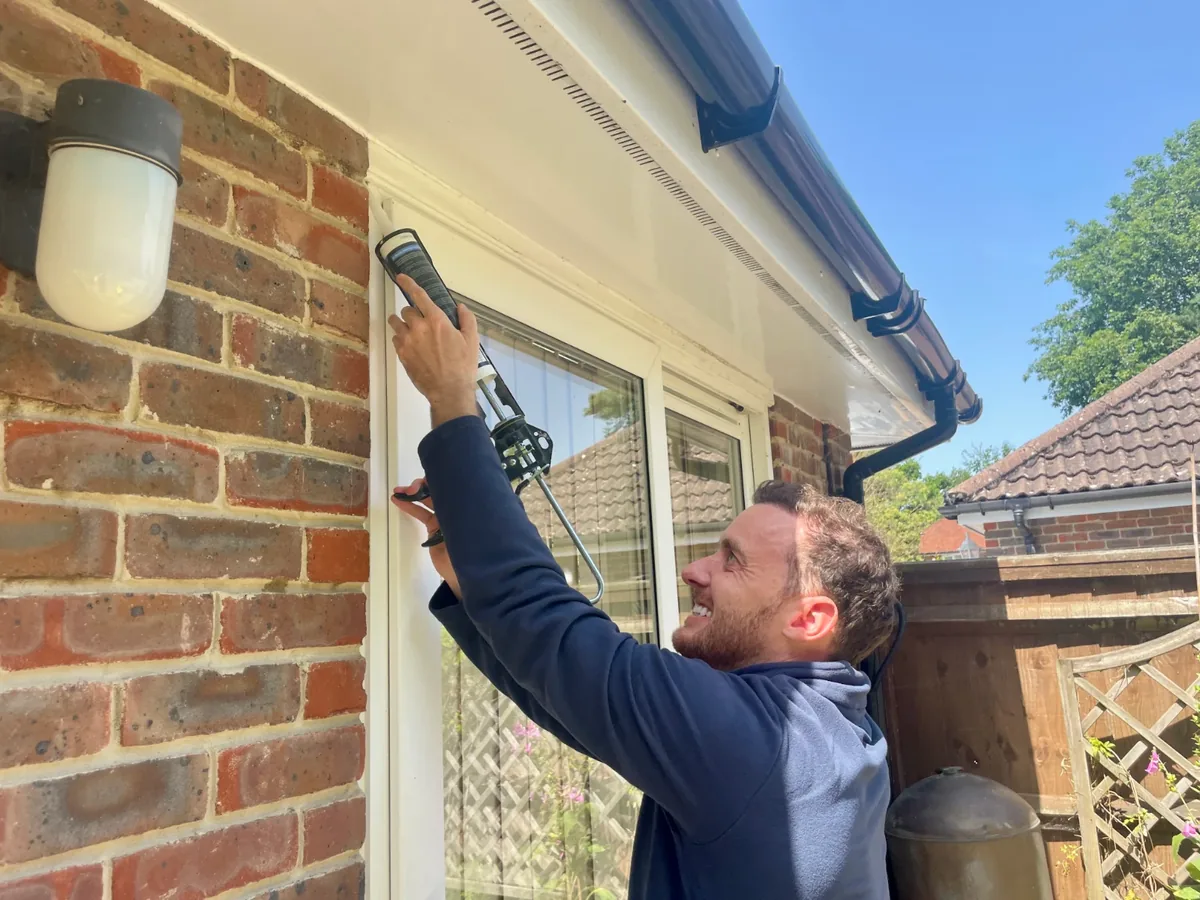
Glass, frames and walls all move at different rates, so the sealant between them does a lot of work. Once it splits or comes away, water finds a way through. We replace it with a glazing silicone that suits the glass and frame. If you are dealing with leaks where conservatory glass meets the frame and split or lifting silicone on glass, we can help.
Outdoor sealant needs dry, clean surfaces, so work on frames around New Hythe is planned for dry weather. Tell us about access to every side of the house, including upper-floor windows.
A 12-month guarantee comes as standard.
- Where
- New Hythe (ME20)
- Region
- Kent
- Guarantee
- One year on every job
- Quote
- A clear quote up front
- Phone
- 0345 464 0079
- Last updated
- 26 October 2026
For landlords and businesses
Mouldy or split sealant often shows up at the end of a tenancy. We can quote for more than one property at once.
Housing providers, facilities teams and property managers book us too. Several sites can go on one quote, and we are fully insured for the work.
How the job changes by surface
Rooflights
Rooflight leaks can come from the sealant or the roof. We check which it is.
Conservatory frames
Frame joints face sun and rain all year. A fresh bead seals them again.
Do you need glazing silicone in New Hythe?
Glass and frames expand and contract with the temperature at different rates. Over years, that movement tears the silicone.
Common reasons people contact us include:
- Cracked silicone between glass panels
- Split or lifting silicone on glass
- Water escaping where a screen meets the wall
- A quick top-up bead that didn’t last
Rented homes near New Hythe station change hands often, and leaking glazing joints, shower screens or conservatory seals are worth sorting between tenancies.
What to look for in a quote
- How the surfaces are prepared before sealing
- How hidden problems are handled
- How the colour is chosen
- Who turns up on the day
Glazing silicone in New Hythe: local notes
With historic houses such as Starkey Castle (about 3.7 miles north) nearby, there’s older building stock in the area around New Hythe as well as newer homes. Where a home is older, older frames set in brick or stone need a sealant that suits them, and sometimes that is traditional sand mastic. Rainfall in the South East is lower than in much of the UK, yet outdoor joints still have to be sealed dry, so jobs are booked with the weather in mind.
If you look after a building such as Brookfield Junior School, larger buildings have plenty of frames, and the mastic around each one ages. Homes close to Church of the Holy Trinity include some older properties, and the windows may be timber, sash or later replacements, and each needs the right sealant against the wall.
New Hythe is about 4 miles north-west of Maidstone, in Kent. New Hythe gets the same service as everywhere we cover: old sealant removed completely, careful preparation and a one-year guarantee. We cover 922 towns and villages across Kent, large and small. There’s also a page for London, about 27 miles away.
We work across ME20 for glazing silicone. Streets in the area include Sherwood Avenue, Ingram Close and Abery Drive, and we cover them all. If you are just outside New Hythe, we cover Lunsford (1 mile west), Larkfield (1 mile south-west), Leybourne (1 mile south-west), Eccles (1 mile north-east) and Snodland (1 mile north-west). Within a short drive, we also cover Maidstone (4 miles south-east), Sittingbourne (12 miles east), Dartford (13 miles north-west), Sevenoaks (12 miles west), Royal Tunbridge Wells (14 miles south-west) and Gravesend (9 miles north).
What’s near New Hythe
Around New Hythe, our work takes us to homes and buildings near Aylesford School, The Monks Head pub and Leybourne Lakes Country Park, among other places. New Hythe has its own railway station: New Hythe station. A little further out are Maidstone Hospital (2.8 miles south-east) and Medway megaliths (2.1 miles east). The countryside around New Hythe includes Blue Bell Hill and Burham Down.
What happens on the day
When we arrive, we look over the joints with you first, so there are no surprises. Surfaces next to the work are protected before any work starts. The work normally takes anything from an hour or two to most of a day, depending on the size of the job. Somewhere as small as New Hythe, access is often the only tricky part. If the job is outside, mention outbuildings, exposed walls and how to reach them.
- First we agree the joints to be done.
- Old sealant is removed from the glass and frame.
- The surfaces are cleaned with a suitable solvent.
- New glazing silicone goes in and is finished neatly.
- We inspect the work and test it where we can.
Before we arrive
- Mention any leaks or damp you’ve noticed
- On commercial sites, let us know about site rules
- Mention any parking rules near the property
How to get a quote
There’s no standard price list. Instead, your job gets its own clear quote. To arrange one, call 0345 464 0079 or send us an email.
Related advice
More services for New Hythe
New Hythe questions
Will you come out to New Hythe?
Yes, we do. We work across London and the South East, and smaller places are part of that. The journey is planned ahead, so it helps to know about access.
Can you help a landlord with a rental near New Hythe station?
Yes, landlords and agents are among the people we work for. You can phone 0345 464 0079 or email us with the details for a clear quote.
What should I tell you?
Only a few details: the address or postcode, what’s wrong and any access issues. Then phone 0345 464 0079 or drop us an email.
Why not top up the existing silicone?
A top-up rarely holds. The new bead can’t grip the old one, so we remove the old sealant and clean the joint.
Which silicone is used for glass joints?
We use a neutral-cure glazing silicone that suits the glass and frame. In bathrooms, we use anti-fungal silicone.
Do you take out the old sealant first?
Yes, every time. New silicone doesn’t stick to old silicone, so any old material comes out before anything new goes in.
Are you insured?
Yes, we are fully insured for every job we do.
What guarantee do I get?
You get our one-year guarantee to every job we do.
Quotes for glazing silicone in New Hythe
You’ll get a clear quote before work begins. It takes into account:
- How many rooms, windows or areas are involved
- Mould in or behind the old joints
- Whether the work is at height
- Any working-time requirements on site
Rather than a set price list, we price the job in front of us: the amount of work, the old material and the access. The price is agreed before we begin.
What to tell us for a quote
When you contact us, these details help:
- Roughly how big the job is
- What the problem is, such as mould, gaps, leaks or cracking
- Whether it has been sealed before
- Whether it’s a home or a business
Asking for a quote is easy: let us know the job and the location and its rough size. A few photos by email make the job easier to understand, and we’ll take it from there.
Keeping the joints in good condition
Joint life depends on how it’s used and looked after. Here’s what we suggest:
- Squeegee the shower screen after each use
- Keep air moving in the conservatory
- Keep scrapers and blades away from the silicone
- Get a new leak looked at quickly
Don’t use blades or scrapers near the bead when you clean. Stick to a soft cloth.
A leaking shower screen may not show at first. It can damage the floor or the ceiling below before you spot it.
Can I do it myself?
Sealing over old silicone is the commonest DIY error. New silicone won’t bond to old, so it lifts and traps water and mould underneath. Everything old must be removed first.
A careful DIYer can reseal a simple joint, such as a straightforward joint indoors. Where it goes wrong is sealing over the old bead, working on a wet joint or overloading the gap.